
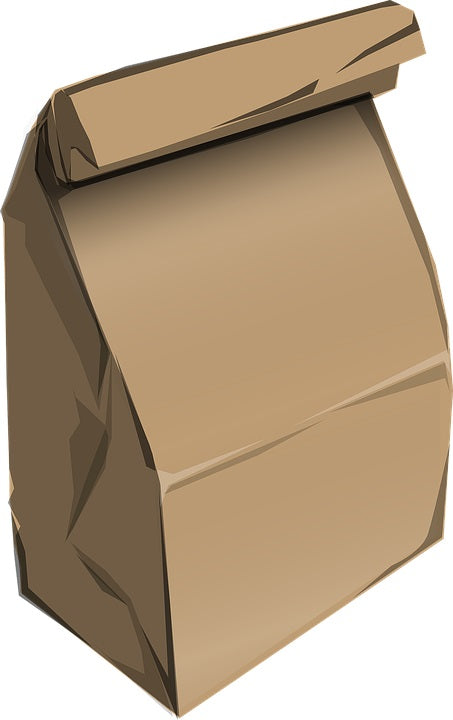
Bags / Paper Bags / Block Bottom SOS Kraft
-
10x6x22 - Brown Kraft Block Bottom S.O.S Bags (28lb)Regular price From £32.74 GBPRegular priceUnit price per
-
8x5½x18¾ - Brown Kraft Block Bottom S.O.S Bags (14lb)Regular price From £14.40 GBPRegular priceUnit price per
-
10x5½x16 - Brown Kraft Block Bottom S.O.S Bags (21lb)Regular price From £13.20 GBPRegular priceUnit price per
-
7x4½x13¾ - Brown Kraft Block Bottom S.O.S Bags (7lb)Regular price From £36.08 GBPRegular priceUnit price per
-
6x2½x12 - Brown Kraft Block Bottom S.O.S Bags (3.5lb)Regular price From £26.43 GBPRegular priceUnit price per
-
121x76x298mm - Bleached Kraft S.O.S Bags - Polythene Lined~Regular price From £30.38 GBPRegular priceUnit price per


Bags / Paper Bags / Block Bottom SOS Kraft
| Product Code | Description |
| 01K01 | 6x3½x12 - Brown Kraft Block Bottom S.O.S Bags |
| 01K02 | 7x4½x13¾ - Brown Kraft Block Bottom S.O.S Bags |
| 01K03 | 10x5½x16 - Brown Kraft Block Bottom S.O.S Bags |
| 01K04 | 8x5½x18¾ - Brown Kraft Block Bottom S.O.S Bags (14lb) |
| 01K05 | 10x6x22 - Brown Kraft Block Bottom S.O.S Bags (28lb) |
Block Bottom S.O.S. Kraft Paper Bags (Brown) — Overview
Block bottom S.O.S. (Self-Opening Sack) kraft paper bags are flat-bottom paper bags designed to open quickly and stand upright once filled. The squared base improves stability on counters and shelves, while kraft paper provides a practical balance of stiffness and tear resistance for everyday packing, staging, and carryout use. This collection focuses on brown kraft S.O.S. bags in several footprints and paper weights, making it easier to match bag size and strength to the contents.
Common uses include packing small retail items, organizing parts, staging orders, and general-purpose carryout where a simple, unhandled paper bag is preferred. Because these bags are uncoated kraft, they are typically best for dry goods and non-greasy items unless paired with an appropriate liner.
Block Bottom S.O.S. Kraft Bags — Helpful Guide
This guide explains the bag style, the size format, and how to choose between the available options in this category.
1) What “S.O.S.” and “Block Bottom” mean
S.O.S. stands for Self-Opening Sack, a paper bag style that pops open easily and forms a rectangular opening. Block bottom (often called flat bottom) refers to the squared base panel that lets the bag stand upright when filled. In practice, many suppliers use “S.O.S.,” “block bottom,” and “flat bottom” together to describe this same stable, self-opening paper bag format.
2) Understanding bag size (W x G x H)
Bag dimensions are typically listed as Width x Gusset x Height:
- Width (W): the front panel measurement across the bag opening.
- Gusset (G): the side depth that expands to create capacity and helps the bag stand.
- Height (H): the measurement from the bottom to the top opening.
When choosing a size, start with the product’s footprint (width and depth) and then add clearance for easy loading. If items are tall, prioritize height; if items are bulky, prioritize gusset depth.
3) Paper weight (lb) and what it affects
Several items in this collection list a paper weight in lb (for example, 14 lb or 28 lb). In paper specifications, this is a basis weight rating for the paper grade, not the weight of a single bag. As a practical rule, higher basis weight generally indicates thicker, stronger paper that better resists tearing and punctures under load.
- Lighter weights: easier to fold and economical for light, non-sharp contents.
- Heavier weights: better for heavier items, denser contents, or products with corners that can stress seams.
4) Types of packaging in this category (and the products available)
This category contains one primary packaging type: Brown Kraft Block Bottom S.O.S. Bags. The options differ by size and paper weight. Use the links below to jump directly to each product page.
-
6x3½x12 - Brown Kraft Block Bottom S.O.S Bags
A compact footprint for small items and light packing needs. The narrow width and moderate gusset help keep small contents upright and contained.
-
7x4½x13¾ - Brown Kraft Block Bottom S.O.S Bags
A versatile mid-small size that adds gusset depth for slightly bulkier items while remaining easy to load and stage on a counter.
-
10x5½x16 - Brown Kraft Block Bottom S.O.S Bags (21lb)
A larger opening and deeper gusset for bulkier contents. The listed 21 lb paper weight is a practical middle ground for general-purpose packing.
-
8x5½x18¾ - Brown Kraft Block Bottom S.O.S Bags (14lb)
Taller profile with a stable base, useful when height matters more than width. The 14 lb paper weight is typically suited to lighter, non-sharp items.
-
10x6x22 - Brown Kraft Block Bottom S.O.S Bags (28lb)
The largest option in this set, with a wide opening and tall height. The 28 lb paper weight is generally chosen when added strength and tear resistance are important.
Case Study: Improving packing speed and consistency with self-opening bags
A small operation packing mixed, dry items often faces two recurring issues: (1) time lost opening and shaping bags, and (2) inconsistent fills that lead to tipping or crushed contents. Switching to block bottom S.O.S. bags can streamline the workflow because the bag opens quickly and stands on its own during loading. Staff can place the bag upright, drop in items, and fold the top consistently. The flat base also helps keep staged orders stable on shelves or counters while awaiting pickup or internal transfer.
In practice, many teams standardize on two or three sizes: a small bag for compact items, a mid-size for most orders, and a heavier-weight large bag for dense or sharp-cornered contents. This reduces decision fatigue and helps maintain consistent packing outcomes.
How to choose the correct block bottom S.O.S. kraft bag
Step 1: Match the footprint
Measure the widest and deepest part of the item (or the combined footprint of multiple items). Choose a bag width and gusset that provide clearance for easy loading. If the fit is too tight, seams and corners experience higher stress, increasing the chance of tearing.
Step 2: Check height and closure needs
Consider whether the top will be folded once or multiple times. If you need a neat fold-over closure, leave extra headspace above the contents. Taller bags can also help keep long items contained, but avoid excessive empty space if stability is important.
Step 3: Choose paper weight based on load and edges
Paper weight selection is not only about total weight of contents; it also depends on how concentrated the load is. Dense items and products with corners (boxed goods, hardware, parts) can create point loads that stress the paper. Heavier basis weights generally provide better resistance to tearing and punctures.
Step 4: Consider the environment (dry vs. moisture/grease exposure)
Uncoated kraft paper performs best with dry goods. If contents may be damp, greasy, or exposed to condensation, consider adding an appropriate liner or secondary barrier. Moisture can soften paper fibers and reduce strength, especially at folds and seams.
Practical tips for packing and handling
- Open the bag fully before loading: Pop the base open and square the corners so the bag stands upright and the seams are not twisted.
- Load heavier items first: Place dense items at the bottom to lower the center of gravity and improve stability.
- Avoid overfilling: Leave enough space to fold the top; overfilling increases the chance of tearing at the opening.
- Mind sharp edges: For items with corners, consider wrapping or adding a protective layer to reduce puncture risk.
- Use consistent folds: A uniform fold-over closure helps keep contents contained and can improve stackability during staging.
Storage and sustainability considerations
Store kraft paper bags in a clean, dry area away from humidity and direct sunlight. Excess moisture can cause waviness and reduce stiffness, while crushing can deform the block bottom and make bags harder to open. For operations that track packaging waste, paper bags are often preferred for their fiber-based construction; however, real-world outcomes depend on local recycling acceptance and contamination (for example, grease or moisture can affect recyclability).
Questions & Answers
What is the difference between S.O.S. bags and regular flat paper bags?
S.O.S. (Self-Opening Sack) bags are designed to pop open quickly and form a squared opening with a flat, block-style bottom. Regular flat paper bags may not stand upright as easily. The block bottom improves stability during filling and staging.
How do I read the dimensions like 10x6x22 on a block bottom bag?
Dimensions are typically listed as width x gusset x height. Width is the front panel across the opening, gusset is the side depth that expands for capacity, and height is from the bottom to the top opening. Measure your item footprint first.
Does “14 lb” or “28 lb” mean how much the bag can carry?
No. The “lb” value is a paper basis weight rating for the paper grade, not the weight capacity of a single bag. Higher basis weight generally indicates thicker, stronger paper that resists tearing better, especially with dense or sharp-cornered contents.
Are uncoated kraft S.O.S. bags suitable for greasy or wet items?
Uncoated kraft paper is best for dry goods. Grease or moisture can soften paper fibers and reduce strength, particularly at folds and seams. If contents may be greasy or damp, use an appropriate liner or secondary barrier to protect the bag.
What’s the best way to prevent tearing when packing heavier items?
Choose a size that isn’t overly tight, fully open and square the base before loading, and place heavier items at the bottom. Avoid sharp corners contacting the paper directly by wrapping items or adding a protective layer. Don’t overfill the opening.