
Postal / Envelopes
-
230x310 - Rigid Corrugated Envelopes A4 FlatRegular price From £17.58 GBPRegular priceUnit price per
-
250x355 - Rigid Corrugated Envelopes A4Regular price From £17.58 GBPRegular priceUnit price per
-
353x518 - Rigid Corrugated Envelopes A3Regular price From £17.58 GBPRegular priceUnit price per
-
302x415 - Rigid Corrugated Envelopes B4Regular price From £17.58 GBPRegular priceUnit price per
-
263x373 - Rigid Corrugated Envelopes C4Regular price From £17.58 GBPRegular priceUnit price per
-
200x288 - Rigid Corrugated Envelopes A5Regular price From £17.58 GBPRegular priceUnit price per
-
381x254x25 - Manilla Gusset EnvelopesRegular price From £20.99 GBPRegular priceUnit price per
-
C5 - Manilla Self Seal EnvelopesRegular price From £57.17 GBPRegular priceUnit price per
-
C4 - White Self Seal EnvelopesRegular price From £0.13 GBPRegular priceUnit price per
-
C5 - White Self Seal EnvelopesRegular price From £0.07 GBPRegular priceUnit price per
-
DL - White Self Seal EnvelopesRegular price From £3.79 GBPRegular priceUnit price per
-
324x229 - White Board Back Envelopes C4Regular price From £17.10 GBPRegular priceUnit price per
-
229x162 - Manilla Board Back Envelopes C5Regular price From £17.10 GBPRegular priceUnit price per
-
324x229 - Manilla Board Back Envelopes C4Regular price From £42.53 GBPRegular priceUnit price per
-
457x324 - Manilla Board Back Envelopes C3Regular price From £17.10 GBPRegular priceUnit price per
-
352x250 - Manilla Board Back Envelopes B4Regular price From £17.10 GBPRegular priceUnit price per


Postal / Envelopes
Postal envelopes are designed to protect documents and flat goods in transit while keeping packing fast and consistent. This collection focuses on rigid corrugated envelopes (often chosen when items must not bend), expandable gusset envelopes for thicker packs, and specialty board envelopes designed for long, narrow contents.
Postal Envelopes — Helpful Guide
Choosing the right postal envelope is mainly about three things: (1) how easily the contents can bend or crease, (2) the thickness of the pack, and (3) how you want to close and label the mailpiece. Below is a practical guide to the envelope types in this category and when to use each.
1) Rigid corrugated envelopes (document mailers / “do not bend” style)
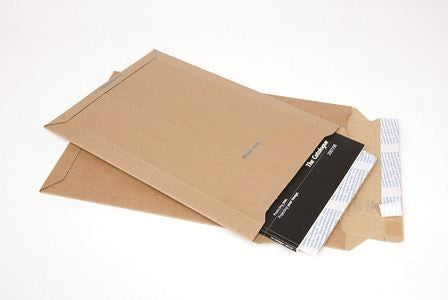
Rigid corrugated envelopes are built to resist bending and corner damage. They are commonly used for certificates, photos, artwork prints, brochures, and important paperwork that needs to arrive flat and presentable. Compared with standard paper envelopes, rigid construction helps reduce creasing and crushing during handling.
-
167x267 - Rigid Corrugated Envelopes A6+
Compact rigid mailer for small documents, photos, and inserts that must stay flat. -
200x288 - Rigid Corrugated Envelopes A5
Rigid protection for A5-sized sheets, booklets, and flat packs. -
230x310 - Rigid Corrugated Envelopes A4 Flat
Designed for A4 documents that should remain flat with minimal movement inside. -
250x355 - Rigid Corrugated Envelopes A4
Extra room for A4 packs, thicker document sets, or additional inserts while keeping rigidity. -
263x373 - Rigid Corrugated Envelopes C4
Useful when you want A4 sheets to fit without folding, with rigid reinforcement. -
302x415 - Rigid Corrugated Envelopes B4
For larger or thicker A4-based packs where you want more clearance and strong edge protection. -
353x518 - Rigid Corrugated Envelopes A3
Large rigid mailer for drawings, plans, posters, and oversized flat items.
When rigid is the best choice: If your contents can crease (photos, certificates, printed marketing packs) or if presentation matters, rigid corrugated envelopes are often the simplest alternative to a shallow box.
2) Gusset envelopes (expandable capacity for thicker packs)
Gusset envelopes include expandable sides (a gusset) that increase capacity. They are a practical option for multi-document sets, manuals, catalog packs, sample sheets, or any mailing where a flat envelope would be too tight. The gusset helps reduce stress on seams and improves closure reliability when the contents are bulky.
-
229x162x25 - White Gusset Envelopes
Expandable envelope for thicker A5-ish packs, multi-page documents, and small booklets. -
324x229x25 - White Gusset Envelopes
Larger gusset format for A4 document bundles, reports, and thicker mail packs.
When gusset is the best choice: If your pack thickness varies from order to order, gusset envelopes help you standardize packing without forcing folds or switching to boxes too early.
3) Window gusset envelopes (expandable + address visibility)
Window gusset envelopes combine an expandable gusset with a clear address window. They are commonly used when the recipient address is printed on the enclosed document (for example, invoices, statements, or dispatch notes). This can reduce labeling steps and help avoid addressing errors.
-
229x162x25 - White Window Gusset Envelopes
Expandable window envelope for thicker letter packs where the address is shown through the window. -
324x229x25 - White Window Gusset Envelopes
Windowed gusset option for larger A4 document bundles and mailing packs.
4) Specialty board envelope for long, narrow contents
Some mailings are awkward: long, narrow items can slide, bend, or puncture standard envelopes. A board envelope with a secure end seal helps keep these items aligned and protected. This style is often used for narrow printed materials, slim components, or items that benefit from a stiff backing.
-
88x575x25mm - 710 micron White folding box board single end sealed envelope with pillow pack at opposite end
Rigid board envelope format designed for long, narrow contents, with a sealed end and a pillow pack at the opposite end.
Case study: reducing damage on flat document shipments
A typical issue with mailing printed packs is corner crush and creasing caused by sorting equipment and stacking. Switching from standard paper envelopes to rigid corrugated envelopes can reduce bending and edge damage, especially for certificates, photo prints, and presentation documents. For thicker packs, moving to gusset envelopes can prevent seam stress and improve closure consistency.
In practice, many shippers standardize on two formats: a rigid corrugated envelope for “must stay flat” items, and a gusset envelope for variable-thickness document bundles. This simplifies packing decisions and helps maintain a consistent presentation on arrival.
How to choose the correct postal envelope
Step 1: Decide whether the contents must not bend
- Must stay flat: choose a rigid corrugated envelope size that gives a little clearance around the contents.
- Can flex slightly: a gusset envelope may be sufficient if thickness is the main challenge.
Step 2: Measure correctly (and allow clearance)
Measure the contents’ length, width, and thickness at the thickest point (including staples, bindings, or stacked inserts). Add clearance so the contents slide in without forcing corners. Overly tight packs increase the risk of tearing, seam stress, and bent corners.
Step 3: Match the envelope format to the paper size you’re sending
- A4 documents unfolded: consider C4 or A4 rigid formats depending on how much clearance you want.
- Large flat items: A3 rigid formats are useful for drawings, plans, and posters.
- Thicker A4 bundles: gusset envelopes can be a better fit than forcing a rigid flat mailer.
Step 4: Consider closure speed and handling
For busy dispatch environments, consistent closure matters. Ensure the envelope is not overfilled so the seal can fully engage. If you are inserting multiple items, stack them neatly and keep edges aligned to reduce internal pressure points that can telegraph through the envelope.
Packing tips for better results
- Protect corners: keep contents centered and avoid sharp corners pressing into the envelope walls.
- Prevent shifting: if there is extra space, add a flat insert sheet to reduce movement.
- Keep surfaces clean: avoid dust or loose paper fibers near the seal area for best adhesion.
- Label placement: keep labels flat and away from seams or folds to reduce peeling during transit.
- Don’t overpack: if the envelope bulges, move up a size or switch to a gusset option.
Common uses for postal envelopes in this category
- Certificates, contracts, and compliance documents
- Photographs, prints, and artwork
- Brochures, presentation packs, and marketing inserts
- Reports, manuals, and multi-document bundles
- Long, narrow printed materials and slim components
Frequently asked questions
What is the difference between a rigid corrugated envelope and a standard paper envelope?
A rigid corrugated envelope uses stiff board construction to resist bending and corner crush. It is designed for documents and flat items that must arrive uncreased. Standard paper envelopes are lighter and flexible, but they offer less protection against creasing during handling.
When should I choose a gusset envelope instead of a rigid flat mailer?
Choose a gusset envelope when thickness is the main issue, such as multi-page document bundles, manuals, or variable pack sizes. The expandable sides reduce seam stress and make insertion easier. If the contents must not bend, a rigid mailer is usually better.
How do I pick the right size so documents fit without damage?
Measure the contents’ length, width, and thickness, then select an envelope that provides clearance on all sides. A tight fit increases corner wear and tearing. For important documents, avoid folding and choose a format intended for the paper size you’re mailing.
What are window gusset envelopes used for?
Window gusset envelopes are used when the recipient address is printed on the enclosed document and needs to show through a clear window. The gusset adds capacity for thicker packs. This format can reduce labeling steps and help keep addressing consistent.
How can I reduce bending or creasing during shipping?
Use a rigid corrugated envelope for items that must stay flat, and avoid overfilling so the envelope can close properly. Keep contents aligned and centered, and add a flat insert if there is extra space to prevent shifting and corner pressure points.