
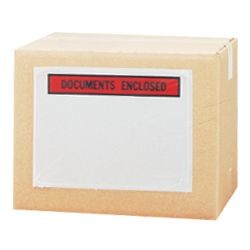
Branding / Document Wallets
-
200x150mmx66m - "Document Enclosed" Pouch TapeRegular price From £17.10 GBPRegular priceUnit price per
-
DL - Plain Document EnvelopesRegular price From £17.47 GBPRegular priceUnit price per
-
DL - "Document Enclosed" EnvelopesRegular price From £18.16 GBPRegular priceUnit price per
-
C7 - Plain Document EnvelopesRegular price From £14.75 GBPRegular priceUnit price per
-
C7 - "Document Enclosed" EnvelopesRegular price From £15.71 GBPRegular priceUnit price per
-
C6 - Plain Document EnvelopesRegular price From £23.32 GBPRegular priceUnit price per
-
C6 - "Document Enclosed" EnvelopesRegular price From £24.21 GBPRegular priceUnit price per
-
C5 - Plain Document EnvelopesRegular price From £43.80 GBPRegular priceUnit price per
-
C5 - "Document Enclosed" EnvelopesRegular price From £0.05 GBPRegular priceUnit price per
-
C4 - Plain Document EnvelopesRegular price From £45.74 GBPRegular priceUnit price per
-
C4 - "Document Enclosed" EnvelopesRegular price From £59.73 GBPRegular priceUnit price per


Branding / Document Wallets
Shipping paperwork is essential, but it’s also one of the easiest things to lose, damage, or separate from a parcel in transit. Branding / Document Wallets (often called “document enclosed” envelopes or packing list wallets) are designed to keep invoices, packing slips, delivery notes, customs paperwork, and return forms securely attached to the outside of cartons, satchels, and mailers. This category includes both plain document envelopes and “Document Enclosed” printed options across common sizes, plus a pouch tape format for creating a document pocket where you need it.
Branding / Document Wallets — Helpful Guide
Document wallets are pressure-sensitive, self-adhesive pouches/envelopes that stick to the outside of a shipment. They help warehouse teams present paperwork consistently, reduce misroutes caused by missing documents, and make it easier for carriers and receivers to locate the right forms quickly. Below is a practical guide to the main types in this collection and when each is typically used.
1) “Document Enclosed” envelopes (printed)
Printed “Document Enclosed” wallets clearly signal that paperwork is inside, which can speed up receiving and reduce the chance that documents are discarded with outer packaging. These are commonly used for invoices, packing lists, delivery dockets, and export paperwork that must remain visible and accessible.
-
C4 - "Document Enclosed" Envelopes
Large format for A4 documents without folding; suited to cartons and freight consignments where full-page paperwork is preferred. -
C5 - "Document Enclosed" Envelopes
Mid-size option for folded A4 (typically folded once) or multi-page sets that don’t require full A4 flat presentation. -
C6 - "Document Enclosed" Envelopes
Compact size for smaller paperwork sets, return slips, or folded documents where space on the parcel is limited. -
C7 - "Document Enclosed" Envelopes
Small format for minimal documentation such as small labels, short notes, or compact return instructions. -
DL - "Document Enclosed" Envelopes
Long format commonly used for invoices and delivery notes folded into thirds; a frequent choice for courier satchels and smaller cartons.
2) Plain document envelopes (unprinted)
Plain wallets provide the same protective function without printed messaging. They’re often chosen when the paperwork type varies (e.g., mixed shipments), when internal processes already identify the contents, or when a clean, neutral appearance is preferred.
-
C4 - Plain Document Envelopes
Best for A4 sheets kept flat; useful for invoices, compliance documents, and multi-page packs that should remain unfolded. -
C5 - Plain Document Envelopes
Good for folded A4 or thicker document sets; balances capacity with a smaller footprint on the carton. -
C6 - Plain Document Envelopes
Compact and versatile for folded paperwork, return slips, or smaller documentation bundles. -
C7 - Plain Document Envelopes
Small option for minimal inserts; helpful when you only need to attach a small note or compact paperwork. -
DL - Plain Document Envelopes
Designed for documents folded into thirds; commonly used for invoices, delivery notes, and dispatch paperwork.
3) Document pouch tape (create a pocket on demand)
When you need flexibility—such as unusual document sizes, variable paperwork thickness, or non-standard packaging shapes—pouch tape can be used to form a secure document pocket. It’s also useful for reinforcing edges or creating a sealed sleeve over paperwork placed on the carton.
-
200x150mmx66m - "Document Enclosed" Pouch Tape
A roll format that can be applied to create a document sleeve/pocket; helpful for variable paperwork and operational workflows that benefit from “cut-to-length” application.
Common uses and where document wallets help most
- Invoices and packing slips: Keeps paperwork with the shipment so receiving teams can reconcile goods quickly.
- Customs and export documentation: Helps ensure required forms remain accessible for inspection and clearance.
- Returns paperwork: Attaching return instructions externally can reduce confusion and speed up processing.
- Multi-parcel consignments: Helps each carton carry its own paperwork, reducing mix-ups across a shipment.
- Third-party logistics (3PL) operations: Supports consistent presentation across many clients and order types.
Case study: reducing “missing paperwork” exceptions in dispatch
Consider a warehouse shipping a mix of business-to-business cartons and direct-to-consumer parcels. The team prints invoices and packing slips at pack stations, but paperwork sometimes ends up inside the carton (hard to find at receiving) or gets separated from the parcel entirely. By standardising on external document wallets for B2B cartons and using a roll-based pouch tape for irregular shipments, the operation can reduce exceptions such as “paperwork missing,” speed up receiving checks, and improve traceability when a carrier queries a consignment.
In practice, the improvement usually comes from three small process changes: (1) selecting a wallet size that matches the document format, (2) applying wallets to a consistent location on the carton, and (3) ensuring the adhesive bonds to a clean, dry surface. These steps help keep documents legible and attached throughout handling.
How to choose the correct document wallet
Step 1: Match the wallet size to your paperwork format
Start with the document size you need to include and whether you want to fold it. If you want A4 paperwork to remain flat, a larger format is typically required. If folding is acceptable, smaller wallets can work well and may fit better on compact parcels.
- A4 kept flat: Choose a larger format such as C4.
- A4 folded once: A mid-size option such as C5 is often suitable.
- A4 folded into thirds: DL is commonly used for this fold style.
- Small notes or compact paperwork: C6 or C7 may be appropriate.
Step 2: Decide between printed vs plain
Printed “Document Enclosed” wallets are helpful when you want immediate visual identification for carriers and receivers. Plain wallets are useful when you prefer a neutral look or when your internal paperwork already clearly indicates what it is.
- Choose printed: When fast identification matters, or when shipments pass through multiple handling points.
- Choose plain: When you want flexibility across document types or a clean presentation.
Step 3: Consider your packaging surface and handling conditions
Adhesive performance depends on the surface and environment. Corrugated cartons generally provide a good bonding surface, while dusty cartons, textured films, or cold/condensation conditions can reduce adhesion. For best results, apply to a clean, dry area and press firmly across the full adhesive zone.
Step 4: Think about workflow efficiency
High-throughput packing lines often benefit from standardising on one or two wallet sizes for most orders, with a roll-based pouch tape available for exceptions. This reduces decision-making at the bench and helps maintain consistent placement and scanning visibility.
Best practices for application (to reduce peel, wrinkles, and unreadable paperwork)
- Place on a flat panel: Avoid carton seams, deep corrugations, or heavily curved surfaces where edges can lift.
- Keep barcodes visible: If paperwork includes barcodes, ensure the wallet window is smooth and not creased.
- Press from centre outward: This helps remove air pockets and improves edge seal.
- Avoid dusty cartons: Wipe away dust where possible; adhesion is strongest on clean surfaces.
- Protect against moisture: If shipments may be exposed to rain or condensation, ensure the wallet is fully sealed and positioned away from likely water run-off paths.
Operational tips: standard placement and compliance
Many shipping teams choose a consistent placement location (for example, the top-right of the largest carton face) so receivers know where to look. Consistency also helps internal audits: staff can quickly confirm that required paperwork is present before dispatch. For export shipments, ensure the correct documents are included and that any required information remains legible through the wallet window.
Frequently asked questions
What is the difference between a “Document Enclosed” wallet and a plain document wallet?
A “Document Enclosed” wallet is printed to clearly indicate paperwork is inside, helping carriers and receivers identify it quickly. A plain wallet is unprinted and more neutral, which can be useful when the document type varies or when you prefer minimal external messaging.
Which size should I choose for invoices and packing slips?
Choose based on your paper size and whether you will fold it. For A4 kept flat, a larger wallet is typically needed. If folding is acceptable, smaller sizes can work well. DL suits documents folded into thirds; C5 suits A4 folded once.
Do document wallets stick well to all cartons and mailers?
They generally adhere well to clean, dry corrugated cartons and many smooth packaging films. Adhesion can be reduced by dust, heavy texture, moisture, or very cold surfaces. Applying to a flat area and pressing firmly across the adhesive zone improves bond strength and reduces edge lift.
When is pouch tape a better option than pre-sized wallets?
Pouch tape is useful when document sizes vary, paperwork thickness changes, or packaging shapes are non-standard. Because it can be cut to length, it supports flexible workflows and can help create a secure sleeve over documents placed on the carton without relying on a fixed pouch size.
Should shipping documents be placed inside the carton or attached externally?
External placement helps receiving teams find paperwork quickly and can support customs or carrier checks without opening the carton. Internal placement can protect documents from weather but may slow receiving. Many operations attach key paperwork externally and keep sensitive documents inside when needed.