
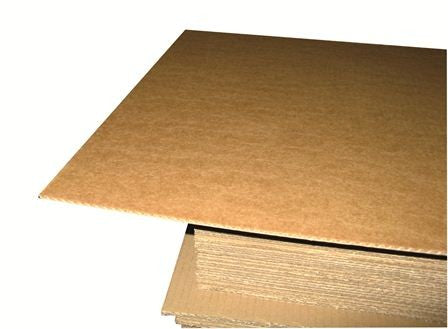
Boxes / Sheet Cardboard
-
2x2M - Double Wall 125TTBC Corry SheetsRegular price £1,055.04 GBPRegular priceUnit price per
-
260x320mm - BENDY FOLDING CARDS - 275gsm - White/GreyRegular price From £12.83 GBPRegular priceUnit price per


Boxes / Sheet Cardboard
Sheet Cardboard & Corrugated Sheets for Packing, Protection & Presentation
This category brings together two practical formats used every day in packing and production environments: large-format corrugated sheets (often used as pads, dividers, wraps, and custom box-making material) and flexible folding card sheets used for lightweight protection and presentation. The products listed here are supplied as flat sheets, making them easy to store, quick to cut or crease, and adaptable to many packing workflows.
On this page you’ll find:
- Large double wall corrugated sheets for heavy-duty protection and pallet work.
- Lightweight folding cards (also called bendy cards) for surface protection, wrapping, and separating items.
Boxes / Sheet Cardboard — Helpful Guide
Flat sheet materials are often chosen when you need protection without the bulk of a pre-made box, or when you want to create custom packaging on demand. Below is a practical guide to the sheet types in this category, what they’re typically used for, and how to match them to your packing task.
1) Double Wall Corrugated Sheets (heavy-duty pads & custom packaging)
Double wall corrugated board is built from two fluted layers with liner papers on the outside. This construction increases stacking strength and puncture resistance compared with single wall board, making it a common choice for heavier products, pallet layers, and export-style protection. Double wall sheets are frequently used as:
- Pallet layer pads to spread load and reduce point pressure.
- Interleaving sheets between products to prevent scuffing and abrasion.
- Edge and corner reinforcement when combined with other protective materials.
- Custom cartons, sleeves, and wraps when cut and creased to size.
- Temporary work surfaces for packing benches and assembly areas.
Product in this category:
-
2x2M - Double Wall 125TTBC Corry Sheets
Large-format double wall corrugated sheets suited to heavy-duty protection, pallet layering, and making bespoke protective wraps or dividers where extra rigidity is needed.
2) Folding Cards / Bendy Folding Cards (lightweight separators & surface protection)
Folding card sheets are a versatile option when you need a clean, lightweight barrier between items. They’re commonly used to protect finished surfaces, separate stacked products, and add stiffness to packs without adding much thickness. Depending on the job, folding cards can be used flat, wrapped around an item, or lightly creased to form a protective “U” or “L” profile.
Typical uses include:
- Surface protection for painted, polished, laminated, or printed items.
- Interleaving between sheets, panels, or components to reduce rubbing.
- Wrap-around protection for edges and corners on lighter products.
- Stiffening inserts inside packs to reduce bending during handling.
Product in this category:
-
260x320mm - BENDY FOLDING CARDS - 275gsm - White/Grey
A flexible folding card sheet designed for separating and protecting items. The 260x320mm format is convenient for hand packing, and the 275gsm weight provides a useful balance of stiffness and bendability.
Case Study: Reducing Transit Damage with Simple Sheet-Based Protection
A small dispatch team shipping mixed orders of flat components and boxed items noticed recurring issues: scuffed surfaces, crushed corners on inner packs, and instability on pallets when loads were mixed. Rather than switching every product to a heavier carton, they introduced a sheet-based protection routine.
For palletised shipments, they added large double wall corrugated pads as top and bottom layers and used additional sheets between uneven layers to level the stack. This reduced point loading and helped keep straps and stretch wrap from biting into cartons. For smaller parcels and multi-item packs, they introduced folding cards as interleaves between finished surfaces and as quick wrap-around edge guards for lighter items.
The result was a more consistent packing method that improved stability and reduced cosmetic damage, while keeping packing time predictable. The key was matching the sheet type to the risk: heavy-duty corrugated for compression and puncture resistance, and folding card for clean separation and scuff prevention.
How to Choose the Correct Sheet Cardboard
Choosing the right sheet material is mainly about understanding the hazards your pack will face: compression, puncture, abrasion, moisture, and handling impacts. Use the checklist below to narrow down the best option.
Step 1: Identify the main risk
- Compression / stacking: Choose a stronger corrugated sheet (often double wall) for pallet layers and heavy items.
- Puncture / edge impacts: Corrugated sheets provide better cushioning and resistance than thin card.
- Scuffing / surface marking: Folding cards are ideal as clean interleaves between items.
- Bending / flexing in transit: Use folding cards as stiffeners or combine with corrugated pads for rigidity.
Step 2: Match thickness and rigidity to the product
As a rule of thumb, heavier or more fragile items benefit from thicker corrugated protection, while lighter items often only need separation and surface protection. If you’re wrapping around an item, a bendable card can be easier to handle than thick corrugated board.
Step 3: Consider how the sheet will be used
- Cutting: Large corrugated sheets are commonly trimmed to create pads and dividers. Use safe cutting practices and appropriate tools.
- Creasing / scoring: Folding cards can be creased by hand for quick edge protection. Corrugated can be creased too, but may require more force or a scoring tool for neat folds.
- Layering: For pallets, sheets can be used as slip layers to improve stability and distribute load.
Step 4: Think about storage and handling
Flat sheets are space-efficient, but large formats need adequate storage area to prevent bending and edge damage. If your packing area is compact, smaller folding cards can be easier to keep at hand for quick use.
Common Applications for Sheet Cardboard
Pallet protection and load stabilisation
Corrugated sheets are frequently used as pallet layer pads to reduce carton damage and improve stack stability. A top sheet can also protect the load from strap marks and minor impacts during handling.
Dividers and separators inside cartons
Cut sheets into panels to create internal partitions, preventing items from contacting each other. Folding cards are especially useful when you need a clean, thin separator that won’t add much bulk.
Wrap-around edge protection
For products with vulnerable edges, a sheet can be wrapped around the perimeter to create a sacrificial layer. Folding cards are convenient for this on lighter items; corrugated sheets are better when impacts are more likely.
Temporary surface protection during production
Sheets can be placed on benches or between stacked components to protect finishes during assembly, storage, or internal transport.
Practical Tips for Better Results
- Allow clearance: If using sheets as internal pads, ensure they fit without bowing, which can transfer pressure to the product.
- Protect corners: Corners are often the first point of impact. Consider doubling up material at corners or using folded card profiles.
- Combine materials: Sheets work well with other protective packaging (for example, as a rigid layer alongside cushioning) to control movement and reduce abrasion.
- Keep sheets dry and flat: Store in a clean, dry area to maintain stiffness and avoid warping.
Q&A
What is the difference between corrugated sheets and folding card sheets?
Corrugated sheets have fluted layers between liners, creating thickness and cushioning that improves compression and puncture resistance. Folding card sheets are solid, thinner, and smoother, making them better for interleaving, surface protection, and lightweight stiffening where bulk must be minimal.
When should I choose double wall corrugated sheets?
Choose double wall corrugated sheets when loads are heavy, stacking pressure is high, or there is a higher risk of puncture and edge impacts. They are commonly used as pallet layer pads, heavy-duty dividers, and for creating rigid protective wraps around larger items.
How do I use folding cards to prevent scuffs and scratches?
Place folding cards between items wherever surfaces might rub during handling or transit. Use them as interleaves between stacked components, or lightly crease them to form a wrap-around barrier on edges. Ensure the card fully covers contact areas to reduce abrasion.
Can sheet cardboard be cut and creased to make custom packaging?
Yes. Many teams cut sheets into pads, dividers, and wraps, and crease them to form simple sleeves or edge guards. Corrugated sheets provide more structure for heavier items, while folding cards are easier to crease neatly for lighter protection and presentation tasks.
What size sheet should I choose for my packing process?
Select a sheet size based on how you’ll handle it and the coverage you need. Large sheets suit pallet layers and big items but require storage space. Smaller sheets are faster for hand packing and interleaving. Aim for full coverage without forcing sheets to bend.