
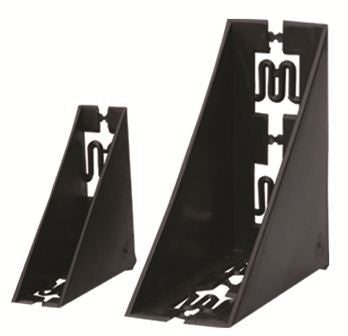
Protective / Edge & Corner Protection / Expanding Corners
-
60mmx60mmx28mm - Open CornersRegular price From £31.14 GBPRegular priceUnit price per
-
40x70 - Expanding CornersRegular price From £49.02 GBPRegular priceUnit price per


Protective / Edge & Corner Protection / Expanding Corners
Expanding Corners for Edge & Corner Protection
Expanding corners (sometimes called open corners) are protective packaging components designed to shield vulnerable edges and corners during handling, storage, and transit. They are commonly used when products have crisp corners, finished surfaces, or laminated edges that can chip, crush, or scuff under strap tension, stacking loads, or incidental impacts. Because corners concentrate force, adding a purpose-built corner protector can reduce damage even when the rest of the pack is well designed.
This collection focuses on expanding/open corner styles that sit over a corner and provide a protective buffer at the point of highest risk. They are typically used on items such as panels, frames, fabricated parts, boxed goods, and products with exposed corners where abrasion and compression are common. Expanding designs are especially useful when you need a corner protector that can accommodate slight variation in thickness or when you want a secure fit without complex assembly.
Expanding Corners — Helpful Guide
Below is a practical guide to the expanding corner styles in this category, how they are typically used, and how to match a corner protector to your product geometry and shipping method.
1) Open Corners (fixed geometry)
Open corners are corner protectors with a defined internal shape intended to sit over a product corner. They are often selected when the product thickness and corner profile are consistent from unit to unit and you want repeatable fit and protection.
-
60mmx60mmx28mm - Open Corners
Designed for applications where a broader corner face is helpful for distributing compression and reducing edge crush. The 28mm depth provides coverage down the edge while keeping the protector compact for efficient packing.
2) Expanding Corners (adaptive fit)
Expanding corners are designed to accommodate a range of thicknesses or slight dimensional variation. This can be helpful for products that vary due to tolerances, coatings, or multi-layer builds, or when you want one corner style to cover multiple SKUs.
-
40x70 - Expanding Corners
A versatile expanding corner format often used for protecting corners on larger panels or assemblies where a longer leg helps stabilize the protector and spread load away from the corner point. -
16x40 - Expanding Corners
A more compact expanding corner option suited to tighter packaging footprints, lighter products, or situations where you need corner protection without adding much bulk.
Where Expanding Corners Help Most
- Preventing edge crush under strapping: When cartons or bundled products are strapped, the strap can concentrate force at corners. Corner protectors help distribute that force over a larger area.
- Reducing scuffs and abrasion: Corners often rub against cartons, pallets, or adjacent products. A corner protector acts as a sacrificial surface.
- Improving stacking performance: In stacked loads, corners can take compressive forces. Properly sized corners can help maintain geometry and reduce deformation.
- Protecting finished edges: Painted, laminated, or coated edges can chip easily. Corner protection reduces direct contact and impact at the edge.
Case Study: Reducing Corner Damage on Flat Panels
A shipper of flat panels experienced recurring corner dents and edge scuffs during LTL shipments. The panels were packed in cartons with minimal void space, but handling impacts and pallet strap tension still caused damage at the corners. By adding expanding corners at each exposed corner before closing the carton, the shipper created a buffer that absorbed incidental impacts and spread strap pressure. The result was fewer corner-related claims and more consistent product presentation on arrival.
Key takeaways from this type of application:
- Corner protection is most effective when it is snug and cannot migrate during vibration.
- Using a corner style that matches the product thickness reduces shifting and improves repeatability.
- Corner protectors work best as part of a system (carton strength, internal blocking, and palletization all matter).
How to Choose the Correct Expanding Corner
Step 1: Measure the corner you need to protect
Start with the product thickness (or the thickness of the packaged unit if you are protecting a carton corner). Measure the edge thickness at the corner and note any features that affect fit (bevels, radii, protruding hardware, or protective films). Expanding corners can tolerate some variation, but you still want a stable, repeatable fit.
Step 2: Choose leg length based on load and handling
Longer legs generally provide more surface area to distribute compression and resist twisting or slipping. If your product is heavy, stacked, or strapped, a larger corner footprint can help. For lighter products or tight cartons, a smaller corner may be sufficient and can reduce dimensional weight impacts.
Step 3: Match the corner style to your packaging method
- Cartoned shipments: Use corners to protect the product itself, the carton corner, or both depending on where damage occurs. If the product corner is the concern, place corners directly on the product before inserting into the carton.
- Bundled or strapped loads: Corners are commonly placed under straps to prevent strap indentation and to spread force across the edge.
- Palletized shipments: Consider how stretch wrap and top loads interact with corners. Corners can help maintain edge integrity when loads shift.
Step 4: Confirm retention (prevent migration)
Corner protectors should stay in place through vibration and handling. If corners slide off during packing or transit, protection drops sharply. A snug fit, appropriate leg length, and compatible pack design (tight carton fit, blocking, or wrap/strap retention) help keep corners positioned correctly.
Step 5: Validate with a simple transit simulation
Before scaling up, test a small batch. Look for corner movement, carton deformation, and any new contact points created by the protector. If you ship via parcel, consider drop and vibration exposure; for freight, consider stacking and strap compression. Adjust size and placement based on observed failure modes.
Common Applications
- Panels and sheets: Protecting corners of laminated boards, acrylic sheets, composite panels, and similar flat goods.
- Frames and fabricated assemblies: Preventing corner dents and finish damage on metal or wood frames.
- Boxed products: Reinforcing carton corners where compression or abrasion is common.
- Strapped bundles: Reducing strap marks and edge crush on bundled items.
Best Practices for Use
- Use four corners consistently: If one corner is vulnerable, the others usually are too. Consistent placement improves protection and pack stability.
- Keep corners aligned: Misaligned corners can create pressure points. Ensure the protector sits squarely on the corner before closing the carton or applying straps.
- Pair with appropriate cushioning: Corners protect edges and points; they do not replace cushioning for broad surfaces. Use blocking, pads, or void fill as needed.
- Watch for over-tight strapping: Corner protectors help distribute force, but excessive strap tension can still deform cartons or products. Set tension to the minimum needed for load stability.
- Consider moisture and storage conditions: If protectors are stored in variable environments, keep them clean and dry to maintain consistent performance and packing efficiency.
Troubleshooting: If You Still See Corner Damage
- Damage at the very tip of the corner: Increase protector depth/coverage or ensure the protector is fully seated.
- Scuffing along the edge: Add edge protection along the length, or improve internal blocking so the product cannot rub the carton.
- Protector slipping off: Choose a better-fitting expanding corner, increase leg length, or use wrap/strap/carton fit to retain position.
- Carton corners crushing: Upgrade carton strength, reduce stacking load, or use corners to distribute compression under straps and top loads.
Q&A
What is the difference between an open corner and an expanding corner?
An open corner typically has a fixed internal geometry intended for consistent product thickness and repeatable fit. An expanding corner is designed to accommodate a range of thicknesses or slight dimensional variation, helping the protector stay seated when products vary or when one size must cover multiple items.
How do I size an expanding corner protector for my product?
Measure the thickness at the corner you want to protect and note any bevels, radii, or protrusions that affect fit. Choose a corner with leg lengths that cover enough edge to resist slipping. Confirm the protector stays in place during packing and does not interfere with carton closure.
Should corner protectors go on the product or on the carton?
Place corners on the product when the product’s finish or edge is the primary concern. Place corners on the carton when carton corner crush or strap indentation is the issue. In some shipments, using corners on the product inside the carton provides the most consistent protection.
Do expanding corners help with strap marks and edge crush?
Yes. When used under straps, corner protectors spread strap force over a larger area, reducing localized compression that can dent corners or crush edges. They also help keep straps aligned. Proper strap tension and stable palletization are still important for preventing deformation.
Why do corner protectors sometimes shift during transit?
Shifting usually happens when the fit is loose, the legs are too short, or the packaging allows movement during vibration. A snug expanding corner, adequate leg length, and retention from carton fit, wrap, or strapping help keep corners positioned. Testing a small batch can confirm stability.