
Protective / Bubble Wrap / Air Bag Void Fill
-
Mini Air Bag MachineRegular price £0.00 GBPRegular priceUnit price per
-
Air Bag Roll (Valve system) 1000mm Wide x 200 Meters x Single Valve per Tube, 75um/single layerRegular price From £175.69 GBPRegular priceUnit price per
-
200 x 175 Air Bag FilmRegular price From £80.17 GBPRegular priceUnit price per


Protective / Bubble Wrap / Air Bag Void Fill
Protective packaging is most effective when it is matched to the product’s fragility, weight, and the amount of empty space inside the carton. This collection focuses on inflatable void fill and cushioning solutions—air bag film and compatible equipment—designed to reduce movement in transit, absorb minor impacts, and help prevent scuffs, chips, and abrasion that can occur when items shift during handling.
Protective / Bubble Wrap / Air Bag Void Fill — Helpful Guide
Air-based void fill works by creating a lightweight cushion that occupies unused space in a shipping carton. Instead of relying on heavy loose fill, inflatable bags and pillows can be produced on demand, helping packers create consistent protection while keeping packaging tidy and easy to handle.
Types of protective packaging in this category
- Inflation equipment (air bag machine) — used to inflate film into pillows/bags at the packing station.
- Air bag / air pillow film (pre-made roll stock) — film that inflates into connected cushions for void fill and light cushioning.
Inflation equipment
-
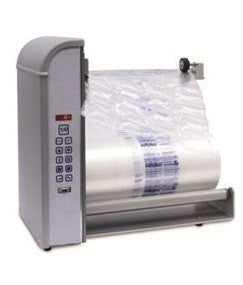
Mini Air Bag Machine
Compact inflation unit designed to convert compatible air bag film into inflated cushions at the point of packing. Useful for operations that want on-demand void fill without storing bulky pre-inflated materials.
Air bag / air pillow film (valve system)
-
Air Bag Roll (Valve system) 1000mm Wide x 200 Meters x Single Valve per Tube, 75um/single layer
Roll stock film for producing inflatable void fill cushions. The valve-style format is intended for use with compatible inflation equipment. The 75 micron single-layer construction is commonly selected for general void fill where low weight and efficient space-filling are priorities. -
200 x 175 Air Bag Film
Air bag film sized to create smaller cushions that can be placed around products or layered to reduce movement inside cartons. Smaller pillow formats are often chosen for compact boxes, mixed-SKU orders, or when you need more precise placement around corners and edges.
Where air bag void fill fits (and where it doesn’t)
Inflatable void fill is primarily designed to stop products from shifting inside a carton. It is ideal when the product is already in a retail box or has its own rigid structure and you mainly need to immobilize it. For very sharp, heavy, or highly fragile items, you may need additional cushioning or blocking/bracing so that concentrated loads do not puncture the inflated chambers.
- Best for: boxed goods, cosmetics, small appliances, parts in inner cartons, multi-item orders, and products that need clean, dust-free void fill.
- Use with care for: sharp edges, exposed metal corners, very heavy items, or products that can “knife” through cushions under compression.
Case study: reducing damage from in-box movement
A small fulfillment team shipping mixed consumer goods noticed that most damage claims were not from crushing, but from items sliding and colliding inside cartons—especially when orders contained multiple SKUs. By switching to on-demand inflatable void fill, packers could quickly create consistent cushions sized to each order. The result was fewer returns related to scuffing and corner damage, and faster packing because the void fill was produced at the station rather than pulled from large bins.
How to choose the correct air bag void fill
1) Start with the shipping carton and the “void volume”
Measure the empty space around the product once it is placed in the carton. Inflatable void fill performs best when it fills space firmly enough to prevent movement, without overstuffing. Overfilling can increase outward pressure on carton panels and may contribute to bulging or seam stress.
2) Match cushion size to packing style
- Smaller cushions (like the format produced from 200 x 175 Air Bag Film) are easier to position around corners, between multiple items, or in narrow gaps.
- Larger connected chambers (commonly produced from wider rolls such as Air Bag Roll (Valve system) 1000mm Wide x 200 Meters x Single Valve per Tube, 75um/single layer) can fill bigger voids quickly and are efficient for higher-throughput packing lines.
3) Consider film thickness and expected handling
Film thickness (often expressed in microns) influences puncture resistance and how the cushion behaves under compression. A 75 micron single-layer film is frequently used for general void fill and light cushioning. If shipments face rough handling, long transit routes, or heavier products, consider testing with higher puncture resistance solutions or adding protective wraps around sharp edges before placing cushions.
4) Confirm compatibility with your inflation equipment
Air bag film formats vary (including valve systems and other feed/inflation styles). Ensure the film you select matches the machine’s intended format and settings. A compact unit such as the Mini Air Bag Machine can be a practical choice when you want to inflate cushions on demand at a single packing bench or in a small shipping area.
5) Build a simple packing method (repeatable steps)
Consistency reduces damage. A common approach is: place a base layer of cushions, insert the product, add side cushions to prevent lateral movement, then top off with a final layer so the product cannot bounce vertically when the carton is shaken. The goal is immobilization, not compression.
Packing tips for better protection
- Prevent punctures: If products have sharp corners, add a protective wrap or corner protection before placing inflatable cushions.
- Don’t underfill: If the carton can be shaken and the product moves, add more cushions or use smaller pillows to fill gaps.
- Don’t overfill: If the carton bows outward or is difficult to close, remove some cushions and re-balance placement.
- Use blocking for heavy items: For dense products, combine void fill with corrugated inserts or molded supports to distribute loads.
- Keep seals and tape in mind: A well-filled carton still needs proper closure; ensure top flaps meet without excessive force.
Operational considerations (storage, speed, and waste)
One advantage of inflatable void fill is storage efficiency: film rolls take far less space than pre-inflated materials. On-demand inflation can also improve packing speed by keeping material at the workstation. For disposal, many inflatable cushions are mostly air by volume; users typically deflate them to reduce bin space. Always follow local recycling guidance for plastic films.
Common applications
- E-commerce fulfillment: fast void fill for mixed orders and varying box sizes.
- Warehousing and distribution: stabilizing inner cartons on pallets or in master cartons.
- Spare parts shipping: preventing abrasion between components and reducing rattling.
- Gift and presentation items: clean, lightweight cushioning that avoids dust and loose particles.
Quality checks you can run in minutes
- Shake test: Close the carton and gently shake; there should be minimal movement.
- Drop awareness: Consider the likely drop height in your carrier network; add protection for corners and edges accordingly.
- Compression check: Press on carton panels; if cushions collapse too easily, adjust fill quantity or cushion placement.
- Puncture review: Inspect returned packages for puncture points; add wraps or change cushion placement near sharp features.
Questions & Answers
What is the difference between void fill and cushioning?
Void fill is used to occupy empty space in a carton so products do not shift during transit. Cushioning is intended to absorb impact energy. Inflatable air bags can do both for light-to-moderate needs, but heavy or fragile items may require additional cushioning materials.
How do I know what size air pillows to use?
Choose pillow size based on the gaps you need to fill and how precisely you must place protection. Smaller pillows fit narrow spaces and mixed-item orders. Larger connected chambers fill big voids quickly. The best choice is the one that prevents movement without overstuffing.
Does film thickness (microns) matter for shipping protection?
Yes. Thicker films generally provide better puncture resistance and can hold up better under compression and rough handling. Thinner films may be sufficient for lightweight products and short transit routes. If you see punctures or deflation, test a more robust film or add edge protection.
Can inflatable void fill replace bubble wrap for all shipments?
Not always. Inflatable void fill is excellent for immobilizing items inside a carton, especially when products are already boxed. Bubble wrap can be better for wrapping irregular shapes or providing surface protection against scuffs. Many pack-outs use both: wrap the item, then fill remaining voids.
What causes air pillows to deflate during transit?
Deflation is usually caused by punctures from sharp edges, abrasion against rough surfaces, or insufficient sealing/inflation settings. It can also happen if pillows are over-compressed in an undersized carton. Reduce risk by protecting sharp corners, using correct pillow placement, and avoiding overfilling.