
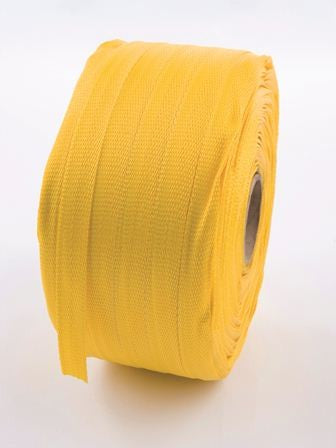
Strapping / Polyester Strapping Banding
-
12mmx2000mx0.8 - Polyester Blue Machine Strapping (406x150 core)Regular price From £44.63 GBPRegular priceUnit price per
-
19mmx1200m - Polyester Machine StrappingRegular price From £84.11 GBPRegular priceUnit price per
-
16mmx1750m - Polyester Machine StrappingRegular price From £84.11 GBPRegular priceUnit price per
-
16mmx1000m - Polyester Machine StrappingRegular price From £84.11 GBPRegular priceUnit price per


Strapping / Polyester Strapping Banding
Polyester (PET) machine strapping is a high-strength, low-creep banding material used to unitize, stabilize, and secure palletized loads for storage and transport. It is commonly selected as an alternative to steel strapping for many applications because it offers strong retained tension, consistent performance through temperature changes, and safer handling characteristics (no sharp edges or rust). In machine-grade formats, PET strapping is supplied on large cores designed to run smoothly through semi-automatic and automatic strapping equipment.
Polyester Strapping Banding — Helpful Guide
This collection focuses on machine-grade polyester strapping in several common widths and roll lengths. Machine strapping is engineered for consistent feed, weld/seal reliability, and predictable tensioning in powered tools and strapping machines. Below is a practical guide to the types, typical use cases, and how to match strap size to your load and equipment.
Types of strapping in this category
-
Polyester Blue Machine Strapping (PET)
PET machine strapping is designed for powered tensioning and heat-weld sealing in strapping machines. It is widely used for pallet loads such as cartons, building products, appliances, and general distribution shipments where retained tension matters.
Products available in this collection (with quick selection notes)
-
12mmx2000mx0.8 - Polyester Blue Machine Strapping (406x150 core)
A narrower machine strap option often chosen for lighter-to-medium pallet loads where you want good tension retention with lower strap consumption per cycle. The 406x150 core format is commonly used on many machine dispensers. -
16mmx1000m - Polyester Machine Strapping
A versatile mid-width strap frequently used for general pallet unitizing. The shorter roll length can be convenient where roll changes are acceptable or where equipment/space favors smaller roll inventories. -
16mmx1750m - Polyester Machine Strapping
Similar width to other 16mm options but with a longer roll length to reduce changeovers. Often selected for higher-throughput lines or when consistent run time between roll swaps is important. -
19mmx1200m - Polyester Machine Strapping
A wider strap option typically used for heavier or more demanding loads where higher break strength and greater contact area help resist shifting, edge damage, or compression during transit.
How polyester (PET) machine strapping works in a strapping system
Most machine-grade PET strapping systems follow the same basic cycle:
Feed: The machine dispenses strap around the load.
Tension: Powered rollers pull the strap tight to remove slack and apply a set tension level.
Seal: Many machines use heat-weld (friction weld) sealing, fusing overlapping strap layers into a strong joint.
Cut: The strap is cut and the cycle repeats.
Because the seal is created by controlled heat and pressure, machine strapping benefits from consistent strap thickness, surface finish, and stiffness. These factors influence feed reliability, tension consistency, and weld quality.
Key performance concepts (what matters most when choosing PET strap)
1) Width and thickness (strength and stability)
In general, wider and/or thicker PET strap provides higher break strength and improved resistance to load movement. Typical market specifications for machine-grade PET strapping commonly fall into ranges such as:
12 mm machine PET: often paired with thicknesses around 0.6 mm and break strengths in the ~3,300–3,500 N range.
16 mm machine PET: often paired with thicknesses around 0.7 mm and break strengths around ~4,000 N.
19 mm machine PET: often paired with thicknesses around 0.8–1.0 mm and break strengths roughly ~5,500–7,500 N.
Exact values vary by strap construction and thickness, but these ranges are useful for initial sizing decisions.
2) Elongation and retained tension (load stability over time)
PET strapping typically has moderate elongation at break (often around ~8–20% depending on strap design). In practical terms, PET can absorb shocks and vibration better than very rigid materials, while still maintaining useful retained tension on loads that settle slightly during handling.
3) Core size and machine compatibility
Machine-grade PET strapping is commonly supplied on large cores such as 406 x 150 mm (sometimes listed by suppliers as 406 x 148 mm or 407 x 150 mm). Matching core size to your dispenser or machine is essential for safe mounting, smooth payout, and consistent feed.
4) Surface finish and feed behavior
Machine strapping is engineered to run through guides, rollers, and weld heads. If you experience feed issues, inconsistent tension, or weld variability, the cause is often a mismatch between strap stiffness/finish and the machine’s settings (tension level, weld time, cooling time, and strap track condition).
Case study: reducing load shift on palletized cartons
A distribution operation shipping mixed cartons on standard pallets experienced occasional load shift and corner damage during transit. The team reviewed three factors: strap width, tension settings, and edge protection. By moving from a narrower strap to a mid-width machine PET strap, adding corner/edge protection on vulnerable cartons, and standardizing tension and weld settings across shifts, they reduced rework and improved load integrity. The key takeaway: strap selection works best when paired with correct tension and proper load protection.
How to choose the correct polyester strapping for your application
Step 1: Identify your load characteristics
Weight: Heavier loads generally require wider/thicker strap.
Rigidity: Compressible loads (cartons, insulation, some bagged goods) may settle after strapping; PET’s tension retention helps, but you may also need corner boards or edge protectors.
Edges: Sharp edges can cut strap; use edge protection and consider wider strap to distribute pressure.
Stability: Tall or narrow pallets may need additional straps or different strap placement patterns.
Step 2: Match strap size to required performance
12 mm is often used for lighter unitizing and bundling where machine throughput and material efficiency are priorities.
16 mm is a common general-purpose choice for many pallet loads.
19 mm is often selected for heavier loads, higher tension requirements, or when you want more surface area to reduce localized pressure.
Step 3: Confirm equipment requirements
Core size: Verify your machine/dispenser accepts the roll core (e.g., 406 x 150 mm).
Strap path: Ensure the strap width fits guides and tracks.
Seal method: Confirm your machine uses heat-weld sealing compatible with PET strap.
Settings: Adjust tension, weld time, and cooling time to match strap thickness and load type.
Step 4: Validate with a simple in-house test
Before standardizing a strap, run a short trial: strap several representative pallets, check weld consistency, observe any strap edge damage, and re-check tension after the load has settled (e.g., after 30–60 minutes). If tension drops significantly, consider adjusting tension settings, adding edge protection, or moving up a strap size.
Best practices for safer, more reliable strapping
Use edge protection on sharp or fragile corners: Helps prevent strap cutting and reduces product damage.
Keep strap tracks clean: Dust and debris can affect feed and weld quality.
Don’t over-tension compressible loads: Excess tension can crush cartons and lead to strap loosening after settling.
Inspect welds regularly: A consistent weld is critical; inconsistent seals often indicate incorrect settings or worn components.
Store rolls properly: Keep strapping dry and protected from extreme heat to maintain consistent performance.
Common applications for machine-grade PET strapping
Pallet unitizing for cartons and mixed loads
Bundling building materials and manufactured goods
Stabilizing loads for LTL shipments and warehouse transfers
General distribution where retained tension and shock absorption are important
Questions & Answers
What is the difference between polyester (PET) machine strapping and hand strapping?
Machine strapping is engineered for consistent feeding, tensioning, and heat-weld sealing in powered equipment. It is typically supplied on larger cores and made to tighter dimensional tolerances. Hand strapping is usually used with manual tools and may use different seals or buckles.
How do I choose between 12mm, 16mm, and 19mm PET strapping?
Start with load weight, stability, and edge conditions. Narrower straps can suit lighter loads and higher cycle efficiency, while wider straps generally provide higher break strength and better pressure distribution. Also confirm your machine’s strap width capability and core size requirements.
Why does my strap feel loose after strapping a pallet?
Loads often settle after tensioning, especially cartons or compressible products, which can reduce strap tension. Check tension settings, add edge protection or corner boards, and ensure the strap is sized appropriately. Also verify weld quality and that the strap path is clean.
What does the 406 x 150 core size mean, and why is it important?
It refers to the approximate core diameter and core width used to mount the roll on a dispenser or machine. Using the correct core size helps the roll fit securely, unwind smoothly, and feed consistently. Mismatched cores can cause payout issues and machine downtime.
Is PET strapping suitable for outdoor storage or temperature changes?
PET strapping generally performs well across typical warehouse and transit temperature ranges and can retain tension better than some alternatives as conditions change. For outdoor exposure, consider UV and weathering factors, protect rolls during storage, and validate performance with a short trial.