
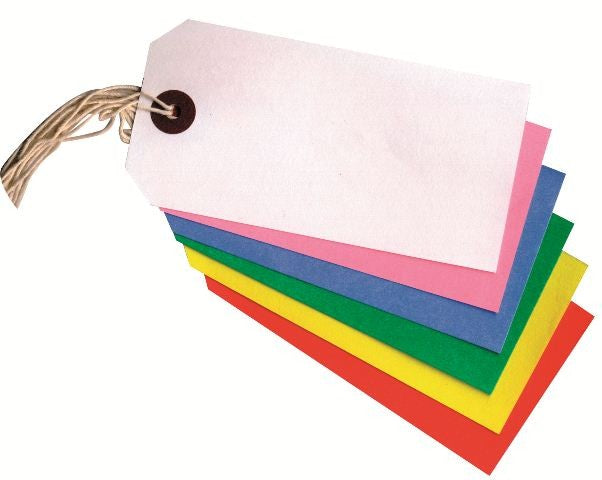
Branding / Tags / Swing Tags - Unstrung
-
 Sold outPL55 - White U/S Tags-on-RollRegular price From £8.31 GBPRegular priceUnit price per
 -
 Sold outE23 - Yellow Unstung TagsRegular price From £7.43 GBPRegular priceUnit price per


Branding / Tags / Swing Tags - Unstrung
Unstrung Swing Tags (Branding Tags) — Overview
Unstrung swing tags (also called unstrung hang tags) are pre-cut tags supplied without string, elastic, or fasteners. They’re commonly used for product identification, pricing, size/colour coding, care notes, and promotional messaging at point of sale. Because they arrive unstrung, you can choose the attachment method that best suits your product (tag pins, loop locks, string, ribbon, or elastic) and your packing workflow.
This collection focuses on practical, ready-to-use stock tag formats: plain white unstrung tags in popular sizes, coloured variants for quick visual coding, pre-printed “Sale Was/Now” tags, and tags supplied on a roll for faster application. These options are widely used across apparel, footwear, gifts, homewares, and general retail where clear information and consistent presentation matter.
Unstrung Swing Tags — Helpful Guide
Below is a guide to the main tag types in this category and how they’re typically used. Product links are included so you can quickly compare formats and choose the most suitable option for your application.
1) Plain white unstrung swing tags (rectangular stock sizes)
Plain white tags are a versatile choice when you need a clean, neutral tag for handwriting, stamping, over-labelling, or adding a small sticker (e.g., barcode, price, SKU, or size). They’re often used as a base tag when branding is applied separately (stamp, label, or overprint).
-
26U (30x46) - White Unstrung Tags
Compact rectangular tags suited to smaller items or where you want minimal tag presence while still leaving room for price/SKU and short notes. -
23U (22x32) - White Unstrung Tags
Smaller-format tags ideal for jewellery, accessories, small gift items, or any product where space is limited and a discreet tag is preferred.
2) Stock print unstrung tags (pre-printed formats)
Stock print tags are pre-printed with common retail messaging so staff can apply them quickly and consistently. They help standardise presentation across multiple locations or teams and reduce handwriting time.
-
SC9 - (Stock print) White Unstrung Tags
Pre-printed white unstrung tags designed for fast, consistent marking in-store or during packing, reducing variability compared with handwritten tags.
3) Promotional “Sale Was/Now” unstrung tags
“Was/Now” tags are used to communicate price changes clearly. They’re typically applied during markdown events, seasonal promotions, clearance periods, or when rotating stock. A consistent “Was/Now” layout improves readability and helps customers understand the change at a glance.
-
Sale Was/Now Unstrung Tags
Pre-printed promotional tags that provide dedicated spaces for previous and current pricing, supporting clear, uniform markdown communication.
4) Coloured unstrung tags (quick visual coding)
Coloured tags are commonly used for rapid identification—such as size runs, departments, delivery batches, staff-only codes, or stock status. Colour coding can reduce picking errors and speed up sorting when multiple variants are handled together.
-
E23 - Yellow Unstung Tags
Bright colour option for high visibility—useful for priority items, special handling notes, or quick category separation. -
E23 - Pink Unstung Tags
Distinct colour option often used for promotions, returns processing, or internal coding where immediate recognition is helpful.
5) Unstrung tags on a roll (for faster application)
Tags-on-roll formats are designed for speed and workflow efficiency. They’re often used where tags are applied in higher volumes, or where a roll format integrates better with packing benches and dispensing setups. Roll supply can also help keep work areas tidy and reduce time spent handling loose stacks.
-
PL55 - White U/S Tags-on-Roll
Roll-supplied white unstrung tags intended to streamline tagging in busy environments and support consistent, repeatable application.
Case Study: Reducing Tagging Time During Peak Periods
A multi-category retailer preparing for a seasonal rush needed to speed up tagging while keeping information consistent across teams. Previously, staff used mixed tag sizes and handwritten notes, which led to uneven presentation and occasional pricing/variant confusion.
They standardised on a small set of tag formats: plain white unstrung tags for everyday items, “Was/Now” tags for markdowns, and tags-on-roll for high-volume lines. Coloured tags were reserved for internal coding (e.g., urgent replenishment, online orders, or returns). By limiting the number of formats and assigning each a clear purpose, staff training became simpler and tagging became more uniform. The roll format reduced handling time at the packing bench, while pre-printed promotional tags improved readability and reduced mistakes during markdown changes.
How to Choose the Correct Unstrung Swing Tag
Step 1: Decide what the tag must communicate
- Price/SKU only: a smaller plain white tag is often sufficient.
- Markdown messaging: choose a dedicated “Was/Now” format to avoid confusion.
- Internal coding: coloured tags can speed up sorting and reduce picking errors.
- Standardised notes: stock print tags help keep information consistent across staff and locations.
Step 2: Match the tag size to the product and available space
Smaller items (jewellery, accessories, compact giftware) typically benefit from smaller tags that won’t overwhelm the product. Larger items can accommodate bigger tags, but even then, a compact tag can look cleaner if you only need minimal information. If you’re unsure, choose the smallest size that still allows legible writing and any required stickers.
Step 3: Choose the supply format that fits your workflow
- Loose tags: flexible for low-to-medium volumes and easy to distribute across workstations.
- Tags on a roll: ideal for higher volumes, packing benches, and repeatable processes where speed matters.
Step 4: Plan the attachment method (since tags are unstrung)
Because these tags are supplied without string, you can select the fastening method that best suits the product material and presentation. Common options include loop locks for quick application, string/ribbon for a premium look, or tag pins for textiles. Consider whether the attachment needs to be removable, tamper-evident, or gentle on delicate materials.
Step 5: Consider writing and labelling needs
If staff will handwrite information, ensure there’s enough space for clear, consistent writing. If you apply barcode or price stickers, check that the tag face can accommodate the label without covering essential fields (especially on “Was/Now” tags). For busy environments, pre-printed formats can reduce variability and improve legibility.
Best Practices for Using Unstrung Swing Tags
Keep information consistent
Decide on a standard layout for handwritten fields (e.g., SKU top-left, price bottom-right) and train staff to follow it. Consistency improves speed and reduces errors when multiple people handle the same product range.
Use colour coding intentionally
Colour coding works best when each colour has a single meaning. Document the code (even a simple one-page guide) so new staff can follow it. Avoid using too many colours for too many meanings, which can reduce clarity.
Prevent smudging and improve legibility
Choose writing tools that dry quickly and remain readable. If tags may be exposed to handling, friction, or humidity, test your pen/marker choice on a sample tag and allow adequate drying time before packing.
Reduce rework during markdowns
For price changes, dedicated “Was/Now” tags can reduce confusion and rework compared with crossing out prices or layering multiple stickers. They also help ensure the previous and current prices are clearly separated and easy to read.
Streamline high-volume tagging
If you tag many items per day, consider a roll format at the packing bench and keep attachments (loop locks, pins, or string) within easy reach. A simple, repeatable workstation layout can reduce handling time and improve accuracy.
Common Uses by Industry
- Apparel & footwear: size/colour identification, SKU and price display, markdown communication.
- Gifts & homewares: product details, care notes, barcode labels, and presentation consistency.
- Jewellery & accessories: compact tags for pricing and SKU tracking where space is limited.
- Warehousing & stockrooms: internal coding for batches, returns, and pick/pack prioritisation.
Q&A
What does “unstrung” mean for swing tags?
Unstrung swing tags are supplied without any string, elastic, or fastener attached. You add your preferred attachment method during packing or in-store tagging. This gives flexibility to match the fastener to the product, presentation style, and handling requirements.
When should I choose tags-on-roll instead of loose tags?
Tags-on-roll are typically best for higher-volume tagging or when you want a more streamlined workstation. A roll format can reduce handling time, keep tags organised, and support repeatable application. Loose tags are often fine for lower volumes or multiple stations.
Are coloured unstrung tags only for promotions?
No. Coloured tags are often used for internal coding such as size runs, departments, delivery batches, returns, or priority handling. The key is to assign each colour a clear meaning and keep that meaning consistent so staff can identify items quickly and accurately.
How do “Was/Now” tags help during markdowns?
“Was/Now” tags provide dedicated spaces for the previous and current prices, improving clarity and reducing mistakes. They can also reduce rework compared with crossing out prices or layering multiple stickers, especially when many items are repriced in a short time.
How do I choose the right tag size for my product?
Choose the smallest tag that still allows legible writing and any required labels (such as barcodes). Smaller items usually look better with compact tags, while larger items can accommodate more space if needed. Testing a sample on the product helps confirm fit and readability.