
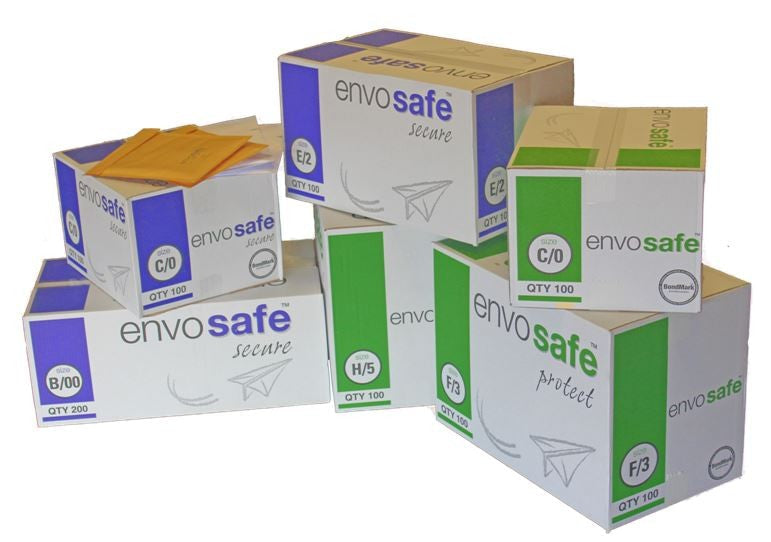
Postal / Bubble Lined Mailers / Envosafe Protect
-
K/7 - White Envosafe Protect 350 x 470mmRegular price From £16.10 GBPRegular priceUnit price per
-
J/6 - White Envosafe Protect 300 x 440mmRegular price From £13.60 GBPRegular priceUnit price per
-
G/4 - White Envosafe Protect 240 x 330mmRegular price From £18.34 GBPRegular priceUnit price per
-
CD - White Envosafe Protect BagsRegular price From £9.36 GBPRegular priceUnit price per
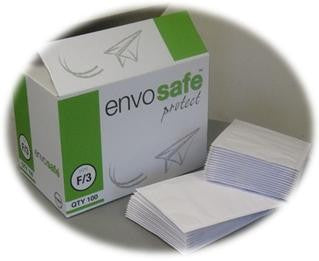
Postal / Bubble Lined Mailers / Envosafe Protect
See also: Envosafe Secure
| Order Code | Description |
Internal Dimensions (mm) |
Royal Mail | Pack Quantity |
| 15MA000 | Protect - white A/000 | 110 x 165 | letter | 200 |
| 15MB00 | Protect - white B/00 | 120 x 215 | letter | 200 |
| 15MC0 | Protect - white C/0 | 150 x 215 | letter | 100 |
| 15MD1 | Protect - white D/1 | 180 x 265 | large letter | 100 |
| 15ME2 | Protect - white E/2 | 220 x 265 | large letter | 100 |
| 15MF3 | Protect - white F/3 | 230 x 335 | large letter | 100 |
| 15MG4 | Protect - white G/4 | 240 x 335 | large letter | 100 |
| 15MH5 | Protect - white H/5 | 270 x 360 | packet | 100 |
| 15MJ6 | Protect - white J/6 | 300 x 445 | packet | 50 |
| 15MK7 | Protect - white K/7 | 350 x 470 | packet | 50 |
| 15MK7 | Protect - white K/7 | 350 x 470 | packet | 50 |
Postal Bubble Lined Mailers (Envosafe Protect) — Quick Overview
Bubble lined mailers are designed to protect items in transit while keeping parcels lightweight and easy to handle. This collection covers white “Protect” bubble mailers in common postal-friendly formats, with internal sizes ranging from 110 x 165 mm up to 220 x 265 mm. The range includes options typically used for letter and large-letter formats, helping you match packaging to both product size and mailing requirements.
Envosafe Protect — Helpful Guide
This category focuses on cushioned mailers that combine an outer envelope with an internal bubble lining. They are commonly used for shipping small, fragile, or scratch-prone items where a rigid box would be unnecessary. The key selection factors are internal dimensions, thickness of the contents, and how much clearance you need for easy insertion and sealing.
Types of packaging in this category
-
White bubble lined mailers (Protect series)
A general-purpose padded mailer format intended to reduce scuffing and minor impact damage during handling. Choose the size based on the internal dimensions shown on the page table.- Protect - white A/000 (Order code 15MA000) — internal 110 x 165 mm; commonly aligned with letter format for very small items.
- Protect - white B/00 (Order code 15MB00) — internal 120 x 215 mm; letter format; useful when you need extra length for slim products.
- Protect - white C/0 (Order code 15MC0) — internal 150 x 215 mm; letter format; a wider option for flat items.
- Protect - white D/1 (Order code 15MD1) — internal 180 x 265 mm; large letter format; suited to larger flat goods and bundled items.
- Protect - white E/2 (Order code 15ME2) — internal 220 x 265 mm; large letter format; for bulkier or wider items that still ship efficiently.
Case Study: Reducing Damage Without Switching to Boxes
A small fulfilment operation shipping mixed small goods (flat accessories, small components, and occasional fragile items) often starts with paper envelopes to keep postage low. Over time, customer returns can increase due to corner dents, surface scratches, or cracked low-profile items. Switching to bubble lined mailers can reduce these issues by adding cushioning while keeping the parcel flexible and lightweight. The practical improvement usually comes from (1) selecting the correct internal size so items don’t rattle, and (2) adding a simple internal wrap for sharp edges or heavy parts.
In day-to-day packing, the biggest gains typically come from standardising a small set of sizes (for example, one letter size and one large-letter size) and training packers to leave consistent clearance for sealing. This reduces packing time and helps maintain predictable parcel thickness.
How to Choose the Correct Bubble Lined Mailer
1) Measure the product correctly (and include protective layers)
Use the product’s length x width x thickness after any internal protection is applied (e.g., tissue, a small poly bag, or a thin foam sheet). Bubble lined mailers are sized by internal dimensions, so the usable space is the inside of the envelope, not the outside.
2) Allow clearance for easy insertion and reliable sealing
As a rule of thumb, leave a little extra room in both length and width so the item slides in without forcing. If you have to push the item into the mailer, you risk stressing the seams and creating a poor seal. Extra clearance also helps when packing multiple items together.
3) Consider thickness and postal format
The table on this page indicates typical postal format alignment (e.g., letter vs large letter). Thickness is often the limiting factor: even if an item fits in length and width, a bulky product can increase parcel depth. If your shipments vary, test-pack a sample item and check the final thickness after sealing.
4) Match cushioning to risk
Bubble lining helps with minor impacts and abrasion, but it is not a substitute for rigid protection when shipping highly fragile items. For sharp corners, heavy metal parts, or items with protrusions, add an internal wrap so the product doesn’t puncture the lining or outer film.
5) Choose the smallest size that fits comfortably
Oversizing can increase movement inside the mailer, which can lead to edge wear and corner damage. A snug-but-not-tight fit reduces shifting and helps the cushioning do its job. If you need to include paperwork, consider whether it should be folded or placed behind the item to keep the face protected.
Practical Packing Tips (to Improve Protection and Consistency)
- Keep labels flat: Apply shipping labels to a smooth area to reduce scanning issues and avoid wrinkles.
- Protect corners: For items with sharp edges, add a thin internal sleeve or wrap to prevent punctures.
- Prevent rattling: If there is spare space, add a small void-fill sheet so the item doesn’t slide.
- Seal cleanly: Ensure the sealing area is free from dust and product debris; press firmly along the full width.
- Batch by size: Keep the most-used sizes at the packing bench to reduce handling time and mistakes.
Common Use Cases by Size (Examples)
Exact fit depends on thickness and how flexible the contents are, but the internal dimensions on this page provide a reliable starting point:
- A/000 (110 x 165 mm): very small flat items, small components, or compact accessories.
- B/00 (120 x 215 mm): slim items needing extra length; small bundles where thickness stays low.
- C/0 (150 x 215 mm): wider flat items; multiple small items packed together.
- D/1 (180 x 265 mm): larger flat goods; thicker bundles that still suit large-letter handling.
- E/2 (220 x 265 mm): wider items and multi-item packs where you need extra width for easy insertion.
Storage, Handling, and Quality Checks
To keep mailers performing consistently, store them in a clean, dry area away from direct heat sources. Before packing, do a quick check for crushed corners or damaged seals (especially if cartons have been compressed in storage). During packing, avoid overfilling: forcing the flap closed can compromise the seal and increase the chance of opening during transit.
Questions & Answers
Are the sizes listed for bubble lined mailers internal or external dimensions?
The sizes shown for this collection are internal dimensions, meaning the usable space inside the mailer. External measurements are larger because they include the outer material and seams. Always measure your product and any internal wrapping, then choose a mailer with comfortable internal clearance.
How much extra space should I allow when choosing a padded mailer?
Allow enough clearance so the item slides in easily and the flap closes without strain. A small margin in both length and width helps prevent seam stress and improves sealing. If packing multiple items, add extra room to avoid bulging and uneven thickness.
Can bubble lined mailers replace boxes for fragile items?
They can reduce scuffs and minor impact damage for many small items, but they are not a full replacement for rigid packaging. If an item is highly fragile, heavy, or has sharp corners, use additional internal protection or consider a rigid mailer or box to prevent crushing.
What causes padded mailers to split or open during transit?
Common causes include overfilling, forcing the flap closed, poor adhesion due to dust or debris on the sealing area, and sharp edges inside the pack. Choosing the correct internal size, adding a protective wrap for corners, and pressing the seal firmly across the full width helps reduce failures.
How do I keep parcels within letter or large-letter requirements?
Start with a mailer size aligned to the intended format, then test-pack a typical order and measure the final thickness after sealing. Thickness often changes with bundled items and paperwork. Selecting the smallest mailer that fits comfortably and keeping contents flat helps maintain consistent parcel depth.