
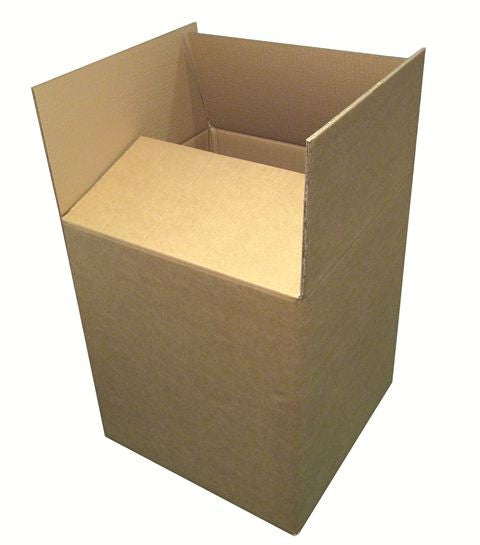
Boxes / Double Wall Boxes
-
610x375x405 (24x15x16) - D/W CartonsRegular price From £2.74 GBPRegular priceUnit price per
-
405x405x405 (16x16x16) - D/W CartonsRegular price From £2.24 GBPRegular priceUnit price per
-
760x455x305 (30x18x12) - D/W CartonsRegular price From £2.49 GBPRegular priceUnit price per
-
610x457x457 (24x18x18) - D/W Vari-Depth CartonsRegular price From £4.72 GBPRegular priceUnit price per
-
505x505x505 (20x20x20) - DW CartonsRegular price From £3.98 GBPRegular priceUnit price per
-
457x457x457 (18x18x18) - D/W CartonsRegular price From £3.24 GBPRegular priceUnit price per
-
455x455x300 (18x18x12) - D/W CartonsRegular price From £2.99 GBPRegular priceUnit price per
-
355x355x355 (14x14x14) - D/W CartonsRegular price From £1.75 GBPRegular priceUnit price per
-
305x305x305 (12x12x12) - D/W CartonsRegular price From £1.17 GBPRegular priceUnit price per
-
305x225x150 (12x9x6) - D/W CartonsRegular price From £0.62 GBPRegular priceUnit price per
-
250x250x250 (10x10x10) - D/W CartonsRegular price From £0.75 GBPRegular priceUnit price per
-
305x225x125 (12x9x5) - D/W Cartons - discontinuedRegular price From £0.60 GBPRegular priceUnit price per
-
610x457x457 (24x18x18) - D/W CartonsRegular price From £4.23 GBPRegular priceUnit price per


Boxes / Double Wall Boxes
Double wall boxes (often called double wall cartons) are heavy-duty corrugated shipping boxes designed for higher compression strength, improved puncture resistance, and better protection when loads are dense, fragile, or stacked during storage and transit. Compared with standard single-wall cartons, double wall board uses an extra corrugated layer, creating a thicker structure that helps reduce panel bowing and corner crush in tougher distribution environments.
Boxes / Double Wall Boxes — Helpful Guide
This collection brings together two main needs: robust double wall cartons for heavier shipments, and a set of Vari-flex style mailing boxes, part boxes, and internal platforms that help present and protect smaller items. Use the sections below to match the right box style to your product weight, fragility, and packing method.
1) Double Wall Cartons (heavy-duty shipping cartons)
Choose these when you need a traditional top-opening corrugated carton with extra board strength for stacking, palletisation, or heavier contents. Double wall cartons are commonly selected when a shipment will experience multiple handling points, longer transit, or warehouse stacking pressure.
-
610x375x405 (24x15x16) - D/W Cartons
Large-format double wall carton suited to bulky or heavier items, multi-pack shipments, or protective packing with void fill. -
405x405x405 (16x16x16) - D/W Cartons
Square double wall carton that works well for dense products, kits, or items that benefit from balanced internal space for cushioning.
2) Vari-flex Mailing Boxes (compact mailers for small-to-medium items)
Mailing boxes are typically used for parcel networks and e-commerce style fulfilment where presentation, quick assembly, and consistent sizing matter. They are ideal for smaller products that still need rigid protection. Pairing a mailing box with an internal platform can help keep contents centred and reduce movement.
-
395x235x145 - Vari-flex Mailing Box 5
Deeper mailer format for taller items or multi-item packs where you still want a compact footprint. -
345x235x112 - Vari-flex Mailing Box 4
Mid-depth mailer for boxed goods, small assemblies, or bundled components. -
245x160x92 - Vari-flex Mailing Box 3
Compact mailer for smaller products that need rigid walls and tidy packing. -
348x238x44 - Vari-flex Mailing Box 2
Low-profile mailer for flatter items such as printed materials, thin parts, or shallow product packs. -
219x166x49 - Vari-flex Mailing Box 1
Small mailer for compact items where minimising empty space helps reduce movement and damage risk.
3) Vari-flex Platforms (internal supports to stabilise contents)
Platforms are internal components designed to support, lift, or locate products inside a compatible box size. They can help reduce rattling, keep items away from outer panels, and improve consistency for packing teams. Platforms are especially useful when shipping fragile items, items with protrusions, or products that must remain level.
-
370x235x130 - Vari-flex platform for Box 5
Platform insert sized to suit the Box 5 format, helping stabilise taller packs. -
320x235x97 - Vari-flex platform for Box 4
Platform insert for Box 4, useful for keeping contents centred and reducing movement. -
230x155x80 - Vari-flex platform for Box 3
Platform insert for Box 3, suited to smaller items that benefit from a supported base.
4) Vari-flex Part Boxes (organised packing for components and small parts)
Part boxes are designed for packing and organising smaller components, spares, and manufactured parts. They can be used for internal distribution, kitting, or shipping when you want a compact, rigid container that is easy to handle and label.
-
280x210x60 - Vari-flex Partbox 4
Part box format for slightly larger components or multi-part kits. -
240x180x50 - Vari-flex Partbox 3
Part box format for smaller components, spares, or compact kits.
Case study: reducing damage on heavier shipments
A distributor shipping dense, heavy items (such as metal components or tightly packed kits) often sees damage from corner crush and panel bulging when cartons are stacked in transit. Moving to a double wall carton can improve compression performance and reduce deformation, especially when combined with good packing practice: selecting the smallest practical box size, using appropriate cushioning, and ensuring the load is evenly distributed across the base.
For smaller items shipped via parcel networks, switching from an oversized shipper to a right-sized mailing box can reduce internal movement. Adding a platform insert can further stabilise the product, helping it arrive in the same orientation it left the packing bench.
How to choose the correct packaging
Step 1: Start with the product’s weight and density
Weight alone is not the whole story—dense items concentrate force on small areas. If your product is heavy or has hard edges, a stronger board grade and a sturdier box style are typically required. Double wall cartons are commonly chosen when stacking strength and durability are priorities.
Step 2: Consider stacking and compression during storage and transit
Boxes often fail from top-load compression when stacked on pallets or in warehouses. Corrugated performance is frequently discussed using measures such as edge crush strength (related to stacking) and burst strength (related to puncture/rupture resistance). If your cartons will be stacked or strapped on pallets, prioritise compression performance and good pallet patterns.
Step 3: Choose the smallest practical internal size
Right-sizing reduces void space, limits movement, and improves stacking stability. A box that is too large encourages overuse of void fill and can allow the contents to shift, increasing the chance of corner impacts. For compact items, a mailing box or part box can be more efficient than a large shipper.
Step 4: Match the closure and packing workflow
Traditional cartons are flexible for many packing styles and can accommodate a wide range of cushioning materials. Mailing boxes and part boxes can speed up packing for repeatable SKUs. If consistent presentation or quick assembly matters, a mailing box format may be preferable.
Step 5: Add internal support when orientation matters
If the product must remain level, centred, or separated from the outer walls, consider an internal platform. Inserts can reduce movement and help protect delicate features by keeping the product away from impact zones near corners and edges.
Packing tips for double wall cartons and mailers
- Reinforce the base: Use appropriate carton sealing tape and apply it consistently (for example, an “H-tape” pattern) to reduce the risk of base failure on heavier packs.
- Distribute weight evenly: Keep the centre of gravity low and avoid point loads on a single panel.
- Protect corners and edges: Dense items can transmit impact forces; corner protection and cushioning can reduce damage.
- Limit movement: Use void fill or inserts so the contents cannot rattle. Movement is a common cause of scuffing and breakage.
- Label clearly: Orientation and handling labels help, but packaging should still be designed to withstand normal handling.
Common applications
Double wall cartons are widely used for heavier products, industrial parts, bulk shipments, and situations where cartons may be stacked for extended periods. Mailing boxes and part boxes are often used for e-commerce fulfilment, kitting, spares distribution, and shipping smaller items where right-sizing and rigidity reduce damage risk.
Questions & Answers
What is a double wall corrugated box, and how is it different from single wall?
A double wall corrugated box uses two fluted corrugated layers between three liner sheets, making the board thicker and more rigid than single wall. This typically improves stacking strength and puncture resistance, which can be important for heavier items or tougher shipping routes.
When should I choose a double wall carton instead of a mailing box?
Choose a double wall carton when the contents are heavy, dense, or likely to be stacked during storage and transit. Mailing boxes are often better for smaller, lighter items where right-sizing, quick packing, and rigid presentation matter more than maximum compression strength.
How do I pick the right box size to reduce damage in transit?
Select the smallest internal dimensions that comfortably fit the product plus any required cushioning. Oversized boxes allow movement, which increases impact risk and can crush corners. Right-sized packaging also improves stacking stability and reduces the amount of void fill needed.
What does an internal platform do inside a box?
An internal platform helps support and locate the product so it stays centred and stable. This can reduce rattling, keep items away from outer panels, and improve consistency for packing teams. Platforms are useful when orientation matters or when products have delicate features.
What are common causes of box failure with heavy shipments?
Common causes include insufficient compression strength for stacking, weak base sealing, uneven weight distribution, and internal movement that concentrates impact forces. Using a stronger carton, reinforcing closures, and stabilising the contents with cushioning or inserts can reduce these risks.