
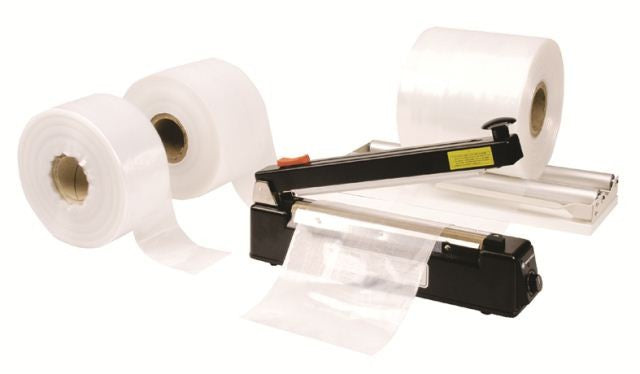
Polythene / Layflat Tubing (Popular)
-
9" 229mmx170m - 500g Orange Transluscent Tint Lay Flat Tubing (127mu)Regular price From £37.59 GBPRegular priceUnit price per
-
6" 150mmx170m - 500g Orange Transluscent Tint Lay Flat Tubing (127mu)~~Regular price From £41.31 GBPRegular priceUnit price per
-
4" 100mmx170m - 500g Orange Transluscent Tint Lay Flat Tubing (127mu)Regular price From £19.00 GBPRegular priceUnit price per
-
14" 355mmx170m - 500g Orange Transluscent Tint Lay Flat Tubing (127mu)Regular price From £89.93 GBPRegular priceUnit price per
-
12" 300mmx170m - 500g Orange Transluscent Tint Lay Flat Tubing (127mu)Regular price From £78.18 GBPRegular priceUnit price per
-
10" 250mmx170m - 500g Orange Transluscent Tint Lay Flat Tubing (127mu)Regular price From £41.53 GBPRegular priceUnit price per
-
9"x18kg - 1000g Lay Flat Tubing (229mm - 254mu)Regular price From £78.18 GBPRegular priceUnit price per
-
9"x9kg - 120g Lay Flat Tubing (229mm - 30mu)Regular price From £33.42 GBPRegular priceUnit price per
-
8"x8kg - 250g Lay Flat Tubing (203mm - 64mu)Regular price From £45.60 GBPRegular priceUnit price per
-
7"x7kg - 500g Lay Flat Tubing (178mm - 127mu)Regular price From £40.22 GBPRegular priceUnit price per
-
7"x7kg - 250g Lay Flat Tubing (178mm - 64mu)Regular price From £26.52 GBPRegular priceUnit price per
-
72"x30kg - 500g Lay Flat Tubing (1829mm - 127mu)Regular price From £151.01 GBPRegular priceUnit price per
-
6"x12kg - 1000g Lay Flat Tubing (152mm - 254mu)Regular price From £53.35 GBPRegular priceUnit price per
-
54"x25kg - 500g Lay Flat Tubing (1372mm - 127mu)Regular price From £85.57 GBPRegular priceUnit price per
-
4"x8kg - 1000g Lay Flat Tubing (102mm - 254mu)Regular price From £49.11 GBPRegular priceUnit price per
-
4"x4kg - 500g Lay Flat Tubing (102mm - 127mu)Regular price From £25.40 GBPRegular priceUnit price per
-
4"x4kg - 250g Lay Flat Tubing (102mm - 64mu)Regular price From £25.40 GBPRegular priceUnit price per
-
4"x8kg - 100g Lay Flat Tubing (102mm - 25mu)Regular price From £25.12 GBPRegular priceUnit price per
-
48"x25kg - 500g Clear Regran Lay Flat Tubing (1219mm - 127mu)~~Regular price From £134.69 GBPRegular priceUnit price per
-
40"x25kg - 500g Lay Flat Tubing (1016mm - 127mu)Regular price From £88.00 GBPRegular priceUnit price per
-
40"x25kg - 250g Lay Flat Tubing (1016mm - 64mu)Regular price From £82.15 GBPRegular priceUnit price per
-
3"x3kg - 250g Lay Flat Tubing (76mm - 64mu)Regular price From £22.26 GBPRegular priceUnit price per
-
36"x25kg - 500g Clear Regran Lay Flat Tubing (914mm - 127mu)Regular price From £120.60 GBPRegular priceUnit price per
-
36"x30kg - 250g Lay Flat Tubing (914mm - 64mu)Regular price From £97.52 GBPRegular priceUnit price per
-
36"x25kg - 120g Lay Flat Tubing (914mm - 30mu)Regular price From £136.36 GBPRegular priceUnit price per
-
30"x25kg - 500g Clear Regran Lay Flat Tubing (762mm - 127mu)Regular price From £120.60 GBPRegular priceUnit price per
-
30"x35kg - 250g Lay Flat Tubing (762mm - 64mu)Regular price From £110.40 GBPRegular priceUnit price per
-
30"x25kg - 250g Clear Regran Lay Flat Tubing (762mm - 64mu)Regular price From £134.69 GBPRegular priceUnit price per
-
3½"x3.5kg - 500g Lay Flat Tubing (89mm - 127mu)Regular price From £22.31 GBPRegular priceUnit price per
-
2"x2kg - 500g Lay Flat Tubing (51mm - 127mu)Regular price From £16.02 GBPRegular priceUnit price per
-
2"x2kg - 250g Lay Flat Tubing (51mm - 64mu)Regular price From £7.43 GBPRegular priceUnit price per
-
28"x25kg - 250g Clear Lay Flat Tubing (711mm - 64mu)Regular price From £122.77 GBPRegular priceUnit price per
-
2½"x2.5kg - 500g Lay Flat Tubing (64mm - 127mu)Regular price From £17.46 GBPRegular priceUnit price per
-
24"x24kg - 500g Lay Flat Tubing (610mm - 127mu)Regular price From £118.65 GBPRegular priceUnit price per
-
22"x25kg - 250g Lay Flat Tubing (559mm - 64mu)Regular price From £82.15 GBPRegular priceUnit price per
-
22"x12kg - 80g Lay Flat Tubing (559mm - 20mu)Regular price From £42.42 GBPRegular priceUnit price per


Polythene / Layflat Tubing (Popular)
120g (30 micron)
| Order Code | Width (Inches) | Width (mm) | Approx roll Length (m) | Approx roll Weight (Kg) |
| 05T22A | 22 | 560 | - | 12 (80g) |
| 05T15A | 15 | 375 | 450 | 10 |
| 05T18A | 18 | 450 | 680 | 18 |
| 05T30A | 30 | 750 | 560 | 30 |
| 05T36A | 36 | 900 | 470 | 25 |
250g (62.5 micron)
| Order Code | Width (Inches) | Width (mm) | Approx roll Length (m) | Approx roll Weight (Kg) |
| 05T1D5 | 1.5 | 38 | 330 | 1.5 |
| 05T2D | 2 | 50 | 330 | 2 |
| 05T3D | 3 | 75 | 330 | 3 |
| 05T4D | 4 | 100 | 330 | 4 |
| 05T5D | 5 | 125 | 330 | 5 |
| 05T6D | 6 | 150 | 330 | 6 |
| 05T7D | 7 | 175 | 330 | 7 |
| 05T8D | 8 | 200 | 330 | 8 |
| 05T10D | 10 | 250 | 330 | 10 |
| 05T12D | 12 | 300 | 330 | 12 |
| 05T15D | 15 | 375 | 330 | 15 |
| 05T16D | 16 | 400 | 330 | 16 |
| 05T18D | 18 | 450 | 230 | 25 |
| 05T20D | 20 | 500 | 230 | 25 |
| 05T22D | 22 | 550 | 230 | 25 |
| 05T24D | 24 | 600 | 230 | 25 |
| 05T30D | 30 | 750 | 230 | 25 |
| 05T36D | 36 | 900 | 230 | 25 |
| 05T48D | 48 | 1200 | 172 | 25 |
| 05T60D | 60 | 1525 | - | 22 |

500g (125 micron)
| Order Code | Width (Inches) | Width (mm) | Approx roll Length (m) | Approx roll Weight (Kg) |
| 05T1F | 1 | 25 | 165 | 1 |
| 05T1F5 | 1.5 | 38 | 165 | 1.5 |
| 05T2F | 2 | 50 | 165 | 2 |
| 05T2.5F | 2.5 | 64 | 165 | 2.5 |
| 05T3F | 3 | 75 | 165 | 3 |
| 05T3.5F | 3.5 | 89 | 165 | 3.5 |
| 05T4F | 4 | 100 | 165 | 4 |
| 05T5F | 5 | 125 | 165 | 5 |
| 05T6F | 6 | 150 | 165 | 6 |
| 05T7F | 7 | 175 | 165 | 7 |
| 05T8F | 8 | 200 | 165 | 8 |
| 05T10F | 10 | 250 | 165 | 10 |
| 05T12F | 12 | 300 | 165 | 12 |
| 05T14F | 14 | 356 | 165 | 14 |
| 05T15F | 15 | 375 | 165 | 15 |
| 05T16F | 16 | 400 | 165 | 16 |
| 05T18F | 18 | 450 | 165 | 18 |
| 05T20F | 20 | 500 | 165 | 20 |
| 05T36F35 | 36 | 915 | 165 | 35 |
| 05T40F | 40 | 1000 | 200 | 50 |
| 05T54F | 54 | 1373 | - | 25 |
| 05T60F | 60 | 1500 | 200 | 50 |
| 05T72F | 72 | 1800 | 200 | 50 |

500g (25 Micron) Regran - Jumbo roll
| Order Code | Width (Inches) | Width (mm) | Approx roll Length (m) | Approx roll Weight (Kg) |
| 05T24F | 24 | 600 | 138 | 25 |
| 05T30F | 30 | 750 | 138 | 25 |
| 05T36F | 36 | 900 | 138 | 25 |
| 05T48F | 48 | 1200 | 138 | 35 |
1000g (250 micron)
| Order Code | Width (Inches) | Width (mm) | Approx roll Length (m) | Approx roll Weight (Kg) |
| 05T4T | 4 | 100 | 160 | 4 |
| 05T6T | 6 | 150 | 160 | 6 |
| 05T9T | 9 | 225 | 160 | 9 |
| 05T48T | 48 | 1200 | 160 | 50 |
| 05T12NB | 12 | 300 | - | 22 (700g - Black) |
| 05T18NB | 18 | 450 | - | 16 (800g - Black) |
Polythene / Layflat Tubing (Popular) — Overview
Layflat polythene tubing is a continuous tube of plastic film supplied on a roll in a flattened (layflat) form. It is commonly used to create custom-length sleeves and bags: you cut the tubing to the required length, seal one end, insert the product, then seal the other end. This approach is useful when you need flexible sizing for long, awkward, or variable-length items, or when you want to standardise on one roll width and make multiple pack lengths as needed.
This collection focuses on popular layflat tubing sizes and specifications, including a 120g (30 micron) option and a range of widths shown in both inches and millimetres, with approximate roll lengths and roll weights listed in the table on this page.
Layflat Tubing — Helpful Guide
1) What “layflat width” means (and how to size it)
Layflat width is the measured width of the flattened tube across one face. When the tube is opened, the layflat width corresponds to half of the tube’s circumference. In practical terms, this helps you estimate whether an item will fit around its perimeter.
Circumference (opened) ≈ 2 × layflat width
For round items, opened diameter ≈ (2 × layflat width) ÷ π
Allow extra room for easy insertion and for the seal area. If the product has corners, protrusions, or irregular shapes, choose a wider tubing size to reduce stress on the film and seals.
2) Understanding thickness: micron and gauge
Film thickness is commonly stated in microns (µm). For example, 30 micron equals 0.03 mm. Thinner films are typically easier to seal and use less material, while thicker films generally provide improved puncture and tear resistance.
Very light duty: ~20–30 micron (dust covers, light items, inner protection)
Light/medium duty: ~40–60 micron (general packaging where handling is moderate)
Heavier duty: ~75–100+ micron (heavier items, higher abrasion risk, sharper edges)
Thickness selection should be driven by the product’s weight, edge sharpness, and handling conditions (manual packing vs. automated lines, warehouse movement, transit vibration, etc.).
3) Roll length vs. width and thickness (why the table matters)
For layflat tubing, roll length is strongly influenced by width and thickness. For the same film weight and thickness, narrower tubing yields a longer roll; wider tubing yields a shorter roll. For the same weight and width, thinner film yields a longer roll; thicker film yields a shorter roll.
A practical estimation approach used in packaging is:
Length ≈ Weight ÷ (2 × Width × Thickness × Density)
The factor of 2 reflects that tubing has two layers (front and back). Density varies by polymer type and blend; many polythene films are in the region of ~920 kg/m³, so calculated lengths should be treated as approximate and validated against the roll-length figures provided for each item.
4) Sealing methods and process notes
Layflat tubing is commonly sealed using heat sealing equipment. Typical workflows include sealing one end to create a pouch, inserting the product, then sealing and cutting to length. Seal quality depends on film thickness, sealer type, dwell time, pressure, and cleanliness of the seal area.
Keep the seal area clean and free from dust or product debris to reduce weak seals.
Use the lowest temperature and dwell time that produces a consistent seal; excessive heat can distort film or cause burn-through.
For thicker films, expect longer dwell time and potentially higher temperature settings.
5) Types of packaging you can create with layflat tubing
Custom-length sleeves for long products: cut to length, seal one end, insert, then seal the other end.
Protective dust/moisture covers for parts and assemblies during storage or internal transport.
Bundling and grouping of multiple items into one sealed pack for counting and handling.
Interleaving and surface protection where a simple barrier layer is needed between components.
Products in this collection (and how they fit typical use cases)
The table on this page lists popular layflat tubing options by order code, width (inches and mm), and approximate roll length/weight. Use these figures to shortlist a width that fits your product, then confirm that the thickness and roll length align with your packing process and throughput needs.
If you are packing items with variable lengths (for example, profiles, trims, tubes, or long components), layflat tubing can reduce the need to stock many pre-made bag lengths. If you are packing items with sharp edges or high weight, consider moving to a thicker film specification to improve puncture resistance and seal robustness.
Case study: reducing SKU complexity for variable-length items
A common challenge in packing long or variable-length products is the number of bag sizes required. Pre-made bags often force you to stock multiple lengths, and the “closest fit” may still leave excess material or require awkward folding. By switching to layflat tubing, a packing team can standardise on a small number of widths and create the required length on demand.
Before: multiple bag lengths stocked; frequent changeovers; occasional poor fit leading to rework.
After: fewer packaging SKUs; consistent sealing method; improved fit by cutting to length; reduced handling time for odd sizes.
The key is selecting the correct layflat width (to accommodate the product’s perimeter) and the correct thickness (to withstand handling and any edge pressure). The roll-length information in the product table helps estimate how many packs you can produce per roll at your typical cut length.
How to choose the correct layflat tubing
Step 1: Measure the packed cross-section
Measure the product at its widest point once it is in its “packed” shape (including any protective layers you plan to add). For irregular items, measure the maximum perimeter around the cross-section rather than just width.
Step 2: Select layflat width with allowance
Because opened circumference is approximately 2 × layflat width, choose a layflat width that comfortably exceeds half of the product’s perimeter. Add allowance for easy insertion and to avoid stretching the film, which can weaken seals and increase the risk of splits.
Step 3: Select thickness based on risk
Low risk (soft, light, no sharp edges): thinner films may be suitable.
Medium risk (moderate weight/handling): choose a mid-range thickness for better durability.
Higher risk (sharp edges, heavy parts, abrasion): choose a thicker film and consider additional edge protection.
Step 4: Confirm sealing method and throughput
Match the film to your sealing equipment and packing speed. Thicker films generally require longer dwell times. If you are sealing many packs per shift, consistency and repeatability matter: standardise settings, train operators, and periodically check seal integrity.
Step 5: Estimate consumption using roll length
Once you know your typical cut length, you can estimate how many packs you will get from a roll using the approximate roll length shown in the table. This helps with replenishment planning and reduces the risk of running out mid-batch.
Common pitfalls (and how to avoid them)
Choosing tubing that is too narrow: leads to difficult insertion, stretched film, and stressed seals. Size for the product’s perimeter, not just its width.
Underestimating edge pressure: even light items can puncture thin film if corners are sharp. Add corner protectors or choose a thicker film.
Contaminated seal area: dust, oil, or product debris can cause seal failures. Keep the seal zone clean and flat.
Overheating during sealing: can distort film and weaken seals. Use the lowest effective heat and dwell time.
Ignoring storage conditions: heat and sunlight can affect film performance over time. Store rolls in a cool, dry area away from direct UV exposure.
Frequently asked questions (Q&A)
How do I know what layflat width I need for my product?
Measure the perimeter around the product’s packed cross-section (including any padding). Opened tubing circumference is approximately twice the layflat width, so choose a layflat width slightly greater than half the perimeter to allow easy insertion and sealing.
What does 30 micron mean in practical terms?
30 micron is a 0.03 mm thick film, typically considered light duty. It can work well for clean, lightweight items and basic dust or moisture barrier needs. For heavier products or sharp edges, a thicker film is usually more suitable.
Why does roll length change when the width changes?
With the same film thickness and roll weight, wider tubing uses more material per metre because there are two layers (front and back). That means fewer metres fit on the roll. Narrower tubing uses less material per metre, so the roll length increases.
Can I heat seal layflat polythene tubing with a standard sealer?
Many polythene films can be sealed with common heat sealers, but settings vary by thickness and equipment. Use a clean, flat seal area and start with lower heat and shorter dwell time, increasing gradually until you achieve a consistent, strong seal.
What should I do if my product has corners or sharp edges?
Sharp edges increase puncture risk and can stress seals. Choose a thicker film, add edge or corner protection, and ensure the product is not forced into an undersized tube. Testing a few samples under realistic handling conditions helps confirm suitability.