
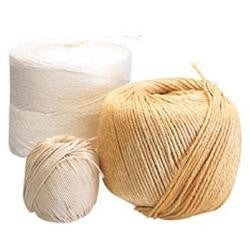
Branding / Twine & Ties / Twines
-
 Sold out3/200m - Sizal - 2.5kg BallRegular price From £19.85 GBPRegular priceUnit price per
 -
 Sold out2/300m - Sizal - 2.5kg BallRegular price From £9.87 GBPRegular priceUnit price per
 -
 Sold out0.5kg - Medium Cotton CopsRegular price From £5.38 GBPRegular priceUnit price per
 -
 Sold out0.25kg - Medium Cotton CopsRegular price From £1.66 GBPRegular priceUnit price per
 -
 Sold outNo5 - Rayon (0.5kg) Cops ‘B’Regular price From £4.97 GBPRegular priceUnit price per
 -
 Sold out450m/kg - Polyprop 4.5kg CopsRegular price From £43.19 GBPRegular priceUnit price per
 -
 Sold out350m/kg - Polyprop 2.25kg CopsRegular price From £6.20 GBPRegular priceUnit price per
 -
 Sold out450m/kg - Polyprop 2.25kg CopsRegular price From £16.50 GBPRegular priceUnit price per
 -
121m/kg - Polyprop 4.5kg CopsRegular price From £144.15 GBPRegular priceUnit price per
-
 Sold out170m/kg - Polyprop 4.5kg CopsRegular price From £43.12 GBPRegular priceUnit price per
 -
 Sold outNo5 - Rayon (0.5kg) Cops ‘A’Regular price From £5.38 GBPRegular priceUnit price per
 -
 Sold outNo4 - Rayon (0.5kg)Regular price From £5.38 GBPRegular priceUnit price per


Branding / Twine & Ties / Twines
| Product Code | Description |
| 12WMB | 0.25kg - Medium Cotton Cops |
| 12W04 | No4 - Rayon (0.5kg) |
| 12W65 | No5 - Rayon (0.5kg) Cops ‘B’ |
| 12W45 | 450m/kg - Polyprop 4.5kg Cops |
| 12W17 | 170m/kg - Polyprop 4.5kg Cops |
| 12WS3 | 3/200m - Sizal - 2.5kg Ball |
| 12WS2 | 2/300m - Sizal - 2.5kg Ball |
Polypropylene Twine
| Order Code | Description | Pack Quantity |
| 12W225 | PP Twine 450m/kg 2.25kg PT4/2.25 | 8 |
| 12W45 | PP Twine 450m/kg 4.5kg PT4/4.5 | 4 |
| 12W35 | PP Twine 350m/kg 2.25kg PT5/2.25 | 8 |
| 12W17 | PP Twine 170m/kg 4.5kg PT7 | 4 |
| 12W45 | Rayon Butchers twine white 450g No.5 | 6 |
Sisal Twine
| Order Code | Description | Pack Quantity |
| 12WS2 | Sisal twine 2ply 300m/kg 2/300 | 10 |
| 12WS3 | Sisal twine 3ply 200m/kg 3/200 | 10 |
Twines for Packaging, Bundling & Presentation
Twine is a simple, versatile tying material used to bundle products, secure parcels, close bags, and organise stock. In packaging environments it is often chosen for its balance of strength, handling comfort, knot security, and suitability for the conditions the pack will face (humidity, abrasion, storage time, and handling). This collection brings together practical twines supplied on cops or balls, covering smooth synthetic options for clean handling and natural-fibre options for grip and heavy-duty tying.
On this page you will find polypropylene twine options (clean, smooth and described as virtually unbreakable on the collection page), plus strong, coarse sisal twine for heavier-duty applications, and rayon/cotton twines supplied on cops for general tying and presentation tasks.
Branding / Twine & Ties / Twines — Helpful Guide
This guide explains the main twine types in this category and how to match them to common packaging tasks. It also links directly to the product pages already listed in this collection so you can quickly compare formats and specifications.
1) Polypropylene twine (smooth, clean handling)
Polypropylene (PP) twine is commonly selected when you want a tidy, low-lint tying material that runs smoothly through hands and dispensers. The collection page describes polypropylene twine as clean and smooth for multiple applications and notes it as virtually unbreakable. PP twine is often used for bundling cartons, tying around protective wraps, and general warehouse organisation where consistent performance and easy handling matter.
- 450m/kg - Polyprop 4.5kg Cops — A larger cop format suited to higher-throughput tying and bundling. The “m/kg” figure indicates approximate length per kilogram, useful when estimating consumption.
- 170m/kg - Polyprop 4.5kg Cops — A heavier-gauge PP option (shorter length per kilogram typically indicates a thicker twine). Often chosen when you want a more substantial tie for larger bundles.
- 121m/kg - Polyprop 4.5kg Cops — A very robust PP twine option in the same 4.5kg cop format, typically used where extra thickness and handling confidence are priorities.
- 350m/kg - Polyprop 2.25kg Cops — A mid-range PP twine on a smaller cop, useful when you want a manageable size while still keeping good run length.
- 450m/kg - Polyprop 2.25kg Cops — A higher run-length PP twine on a 2.25kg cop, often selected for frequent light-to-medium tying where efficiency matters.
How to read “m/kg”: The metres-per-kilogram value is a practical way to compare thickness. Higher m/kg generally means a finer twine (more length per kilogram). Lower m/kg generally means a thicker twine (less length per kilogram). This helps you choose between a finer tie for neat presentation and a thicker tie for heavier bundles.
2) Sisal twine (natural fibre, coarse grip)
Sisal twine is a natural-fibre twine known for its coarse texture and strong grip. The collection page describes sisal twine as strong and coarse for heavy duty applications. In packaging, sisal is often chosen when you want a tie that “bites” and holds well on irregular surfaces, or when a natural look and feel is preferred for presentation and bundling.
- 2/300m - Sizal - 2.5kg Ball — A 2-ply sisal twine supplied as a 2.5kg ball. The ply and run-length information helps indicate the balance between thickness and yield.
- 3/200m - Sizal - 2.5kg Ball — A 3-ply sisal twine supplied as a 2.5kg ball, typically chosen when you want a more substantial, heavy-duty tie.
Understanding ply: “2-ply” and “3-ply” refer to how many strands are twisted together. More plies generally increase thickness and perceived robustness, which can improve knot security and abrasion tolerance for heavier bundles.
3) Rayon twine (smooth tying on cops)
Rayon twine is supplied here on cops and is often used where a smooth, consistent tying material is helpful. On the collection page you’ll see rayon options listed by number (e.g., No4 and No5) and supplied in 0.5kg formats. Numbered twines are commonly used to indicate relative thickness or grade within a range.
- No4 - Rayon (0.5kg) — A rayon twine option supplied in a 0.5kg cop format, suitable for general tying tasks where a smooth finish is preferred.
- No5 - Rayon (0.5kg) Cops ‘A’ — A No5 rayon twine option in a 0.5kg cop format.
- No5 - Rayon (0.5kg) Cops ‘B’ — Another No5 rayon twine option in a 0.5kg cop format, listed separately on the collection page.
Tip: If you are choosing between No4 and No5, consider whether you need a finer tie for neatness (often the lower number) or a slightly more substantial tie for handling confidence (often the higher number). When in doubt, compare the feel and knot security on your actual pack materials.
4) Cotton twine on cops (soft handling)
Cotton twine is often selected when you want a softer feel in hand and a traditional appearance. In packaging and fulfilment, cotton can be useful for tying around delicate items or for presentation where a natural fibre look is desired. This collection includes medium cotton cops in two weights.
- 0.25kg - Medium Cotton Cops — A smaller cop size that’s easy to handle for occasional tying or bench packing.
- 0.5kg - Medium Cotton Cops — A larger cop size for more frequent use while keeping the same “medium” cotton format.
Case Study: Standardising Twine for a Mixed Packing Bench
Consider a packing bench that handles a mix of tasks: bundling small cartons into sets, tying protective wrap around irregular items, and preparing occasional heavier bundles for internal transfers. Initially, the team uses whatever twine is closest, leading to inconsistent knot security and variable consumption.
A simple standardisation approach is to assign twine types by task. A smooth polypropylene twine can be reserved for everyday bundling where clean handling and speed matter. A coarse sisal twine can be kept for heavier or irregular bundles where extra grip helps prevent slippage. Cotton or rayon twine can be used for presentation-focused tying or where a softer feel is preferred. By matching twine to task, the bench reduces rework (reties), improves consistency, and makes it easier to estimate usage because each task draws from a predictable twine type and format.
The key lesson is that “strong enough” is not the only requirement. Handling comfort, knot reliability on your specific materials, and the ability to dispense smoothly can be just as important for day-to-day efficiency.
How to Choose the Correct Twine
Use the checklist below to select the most suitable twine for your packaging process. Where possible, test a short length on your actual pack materials (box board, film, paper, fabric, or product surfaces) and confirm knot security after handling.
Step 1: Define the job (what are you tying?)
- Bundling cartons or packs together: Often benefits from a smooth twine that tightens evenly and doesn’t snag.
- Tying around irregular shapes: Often benefits from a coarser twine that grips and resists slipping.
- Presentation tying: Often benefits from a neat-looking twine with consistent appearance and comfortable handling.
Step 2: Decide on thickness using run-length indicators
For polypropylene twines in this collection, the “m/kg” value is a practical indicator of thickness. If you need a finer tie for neatness and frequent tying, a higher m/kg option can be appropriate. If you need a thicker tie for heavier bundles, a lower m/kg option can be more suitable. Always confirm by testing knot security and the feel in hand.
Step 3: Choose the format (cop vs ball)
- Cops: Often used where you want a stable, compact supply that can sit on a bench or in a holder and feed smoothly. Cops can be convenient for repetitive tying tasks.
- Balls: Often used for natural-fibre twines like sisal and can be easy to pick up and move between work areas. Balls can also be convenient when tying larger items where you may walk around the bundle.
Step 4: Consider handling and finish
- Clean handling: If you want a tidy tying process with minimal snagging, polypropylene twine is often preferred.
- Grip: If you want a tie that holds well on uneven or slippery surfaces, sisal’s coarse texture can help.
- Soft feel: If comfort and a traditional look matter, cotton twine can be a good fit.
- Smooth tying: Rayon twine can be useful where a consistent, smooth tie is desired.
Step 5: Confirm knot security and cutting method
Different twines behave differently when knotted and cut. Before committing to a twine for a process, confirm:
- The knot holds after handling (lifting, sliding, and minor impacts).
- The twine can be cut cleanly with your preferred tool (scissors, safety cutter, or bench cutter).
- The twine does not damage the product surface or packaging material.
Practical Tips for Better Tying Results
Reduce slippage
- Use an extra wrap around smooth surfaces before tying the knot.
- Choose a coarser twine (such as sisal) when tying around film or irregular bundles where grip matters.
- Keep tension consistent while forming the knot; uneven tension can cause loosening.
Improve consistency on a packing line
- Keep one twine type per workstation for the primary task to reduce mix-ups.
- Label twine holders with the product code and intended use (e.g., “daily bundling” vs “heavy bundles”).
- Train staff on a standard knot and number of wraps for each pack type.
Estimate usage more accurately
When twine is specified by run length (such as metres per kilogram), you can estimate consumption by measuring the average length used per pack and multiplying by expected volume. For example, if a typical bundle uses a fixed number of wraps and a consistent knot, the length per bundle becomes predictable. This helps reduce unexpected shortages and supports more consistent replenishment planning.
Common Applications for Twine in Packaging
- Bundling: Grouping multiple items into a single unit for handling or storage.
- Closing: Tying around bags or wraps where a reusable closure is helpful.
- Organising: Securing cables, tubes, or grouped components in a warehouse or workshop.
- Presentation: Adding a neat tie to parcels, gift-style packs, or product sets.
Q&A
What does “m/kg” mean on polypropylene twine listings?
“m/kg” indicates the approximate metres of twine per kilogram of material. It helps compare thickness and yield: higher metres per kilogram usually means a finer twine, while lower metres per kilogram usually means a thicker twine. Use it to estimate consumption and choose a suitable gauge.
How do I choose between 2-ply and 3-ply sisal twine?
Ply refers to how many strands are twisted together. A 3-ply sisal twine is typically thicker and can feel more robust, which may improve knot security on heavier bundles. A 2-ply option can be easier to handle for lighter tying while still offering natural-fibre grip.
Are cops or balls better for a packing bench?
Cops are often convenient for bench work because they can sit in a holder and feed smoothly for repetitive tying. Balls can be easier to carry around larger items or move between stations. The best choice depends on whether you tie in one place or walk around bundles.
Why would I use sisal twine instead of polypropylene twine?
Sisal twine has a coarse texture and strong grip, which can help reduce slippage on irregular bundles or certain surfaces. Polypropylene twine is described as clean and smooth on this page and can be easier for fast, tidy tying. Choose based on grip needs and handling preference.
What’s the difference between rayon and cotton twine in practical use?
Both can be used for general tying, but they can feel different in hand and behave differently in knots. Cotton is often chosen for a softer, traditional feel, while rayon can provide a smooth, consistent tie. Testing on your packaging materials is the most reliable way to decide.