
Polythene / Sheet Polythene - Shrink
-
1.5/3m - 800g Black Sheet Polythene - ShrinkRegular price From £124.50 GBPRegular priceUnit price per
-
2/4m - 500g Sheet Polythene - Shrink 55KgRegular price From £151.01 GBPRegular priceUnit price per
-
1.5/3m - 800g Sheet Polythene - Shrink 50KgRegular price From £151.01 GBPRegular priceUnit price per
-
1150/2300mm - 500g Sheet Polythene - Shrink 40KgRegular price From £110.40 GBPRegular priceUnit price per
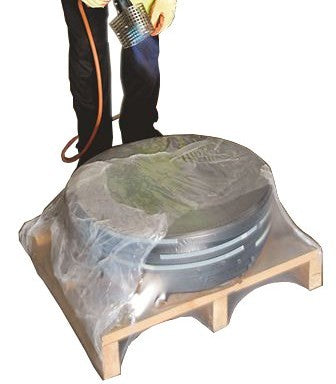
Polythene / Sheet Polythene - Shrink
| Order Code | Description | Approx roll weight (kg) | Length (m) | Thickness (micron) |
| 05S2300F | Centrefolded shrink 1130/2300mm | 40 | 160 | 125 |
| 05S3N | Centrefolded shrink 1500/3000mm | 50 | 88 | 200 |
| 05S4F | Centrefolded shrink 2000/4000mm | 55 | 130 | 125 |
| 05S3B | Centrefolded shrink 1500/3000mm - Black | 50 | 88 | 200 |
| 05C10MF | Multifolded shrink 1000/3600mm | 18 | 20 | 250 |
Polythene / Sheet Polythene – Shrink
Shrink polythene (often supplied as centre-folded or multi-folded sheeting) is designed to contract when heat is applied, creating a tight, protective wrap around products, bundles, or palletised loads. It is commonly used to stabilise goods for transport, reduce movement in transit, and provide a barrier against dust and light moisture. In this collection you’ll find wide-format shrink sheeting options in practical roll sizes and heavier micron thicknesses suited to industrial packaging tasks.
Unlike stretch wrap (which tightens by being pulled and stretched), shrink film relies on controlled heat to shrink down and conform to the shape of the load. This makes it particularly useful for irregular shapes, mixed cartons, or items that benefit from a more rigid, drum-tight finish.
Shrink Polythene Sheeting — Helpful Guide
This guide explains the main formats in this category, how to interpret the sizes shown, and how to choose the right thickness for your application.
1) Centre-folded shrink sheeting
Centre-folded shrink film is a single sheet folded in half along its length and wound onto a roll. The size is often shown as folded width / open width. For example, a listing shown as 1500/3000mm indicates the film is supplied 1500mm wide on the roll (folded), and opens out to 3000mm wide when unfolded. This format is widely used for wrapping large items and pallet loads because it provides a wide sheet while keeping the roll manageable.
- Centrefolded shrink 1130/2300mm — A wide shrink sheet supplied centre-folded, suitable for covering and shrinking around larger packs where an open width of 2300mm is required.
- Centrefolded shrink 1500/3000mm — Centre-folded format that opens to 3000mm, commonly used for pallet covers and larger industrial items where extra width helps achieve full wrap coverage.
- Centrefolded shrink 2000/4000mm — Extra-wide centre-folded shrink sheeting opening to 4000mm, useful for bulky loads, wide pallets, or products needing broad coverage.
- Centrefolded shrink 1500/3000mm - Black — A black centre-folded shrink sheet opening to 3000mm, often chosen where light-blocking or visual concealment is helpful alongside containment.
2) Multifolded shrink sheeting
Multifolded shrink film is folded more than once so that very wide material can be supplied on a narrower roll. This can make handling easier when the required open width is large. Multifolded formats are typically selected for wide covers, large equipment, or applications where a broad sheet is needed but storage and roll handling space is limited.
- Multifolded shrink 1000/3600mm — A heavy-duty multifolded shrink sheet that opens to 3600mm, designed for wide coverage while keeping the roll width compact.
Understanding the key specifications
Folded width vs open width
Many shrink sheeting products are described using two widths. The first is the width as supplied on the roll (folded), and the second is the width when opened out. With centre-folded film, the open width is typically double the folded width. With multifolded film, the open width can be much larger than the roll width because the film is folded multiple times.
Micron thickness (µm)
Thickness is shown in microns (µm). As a quick reference: 1000 microns equals 1mm, so 125µm is 0.125mm, 200µm is 0.200mm, and 250µm is 0.250mm. In general, thicker film provides greater puncture resistance and holding strength, which can be important for heavier loads, sharp corners, or demanding handling conditions.
Roll length and approximate roll weight
Roll length (metres) helps estimate how many wraps or covers you can produce from a roll. Approximate roll weight is useful for manual handling planning and for understanding how substantial the roll will be in day-to-day use. When comparing options, consider both the open width and thickness together—wider and thicker films typically come in heavier rolls.
Case study: stabilising mixed pallets for transport
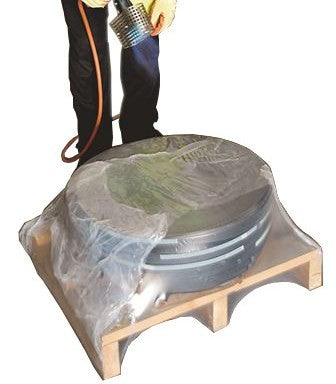
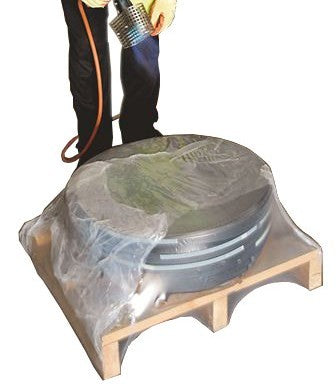
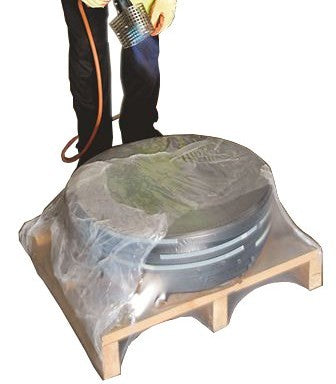
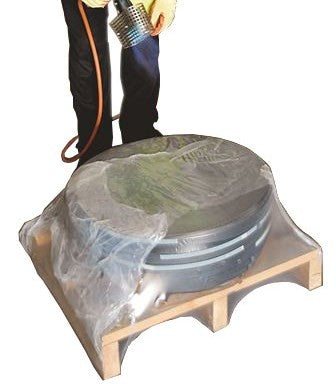
A common challenge in distribution is shipping mixed pallets containing cartons of different sizes, where the load has uneven edges and voids. In these situations, shrink sheeting can be used to create a tight outer skin that reduces carton movement and helps maintain pallet integrity. A typical workflow is to apply the shrink sheet around the pallet, ensure adequate overlap at the base, and then apply controlled heat so the film contracts evenly. The result is a more stable load that is easier to handle with forklifts and less prone to shifting during transit.
Where pallets include sharp corners or heavy items, selecting a higher micron film can reduce the risk of punctures during handling. For loads stored temporarily in warehouses or loading bays, shrink film can also reduce dust ingress and provide short-term protection from light moisture exposure.
How to choose the correct shrink sheeting
Step 1: Determine the required open width
Start by measuring the perimeter coverage you need. For pallet wrapping, this is often related to the pallet width and depth plus allowance for overlap. If you are wrapping a product or bundle, measure around the widest point and add overlap so the film can seal and shrink without leaving gaps. Once you know the open width required, you can select a centre-folded or multifolded option that meets or exceeds that width.
Step 2: Choose the right thickness for the job
- 125 micron — Often used for lighter-duty containment and general protection where puncture risk is low.
- 200 micron — A common choice for heavier pallet loads, irregular shapes, and applications needing improved toughness.
- 250 micron — Typically selected for demanding industrial use, sharp edges, or where maximum durability is required.
Thickness selection should reflect the weight of the load, the presence of sharp corners, and how the wrapped goods will be handled (manual handling, forklift movement, stacking, and transport vibration).
Step 3: Consider colour and visibility requirements
Clear shrink film allows easy identification of goods and labels. Black shrink film can be useful where light-blocking, concealment, or a uniform appearance is preferred. If scanning barcodes or reading labels through the film is important, clear film is typically more practical.
Step 4: Match the format to your handling setup
Centre-folded rolls are straightforward to open and apply, especially for pallet wrapping and general covering. Multifolded rolls can be advantageous when you need very wide film but want a narrower roll for storage and handling. If you are applying film manually, roll weight and roll width can significantly affect ease of use and safety.
Step 5: Plan for heat application and shrink performance
Shrink film requires controlled heat to contract evenly. Uneven heating can cause weak spots, holes, or incomplete shrink. For consistent results, apply heat gradually and keep the heat source moving to avoid overheating one area. Always follow site safety procedures and ensure adequate ventilation when using heat tools.
Common applications for shrink polythene sheeting
- Pallet stabilisation — Creating a tight outer wrap to reduce movement during transport.
- Bundling — Grouping multiple items into a single, manageable pack.
- Protection during storage — Reducing dust and light moisture exposure for short-term storage.
- Oversized items — Wrapping large or awkward products where standard bags or sleeves are unsuitable.
- Industrial and export packing — Adding an outer protective layer to help maintain load integrity through handling stages.
Handling, storage, and best practice tips
- Store rolls correctly — Keep rolls clean and dry, away from direct sunlight and excessive heat to maintain film performance.
- Avoid sharp contact points — Use corner protectors or edge guards where needed to reduce puncture risk.
- Allow for overlap — Adequate overlap helps maintain containment once the film shrinks.
- Test on one load first — If you are changing thickness or format, trial a single pallet or product to confirm fit and shrink behaviour.
- Use safe heat practices — Keep heat sources moving and avoid overheating; ensure operators are trained and the area is ventilated.
Troubleshooting: common issues and fixes
Film splitting or puncturing
If the film splits during shrinking or handling, check for sharp edges on the load and consider a higher micron thickness. Also review heat application—overheating a small area can weaken the film.
Loose wrap after shrinking
A loose finish can occur if the film is too wide, insufficient heat is applied, or the film is not positioned with enough overlap. Confirm the open width is appropriate and apply heat evenly around the load.
Uneven shrink or wrinkles
Wrinkles can result from uneven heating or inconsistent tension during application. Apply the film smoothly, then shrink gradually while moving the heat source continuously to encourage uniform contraction.
Questions & Answers
What does 1500/3000mm mean on centre-folded shrink film?
It describes the film width in two states. The first number is the width as supplied on the roll (folded). The second number is the width when opened out. For centre-folded film, the open width is typically double the folded width.
How do I choose between 125, 200, and 250 micron shrink sheeting?
Choose thickness based on load weight, edge sharpness, and handling conditions. 125 micron suits lighter protection with low puncture risk. 200 micron is a common heavy-duty option for pallets and irregular loads. 250 micron is typically used for demanding industrial loads.
Is shrink film the same as stretch wrap for pallets?
No. Stretch wrap tightens by being stretched around a pallet and does not require heat. Shrink film is applied loosely and then heated so it contracts and conforms to the load. The two materials are used differently and suit different packing setups.
What is multifolded shrink film and when is it useful?
Multifolded shrink film is folded multiple times so very wide material can be supplied on a narrower roll. It is useful when you need a large open width for wide covers or bulky items but want easier roll handling, storage, and application.
Why might shrink film puncture during use, and how can I reduce it?
Punctures usually come from sharp corners, rough surfaces, or impacts during handling. Reduce risk by using edge protection, ensuring adequate overlap, and selecting a thicker film where needed. Also apply heat evenly; overheating one area can weaken the film and cause splits.