
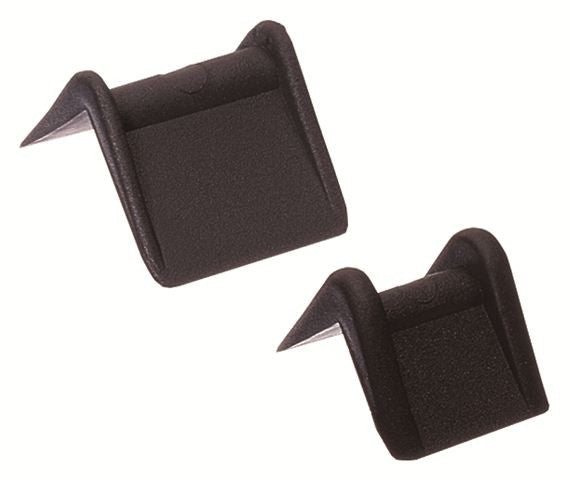
Protective / Edge & Corner Protection / Corner Strap Protectors
-
37x32mm - Corner Strap ProtectorsRegular price From £26.81 GBPRegular priceUnit price per
-
28x25mm - Corner Strap ProtectorsRegular price From £30.86 GBPRegular priceUnit price per


Protective / Edge & Corner Protection / Corner Strap Protectors
Corner strap protectors (also called strapping corner protectors or strap guards) are small, rigid corner pieces designed to sit between tensioned strapping and the load. Their job is simple: protect product edges from strap pressure, help straps track neatly around corners, and reduce the risk of strap damage caused by sharp edges. They are commonly used on palletised cartons, bundled products, and rigid packs where consistent strap tension is required.
Corner Strap Protectors — Helpful Guide
This collection includes compact plastic corner protectors sized to suit common strapping widths and typical pallet loads. They are intended for use with plastic strapping (such as PP or PET) and can also be used wherever a narrow, high-pressure band needs edge protection.
Types of protection in this category
-
Compact corner strap protectors (small footprint)
Designed for applications where you need edge protection without adding bulky packaging. These are ideal for cartons, small bundles, and loads where the strap contacts a defined corner.-
28x25mm - Corner Strap Protectors
A smaller corner protector suited to lighter-to-medium loads and narrower strap paths. Helps prevent strap indentation on carton edges and improves strap alignment around corners. -
37x32mm - Corner Strap Protectors
A larger corner protector that provides a wider bearing surface for higher strap tension or more delicate edges. Useful when you want to spread strap pressure over a larger area to reduce crushing and scuffing.
-
Where corner strap protectors help most
-
Preventing edge crush on cartons
Straps concentrate force at corners. A rigid protector increases the contact area so the same strap tension produces less pressure on the carton edge, reducing denting and deformation. -
Reducing strap damage and break risk
Sharp or abrasive edges can nick or cut strapping during tensioning or transit vibration. A protector creates a smoother strap path and reduces abrasion at the corner. -
Improving load stability
When straps sit consistently on corners, they are less likely to wander across the pack. This helps maintain even tension and can reduce shifting during handling. -
Protecting finished surfaces
Painted, laminated, or printed surfaces can scuff under strap movement. A protector acts as a sacrificial interface between strap and product.
Case study: stabilising a mixed-carton pallet
A warehouse shipping mixed cartons on a standard pallet experienced frequent corner crush and occasional strap failures during transport. The team increased strap tension to reduce shifting, but that made carton damage worse. By adding corner strap protectors at the top corners (and aligning straps consistently), they were able to keep the higher tension while reducing edge damage. Strap tracking improved, and rework from crushed corners dropped because the strap load was distributed more evenly.
How to choose the correct corner strap protector
1) Match the protector size to your strap path and corner geometry
Choose a protector that fully supports the strap where it turns the corner. If the protector is too small, the strap can ride off the edge and concentrate force again. If it is larger than needed, it may interfere with stacking patterns or automated strapping heads.
Use a smaller protector when space is tight, cartons are rigid, and strap tension is moderate.
Use a larger protector when strap tension is higher, edges are fragile, or you want maximum pressure distribution.
2) Consider strap width and tension
Corner strap protectors are most effective when the strap sits flat across the protector’s bearing surface. As strap width and applied tension increase, the benefit of a larger bearing area increases as well. If you are seeing strap “dig-in” marks, step up to a protector with a wider contact area.
3) Evaluate the load’s edge strength
Edge strength varies widely: double-wall cartons, chipboard, and rigid cases tolerate strap pressure better than lightweight corrugate or soft packs. If your load edges deform easily, prioritise a protector that spreads force and maintains a smooth strap radius.
4) Decide how many corners to protect
For most pallet loads, protect the corners where straps change direction. Common approaches include:
Top corners only for many carton pallets where the strap primarily compresses the top layer.
Top and bottom corners when the strap bears on both edges or when the pallet deck boards create uneven support.
All strap contact points for delicate products, high tension, or long-distance transport with vibration.
5) Check compatibility with your process
If you use semi-automatic or automatic strapping equipment, ensure protectors can be placed consistently without slowing throughput. In manual operations, choose a size that is easy to position quickly and stays in place while tension is applied.
Best practices for using corner strap protectors
-
Square up the load before strapping
Protectors work best when corners are true and the strap path is straight. If cartons are misaligned, the strap may pull protectors out of position during tensioning. -
Place protectors before tensioning
Position each protector so the strap will land centrally on the bearing surface. Hold in place until the strap has enough tension to keep it seated. -
Use consistent strap alignment
Mark strap locations on reusable loads or use guides so straps land in the same place each time. Consistency improves protection and reduces the chance of strap edge contact. -
Inspect for edge damage patterns
If you still see crushing, scuffing, or strap marks, increase the bearing area (larger protector), add additional protectors, or reduce strap tension where possible. -
Combine with other protective packaging when needed
For very fragile edges, corner strap protectors can be paired with edge boards, pads, or wrap to further distribute load and prevent abrasion.
Troubleshooting common issues
Protector slips out during tensioning
Ensure the protector is seated squarely on the corner and the strap is centred.
Reduce slack before final tension so the strap doesn’t “snap” into place.
If corners are rounded or irregular, consider adding a small pad or using a larger protector for better stability.
Strap still leaves marks on the carton
Increase the bearing area by moving to a larger protector size.
Check strap tension settings; excessive tension can overwhelm even a protector.
Confirm the strap is not twisted, which can create a narrow pressure line.
Strap frays or breaks at corners
Inspect the load edge for sharp staples, banding clips, or abrasive surfaces.
Use protectors at every corner the strap contacts, not just the top layer.
Verify strap type is appropriate for the applied tension and load weight.
Frequently asked questions
What is the difference between a corner strap protector and an edge protector?
A corner strap protector is designed specifically for the point where strapping turns around a corner, spreading force and smoothing the strap path. An edge protector is typically longer and protects a straight edge section, often used to distribute compression along a side.
Do I need corner strap protectors for plastic strapping?
They are recommended when strap tension is high, carton edges are soft, or the load has sharp corners that could damage the strap. Protectors help reduce indentation, improve strap tracking, and lower abrasion at corners during vibration and handling.
How do I choose between 28x25mm and 37x32mm corner strap protectors?
Choose based on how much bearing area you need and how tight your strap path is. The smaller size suits tighter spaces and moderate tension. The larger size spreads force over more area, helping with higher tension or more damage-prone edges.
How many corner strap protectors should I use per pallet?
Use one at each corner where the strap changes direction. For a typical two-strap pallet, that often means four protectors per strap on the top corners. Add bottom-corner protection when edges are fragile, tension is high, or transit conditions are rough.
Can corner strap protectors help prevent strap breakage?
Yes, when breakage is caused by abrasion or cutting at corners. A protector creates a smoother radius and barrier between strap and sharp edges. If breakage is due to over-tensioning or incorrect strap grade, adjust tension and strap selection as well.