
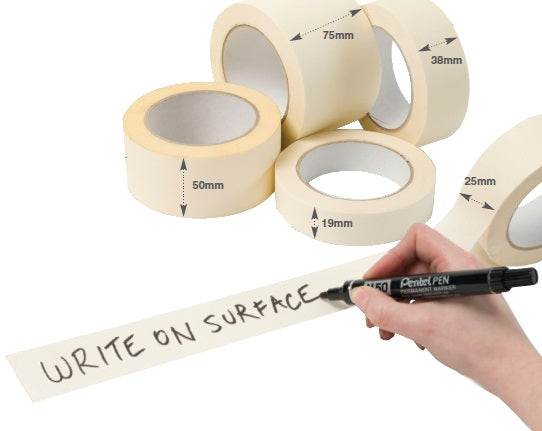
Tapes / Packing Tape (Popular) / 3M Masking Tape
-
48mmx50m - 3M Masking TapeRegular price From £8.06 GBPRegular priceUnit price per
-
100mmx50m - 3M Masking TapeRegular price From £15.95 GBPRegular priceUnit price per
-
24mmx50m - 3M Masking TapeRegular price From £4.05 GBPRegular priceUnit price per


Tapes / Packing Tape (Popular) / 3M Masking Tape
hello test
3M Masking Tape for Packing, Labeling & General Masking
Masking tape is a pressure-sensitive tape made with a paper backing and a rubber-based adhesive designed to stick reliably, tear by hand, and remove with minimal residue when used correctly. In packaging and warehouse workflows, masking tape is commonly used for temporary holds, bundling light items, labeling, color-coding, protecting surfaces during handling, and short-term masking during painting or finishing tasks. The products in this collection focus on practical, everyday masking tape widths that suit common carton sizes, pallet labels, and general shop use.
Because masking tape is engineered for temporary applications, performance depends on the surface (smooth vs. textured), cleanliness (dust/oil), dwell time (how long it stays applied), and temperature/humidity. Many general-purpose masking tapes use a crepe paper backing and rubber adhesive, a combination valued for conformability and quick stick on a wide range of materials. For example, 3M general-purpose masking tapes are commonly described as having a crepe paper backing with rubber or natural rubber adhesive, and some variants are specified for clean removal within a limited time window and for moderate temperature exposure.
3M Masking Tape — Helpful Guide
This guide explains the main ways masking tape is used in packaging and shop environments, and how to choose the right width for your task. The items below are the products available in this collection:
- 24mmx50m - 3M Masking Tape — A narrow width suited for small labels, edge masking, light bundling, and marking parts or cartons where you want a clean, readable strip without covering too much surface area.
- 48mmx50m - 3M Masking Tape — A versatile mid-width roll for general masking, temporary holds, and broader labeling on cartons, poly, or smooth surfaces. This width is often chosen when you want better coverage and visibility than narrow tapes.
- 100mmx50m - 3M Masking Tape — A wide format useful for covering larger areas, protecting surfaces during handling, creating broad “do not use/hold” markings, or masking wide edges where a single pass is faster than overlapping narrower strips.
Common use types (and which width tends to work best)
1) Temporary labeling & identification
Masking tape is frequently used as a writable label on cartons, totes, shelves, and work-in-progress items. For short notes, batch numbers, or routing instructions, a narrower tape can be easier to write on neatly. For high-visibility notes or larger handwriting, a wider tape gives more writing area.
- Best for compact labels: 24mmx50m - 3M Masking Tape
- Best for larger notes and visibility: 48mmx50m - 3M Masking Tape or 100mmx50m - 3M Masking Tape
2) Light bundling & temporary holds
For grouping lightweight items (instruction packets, small parts bags, or temporary closures), masking tape can be convenient because it tears by hand and removes more easily than many packaging tapes. It is not intended as a long-term carton sealing tape for heavy shipments; for that, reinforced or carton-sealing tapes are typically more appropriate.
- General-purpose bundling: 48mmx50m - 3M Masking Tape
- Small items and quick tabs: 24mmx50m - 3M Masking Tape
3) Surface protection & masking during finishing
In light paint masking or surface protection, the goal is usually a consistent seal along an edge and clean removal after the task is complete. General-purpose masking tapes are commonly described as crepe paper backed with rubber adhesive; some general-purpose variants are specified to remove cleanly within a limited time (often up to 24 hours on many substrates) and may have moderate temperature resistance (some are specified up to about 93°C / 200°F for certain applications). Always confirm suitability for your surface and process conditions.
- Edges, trim, and smaller parts: 24mmx50m - 3M Masking Tape
- General masking and broader coverage: 48mmx50m - 3M Masking Tape
- Wide coverage and faster masking of large areas: 100mmx50m - 3M Masking Tape
Case Study: Reducing Rework in a Pick/Pack Area
A small fulfillment team was experiencing frequent “mis-picks” and rework because cartons staged for carrier pickup looked similar and temporary notes were being written on scrap paper. They standardized a simple process: apply a masking tape label to the top of each carton with the route code and cutoff time, then remove the tape once the carton was scanned and loaded.
They used a narrow tape for small parcels and a wider tape for larger cartons so the label remained readable from a distance. The result was fewer staging errors and faster end-of-day cleanup because the temporary labels were removed rather than accumulating as permanent markings.
How to Choose the Correct Masking Tape (Practical Checklist)
1) Choose width based on the job
- 24mm: best for compact labels, narrow edges, and small parts.
- 48mm: best all-around width for general masking and labeling on cartons.
- 100mm: best for wide coverage, large labels, and protecting larger surfaces quickly.
2) Match the tape to the surface
Masking tape generally adheres best to clean, dry, smooth surfaces. Dust, oils, release coatings, and textured materials can reduce adhesion or cause edge lift. If you are applying tape to painted surfaces, plastics, or delicate finishes, test a small area first and remove within the recommended time window for your process.
3) Consider dwell time (how long it stays on)
Many general-purpose masking tapes are intended for short-term use. Longer dwell times can increase the chance of adhesive transfer or make removal harder, especially in heat or direct sunlight. If your workflow requires tape to remain in place for days, consider testing for clean removal at your expected dwell time.
4) Consider temperature and environment
Heat can soften adhesives and increase the risk of residue; cold can reduce initial tack and make paper backings less conformable. Some general-purpose masking tapes are specified for moderate temperature exposure (for example, certain variants are listed up to about 93°C / 200°F) and for clean removal within a limited period (often up to 24 hours on many substrates). If you are masking near ovens, curing lamps, or hot equipment, verify the tape’s temperature rating for your exact process.
5) Application technique matters
- Apply to a clean, dry surface.
- Use firm, even pressure along the tape to improve contact.
- Avoid stretching the tape during application; stretching can cause lift-back.
- For removal, pull back slowly at a low angle (close to the surface) to reduce the chance of tearing or residue.
Best Practices for Packaging & Warehouse Use
Writable labeling tips
- Use a permanent marker for legibility; allow ink to dry before handling.
- Place labels on a flat panel of the carton to reduce wrinkling.
- For barcodes or scan-critical labels, avoid covering printed codes with masking tape unless you have tested scan performance.
Clean removal tips
- Remove as soon as practical after the task is complete.
- If residue occurs, start with mild cleaners appropriate for the surface; avoid aggressive solvents on plastics or painted finishes.
- On delicate surfaces, test removal in an inconspicuous area first.
When not to use masking tape
Masking tape is typically not the best choice for long-term outdoor exposure, high-moisture environments, or heavy-duty carton sealing. In those cases, specialized packaging tapes (carton sealing, filament, or weather-resistant tapes) are usually more suitable.
Q&A
What is masking tape best used for in a packaging or warehouse setting?
Masking tape is best for temporary tasks such as writable labeling, short-term holds, bundling light items, and marking or color-coding cartons and work-in-progress. It is designed to tear by hand and remove more easily than many sealing tapes when used for short durations.
How do I choose between 24mm, 48mm, and 100mm wide masking tape?
Choose 24mm for small labels, narrow edges, and compact markings. Choose 48mm for general-purpose labeling and masking on cartons and smooth surfaces. Choose 100mm when you need wide coverage, large labels, or faster masking of larger areas without overlapping strips.
Will masking tape leave residue or damage surfaces?
It can if left on too long, exposed to heat/sunlight, or applied to delicate or dirty surfaces. For best results, apply to clean, dry surfaces, avoid stretching during application, and remove soon after use by pulling back slowly at a low angle.
Can I use masking tape for sealing shipping cartons?
Masking tape is generally intended for temporary masking and light-duty holds, not as a primary carton-sealing tape for shipping. For reliable shipment sealing—especially on heavier boxes—carton-sealing tapes are typically better suited for strength, adhesion, and durability.
How does temperature affect masking tape performance?
Cold temperatures can reduce initial tack and make the paper backing less conformable, while heat can soften adhesive and increase residue risk. If masking near warm equipment or during curing, verify the tape’s temperature rating and test removal at your expected dwell time.