
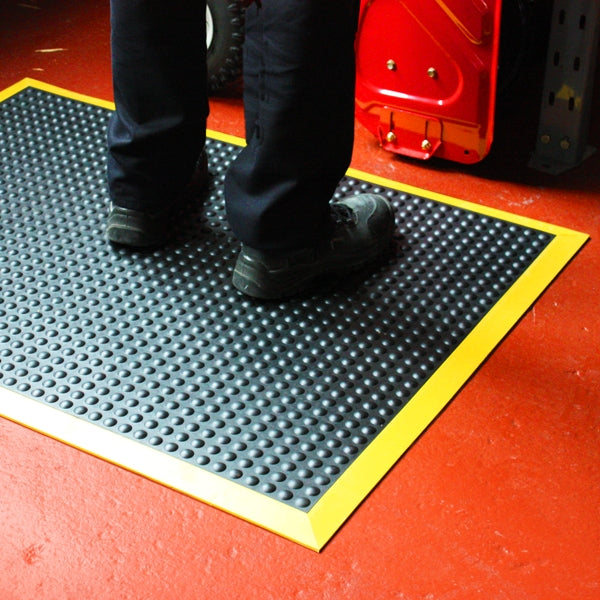
Safety / Floor Mats
-
 Sold outKeep Your Distance Mat 65cm x 200cmRegular price From £86.06 GBPRegular priceUnit price per
 -
 Sold outOCM035 OctoCell 1.5m x1.0m x 22mmRegular price £0.00 GBPRegular priceUnit price per
 -
 Sold outOCM035 OctoCell 1.5m x1.0m x 22mmRegular price From £45.78 GBPRegular priceUnit price per
 -
MC000056 1215 Paris 4 Black/Grey 90X150 CM - border 3 cm - border 3 cm ( Boston ) [Dayton]Regular price £0.00 GBPRegular priceUnit price per
-
MC000064 1215 Paris 5 Black/Rust 90X120 CM - border 3 cm ( Boston ) [Dayton]Regular price £0.00 GBPRegular priceUnit price per
-
MC000037 1215 Paris 2 Black/Red 90X120 CM - border 3 cm ( Boston ) [Dayton]Regular price £0.00 GBPRegular priceUnit price per
-
MC000055 1215 Paris 4 Black/Grey 90X120 CM - border 3 cm ( Boston ) [Dayton]Regular price £0.00 GBPRegular priceUnit price per
-
MC000053 1215 Paris 4 Black/Grey 60X90 CM- border 3 cm ( Boston ) [Dayton]Regular price £0.00 GBPRegular priceUnit price per
-
MC000058 1215 Paris 4 Black/Grey 120X240 CM - border 3 cm ( Boston ) [Dayton]Regular price £0.00 GBPRegular priceUnit price per
-
MC000057 1215 Paris 4 Black/Grey 120X180 CM - border 3 cm ( Boston ) [Dayton]Regular price £0.00 GBPRegular priceUnit price per


![MC000056 1215 Paris 4 Black/Grey 90X150 CM - border 3 cm - border 3 cm ( Boston ) [Dayton]](http://store.sapphirepackaging.com/cdn/shop/files/cat-284-474-475-image_7803b8e2-92e4-4ee7-b7d1-1587ec981cc2.jpg?v=1724357070&width=533)
![MC000064 1215 Paris 5 Black/Rust 90X120 CM - border 3 cm ( Boston ) [Dayton]](http://store.sapphirepackaging.com/cdn/shop/files/cat-284-474-475-image_791b301f-73e9-449a-888a-074a33213d36.jpg?v=1724357066&width=533)
![MC000037 1215 Paris 2 Black/Red 90X120 CM - border 3 cm ( Boston ) [Dayton]](http://store.sapphirepackaging.com/cdn/shop/files/cat-284-474-475-image_4918f4cd-5bbf-40ec-9d17-74c566292b55.jpg?v=1724357062&width=533)
![MC000055 1215 Paris 4 Black/Grey 90X120 CM - border 3 cm ( Boston ) [Dayton]](http://store.sapphirepackaging.com/cdn/shop/files/cat-284-474-475-image_48fc5af4-03a5-4c2c-b7d1-f025b2431eee.jpg?v=1724357056&width=533)
![MC000053 1215 Paris 4 Black/Grey 60X90 CM- border 3 cm ( Boston ) [Dayton]](http://store.sapphirepackaging.com/cdn/shop/files/cat-284-474-475-image_114a6689-59fb-4e46-a0a0-fb83ce026833.jpg?v=1724357053&width=533)
![MC000058 1215 Paris 4 Black/Grey 120X240 CM - border 3 cm ( Boston ) [Dayton]](http://store.sapphirepackaging.com/cdn/shop/files/cat-284-474-475-image_413acc6d-ee8a-4714-b8bd-1462c0ca851a.jpg?v=1724357050&width=533)
![MC000057 1215 Paris 4 Black/Grey 120X180 CM - border 3 cm ( Boston ) [Dayton]](http://store.sapphirepackaging.com/cdn/shop/files/cat-284-474-475-image_3debffb9-628a-4650-b088-f0be43ce0d92.jpg?v=1724357048&width=533)
Safety / Floor Mats
Safety / Floor Mats
Safety and floor mats help manage slip risks, reduce fatigue from standing, and protect floors in busy entrances and work areas. In commercial and industrial settings, the right matting can improve traction, capture dirt and moisture before it spreads, and create clearer walkways and standing zones. This collection includes entrance-style mats and specialty floor mats in multiple sizes, along with a long runner designed to guide foot traffic.
Safety / Floor Mats — Helpful Guide
Below is a practical guide to the mat types represented in this collection, what they are typically used for, and which products on this page match each use case. When selecting matting, start with the environment (dry vs wet, indoor vs outdoor, oily vs clean), then confirm size, placement, and cleaning method.
1) Social distancing & traffic guidance runners
Long runners are commonly used to guide queues, define one-way routes, and create a visible “path” through entrances, corridors, or service counters. They are especially useful where you want consistent messaging and a clear walking lane over a longer distance.
- Keep Your Distance Mat 65cm x 200cm — A long-format floor mat intended to help communicate spacing and guide foot traffic. The 65 cm width suits narrow walkways, while the 200 cm length provides a clear, continuous visual zone.
2) Entrance mats (dirt & moisture control)
Entrance matting is designed to reduce slips and protect interior flooring by capturing debris and moisture at the door. A common approach is to use a more aggressive “scraper” surface at the outer door and a more absorbent “wiper” surface just inside. In many facilities, a single high-performance entrance mat is used inside the vestibule to handle both fine debris and moisture.
- MC000053 1215 Paris 4 Black/Grey 60X90 CM - border 3 cm ( Boston ) [Dayton] — Compact entrance size for smaller doorways, side entrances, or as a secondary mat inside a vestibule.
- MC000037 1215 Paris 2 Black/Red 90X120 CM - border 3 cm ( Boston ) [Dayton] — Medium entrance mat size suited to moderate foot traffic areas where you want more coverage than a standard doormat.
- MC000055 1215 Paris 4 Black/Grey 90X120 CM - border 3 cm ( Boston ) [Dayton] — A versatile mid-size option for interior entrances and reception areas.
- MC000064 1215 Paris 5 Black/Rust 90X120 CM - border 3 cm ( Boston ) [Dayton] — Similar footprint to other 90 x 120 cm mats, useful where you want consistent sizing across multiple entrances.
- MC000056 1215 Paris 4 Black/Grey 90X150 CM - border 3 cm - border 3 cm ( Boston ) [Dayton] — Larger coverage for higher traffic doors, wider entrances, or where people tend to pause (e.g., badge readers, turnstiles).
- MC000057 1215 Paris 4 Black/Grey 120X180 CM - border 3 cm ( Boston ) [Dayton] — Oversized entrance mat for busy lobbies and vestibules; helps extend the “walk-off” zone so more moisture and debris is removed before reaching interior floors.
- MC000058 1215 Paris 4 Black/Grey 120X240 CM - border 3 cm ( Boston ) [Dayton] — Extra-large format for very high traffic entrances or long vestibules where extended walk-off length is needed.
3) Cellular / drainage floor mats (wet-area traction & debris drop-through)
Cellular or open-structure mats are often used where water, mud, or debris is expected. The open pattern helps liquids and small debris fall through, keeping the top surface more stable underfoot. These mats are commonly placed at exterior thresholds, workshop entrances, or transitional areas where shoes are wet or dirty.
- OCM035 OctoCell 1.5m x1.0m x 22mm — A thick, cellular-style mat sized for larger doorways or work-area transitions; the 22 mm thickness supports drainage and helps keep the walking surface elevated above pooled moisture.
- OCM035 OctoCell 1.5m x1.0m x 22mm — Same listed dimensions and thickness; useful when you need consistent coverage across multiple locations.
Case Study: Reducing slips at a busy entrance
A facility with frequent foot traffic noticed that rainy-day moisture was being tracked into the lobby, creating slick patches near the door and along the main walkway. The team implemented a simple two-step approach: (1) a larger entrance mat inside the vestibule to increase walk-off length, and (2) a cellular/drainage mat at the threshold to manage heavier water and debris. After installation, staff reported fewer wet footprints beyond the entrance zone and easier daily cleaning because dirt and moisture were concentrated where the mats were placed.
How to choose the correct mat for your space
Step 1: Identify the primary hazard
- Moisture at entrances: prioritize entrance mats with enough surface area to capture water and fine debris.
- Mud/grit at thresholds: consider cellular/drainage mats that allow debris to drop through.
- Traffic management: use a runner-style mat to guide movement and reinforce spacing or directional flow.
Step 2: Size for “walk-off” length
For entrances, mat performance is strongly influenced by coverage. A larger mat provides more steps for shoes to shed moisture and dirt. If you have space, choose a longer or larger footprint (for example, 120 x 180 cm or 120 x 240 cm) for high-traffic doors. For smaller doors or secondary entrances, 60 x 90 cm or 90 x 120 cm may be sufficient.
Step 3: Match the mat to the environment
- Indoor lobbies and reception: entrance mats help protect interior flooring and reduce slip risk from tracked-in moisture.
- Vestibules and transitional zones: larger entrance mats can handle both debris and moisture where people pause or queue.
- Exterior thresholds and wet transitions: cellular/drainage mats help keep the top surface more stable by letting water pass through.
Step 4: Consider cleaning and maintenance
Plan for how the mat will be cleaned and how often. Entrance mats typically need regular vacuuming and periodic deep cleaning to maintain moisture absorption and debris capture. Cellular/drainage mats often benefit from shaking out, hosing down, and allowing the underside area to dry. Regardless of type, ensure the mat lies flat and is positioned so edges do not create a trip point.
Placement tips for safer floors
- Use a sequence: place a mat at the threshold (especially in wet weather) and a larger mat just inside to extend walk-off length.
- Cover the natural path: position mats where people actually walk, not just where they “should” walk.
- Avoid gaps: if the entrance is wide, use a mat size that covers the full walking lane so traffic doesn’t bypass it.
- Check transitions: ensure the mat thickness and edges work with doors and do not interfere with swing clearance.
- Reassess seasonally: rainy seasons may require larger coverage or more frequent cleaning.
Common mistakes to avoid
- Choosing too small a mat: insufficient walk-off length means moisture and debris continue into the building.
- Using the wrong surface for the condition: a mat that works well indoors may not handle heavy water or mud at an exterior threshold.
- Neglecting maintenance: saturated or clogged mats can lose effectiveness and may become slippery.
- Poor placement: mats placed off the main walking line won’t capture debris where it matters.
Q&A
How do I choose the right entrance mat size for my doorway?
Start by measuring the clear walking width and the available depth inside the entrance. Choose the largest mat that fits the natural walking path. More depth generally improves performance because it increases “walk-off” steps, helping remove more moisture and fine debris.
What’s the difference between an entrance mat and a cellular/drainage mat?
Entrance mats are designed to wipe and hold moisture and fine dirt on the surface, making them ideal for interior vestibules and lobbies. Cellular/drainage mats use an open pattern so water and debris can fall through, which helps in wet thresholds and dirtier transitions.
Where should a long runner-style mat be used?
Runner mats work best in corridors, queue lines, and narrow walkways where you want to guide foot traffic over a longer distance. They can help define a clear route and reduce wear on flooring along the main path, especially near service counters or entry lanes.
How often should safety and entrance mats be cleaned?
Cleaning frequency depends on traffic and weather. In busy entrances, vacuuming may be needed daily, with periodic deeper cleaning to restore performance. In wet or muddy areas, cellular mats may need shaking out or hosing down more often to prevent buildup and maintain traction.
What should I check after installing a floor mat to reduce trip risk?
Confirm the mat lies flat with no curled edges, and that doors clear the mat without catching. Ensure the mat doesn’t slide underfoot and that transitions to surrounding flooring are smooth. Recheck after cleaning, since repositioning can create edge lift or gaps.