
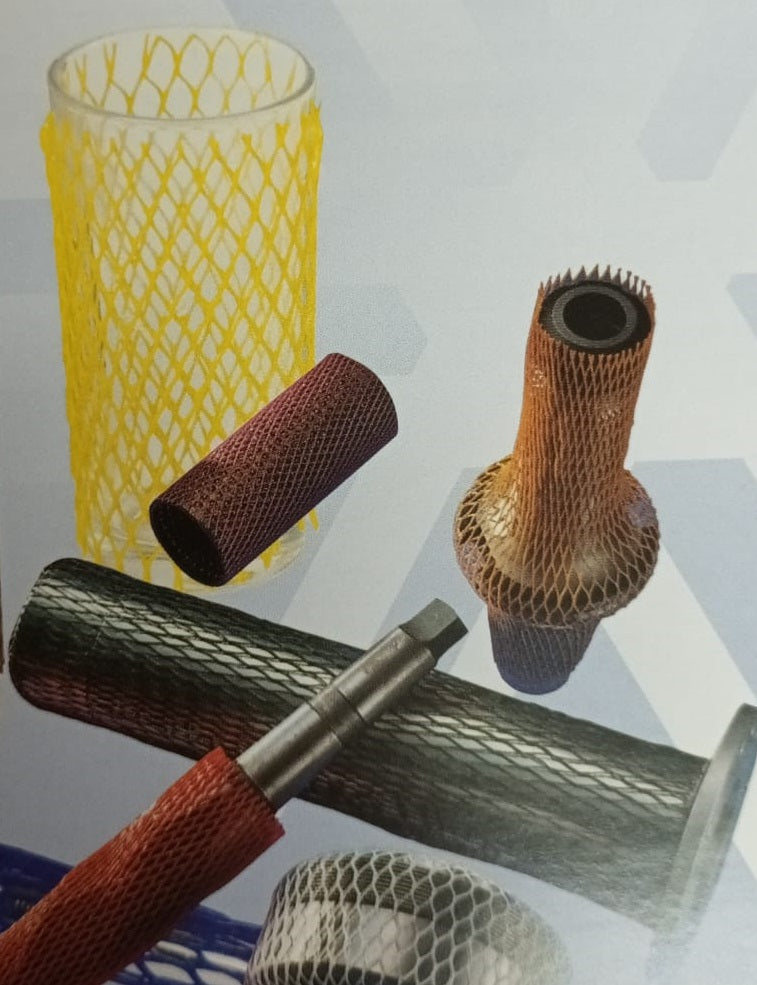
Protective / Protective Mesh Sleeving
-
40-60mm x 50m - Yellow Protective Mesh SleevingRegular price From £37.95 GBPRegular priceUnit price per
-
10-20mm x 50m - Voilet Protective Mesh SleevingRegular price From £37.95 GBPRegular priceUnit price per
-
70-100mm x 50m - Red Protective Mesh SleevingRegular price From £37.95 GBPRegular priceUnit price per
-
90-150mm x 50m - orange Protective Mesh SleevingRegular price From £37.95 GBPRegular priceUnit price per
-
5-15mm x 50m - Clear Protective Mesh SleevingRegular price From £37.95 GBPRegular priceUnit price per
-
50-75mm x 50m - Brown Protective Mesh SleevingRegular price From £37.95 GBPRegular priceUnit price per
-
20-50mm x 50m - Blue Protective Mesh SleevingRegular price From £37.95 GBPRegular priceUnit price per


Protective / Protective Mesh Sleeving
Protective mesh sleeving is a lightweight, flexible netting designed to reduce surface scuffs and minor impact damage when items rub together in storage, handling, or transit. It expands to fit a range of diameters, making it useful for protecting parts with varying profiles such as bottles, tubes, turned components, and delicate finished surfaces.
Protective Mesh Sleeving — Helpful Guide
This collection includes expandable protective mesh sleeving supplied on 50m rolls in multiple diameter ranges. The open mesh structure cushions contact points, helps prevent abrasion, and allows airflow and drainage—useful where moisture needs to escape or where items should not be sealed in a film.
Types of protective mesh sleeving in this collection
-
Small-diameter expandable mesh (for slim parts and necks)
Designed for narrow items such as small tubes, rods, stems, and compact components where you want a snug fit without bulky packaging.-
5-15mm x 50m - Clear Protective Mesh Sleeving
A compact, expandable sleeve range suited to small diameters; the clear mesh makes it easy to visually identify the protected item. -
10-20mm x 50m - Voilet Protective Mesh Sleeving
A slightly larger small-diameter range for slim parts; color can help with quick size identification during packing.
-
5-15mm x 50m - Clear Protective Mesh Sleeving
-
Medium-diameter expandable mesh (general-purpose protection)
Commonly used for mid-sized components, small bottles, fittings, and parts where abrasion protection is the main goal.-
20-50mm x 50m - Blue Protective Mesh Sleeving
A versatile range that expands across many common diameters, useful for mixed packing lines and varied product shapes. -
40-60mm x 50m - Yellow Protective Mesh Sleeving
A mid-range sleeve for larger cylindrical items; helps reduce scuffing on finished surfaces during handling.
-
20-50mm x 50m - Blue Protective Mesh Sleeving
-
Large-diameter expandable mesh (for larger bottles, housings, and bulky parts)
Intended for wider items where you still want breathable, lightweight protection without the bulk of foam.-
50-75mm x 50m - Brown Protective Mesh Sleeving
A larger diameter range for wider components and containers; provides a protective buffer between items. -
70-100mm x 50m - Red Protective Mesh Sleeving
Suitable for larger parts and containers; the open mesh helps prevent trapped moisture while limiting surface contact. -
90-150mm x 50m - orange Protective Mesh Sleeving
The largest range in this collection for bulky items; useful where you need quick slip-on protection for wide diameters.
-
50-75mm x 50m - Brown Protective Mesh Sleeving
Where protective mesh sleeving is typically used
Expandable mesh sleeving is often chosen when the priority is preventing scratches, scuffs, and rub marks rather than providing heavy shock absorption. Typical uses include:
- Bottles and containers: helps reduce glass-to-glass contact and surface abrasion during packing and transport.
- Machined or coated components: protects finishes from handling marks, especially on anodized, painted, polished, or plated surfaces.
- Tubes, rods, and profiles: slips on quickly and conforms to varying diameters along the length.
- Fragile items that benefit from airflow: the open structure allows ventilation and drainage, which can be helpful for items that may be damp after processing.
- Sorting and kitting: color options can support size identification and reduce packing errors.
Case study: reducing cosmetic damage on finished parts
A packing line handling finished cylindrical components was experiencing cosmetic rejects caused by parts rubbing together in totes and cartons. Switching to expandable mesh sleeves for each part reduced surface-to-surface contact and minimized scuffing during internal movement and outbound shipping. Because the sleeve is breathable and quick to apply, it improved protection without slowing throughput.
How to choose the correct protective mesh sleeving
Selecting the right sleeve is mainly about matching the sleeve’s expandable diameter range to your item’s outside diameter and deciding how much coverage you need.
1) Measure the outside diameter (OD) and identify the working range
Measure the widest point of the item you want to cover (or the widest section you need to pass the sleeve over). Choose a sleeve range where your OD sits comfortably within the stated minimum–maximum. If your item is near the upper end of the range, the mesh will be more stretched and may provide less cushioning; if it’s near the lower end, the fit will be looser.
2) Consider the surface sensitivity
For high-gloss, polished, or coated finishes, prioritize a sleeve size that fits without excessive stretching and provides consistent separation between items. If the goal is mainly to prevent light scuffs, a broader range may be acceptable. For very delicate finishes, consider pairing sleeving with additional void fill or separators.
3) Decide on coverage length and application method
Mesh sleeving can be cut to length for partial coverage (contact points, edges, necks) or full-length coverage. For repetitive packing tasks, pre-cut lengths can speed up application and improve consistency. For long items, consider whether you need overlap at the ends to prevent exposed contact areas.
4) Think about moisture, airflow, and cleanliness
The open mesh design allows airflow and drainage, which can be beneficial where condensation or residual moisture is a concern. If you need a dust barrier or tamper evidence, mesh sleeving is not a sealed solution; you may need an outer bag or wrap depending on your process.
5) Use color as a practical packing control
Color-coded sleeving can help operators quickly select the correct size range and can support visual checks in kitting, assembly, or dispatch. If you pack multiple diameters, assigning a color to each size range can reduce mistakes and rework.
Best practices for packing with mesh sleeving
- Avoid overstretching: if the sleeve is stretched tight, it may thin out and provide less separation between items.
- Protect edges and protrusions: for parts with sharp edges, consider additional edge protection or ensure the sleeve is not snagging during application.
- Combine with separators when needed: mesh sleeving reduces abrasion, but cartons with heavy loads may still require dividers, pads, or void fill to limit movement.
- Standardize cut lengths: consistent lengths improve repeatability and reduce waste.
- Test in real transit conditions: validate the chosen size and coverage with a short trial shipment to confirm cosmetic protection and packing efficiency.
Frequently asked questions
What does the diameter range (for example, 20–50mm) mean?
The range indicates the approximate outside diameters the sleeving can fit by expanding and contracting. If your item’s diameter falls within that range, the sleeve should slide on and conform. Near the maximum, the mesh stretches more and may cushion less.
Is protective mesh sleeving meant to prevent breakage?
It is primarily used to reduce scratches, scuffs, and surface rub marks by separating items and softening contact points. It offers limited shock absorption compared with foam. For high drop-risk shipments, combine it with cushioning materials and secure carton packing.
How do I choose between two sizes if my item is close to the overlap?
If your item sits near the top end of a range, choosing the next size up can reduce stretching and make application easier. If you need a tighter grip to keep the sleeve in place, the smaller range may work better—test both for fit and protection.
Can I cut the sleeving to shorter lengths without it unraveling?
Yes, it is commonly cut to length for partial or full coverage. Because it is a net structure, the cut edge can feel slightly open, but it typically remains usable. For neatness and consistency, use a sharp cutter and standardize lengths.
When should I avoid using mesh sleeving?
Avoid relying on it when you need a sealed moisture or dust barrier, tamper evidence, or strong impact protection. It is also not ideal for sharp-edged parts that can snag or cut the mesh. In those cases, use appropriate wraps, bags, or rigid protection.