
Equipment / Hot Melt Glue
-
43mm - HSS43 High Strength Amber Hot Melt Glue - Long Set (Kg)Regular price From £58.57 GBPRegular priceUnit price per
-
300mm - High Performance Hot Melt Glue (Kg)Regular price From £57.62 GBPRegular priceUnit price per
-
General Purpose Display Clear Hot Melt Glue (Kg)Regular price From £12.40 GBPRegular priceUnit price per
-
300mm - HSS12 General Purpose Clear Hot Melt Glue (Kg)Regular price From £78.74 GBPRegular priceUnit price per
-
43mm - General Purpose Clear Hot Melt Glue (Kg)Regular price From £35.70 GBPRegular priceUnit price per
-
18mm - Fast Set Glue (Kg)Regular price From £51.79 GBPRegular priceUnit price per
-
300x12mm MPS12 Multi Purpose Clear Hot Melt Glue (Kg)Regular price From £38.29 GBPRegular priceUnit price per


Equipment / Hot Melt Glue
Hot Melt Glue Sticks for Packaging & Assembly
Hot melt glue is a solid thermoplastic adhesive supplied as sticks that melt inside a glue gun or applicator and then set as they cool. In packaging and light assembly work, hot melt is valued for fast handling strength, clean application, and the ability to bond many common substrates such as corrugated board, paper, some plastics, foams, and wood. This category focuses on hot melt glue sticks used with compatible equipment, including larger-format sticks designed for higher output applications.
Because hot melt adhesives are formulated for different performance goals, choosing the right stick is less about “one glue fits all” and more about matching open time, set speed, viscosity/flow, and bond strength to your process. The products in this collection include clear general-purpose options for neat appearance, fast-set sticks for quick cycle times, and high-strength amber formulations for demanding bonds and longer working time.
Equipment / Hot Melt Glue — Helpful Guide
Below is a practical guide to the hot melt glue types in this collection, what they are typically used for, and how the listed products fit into each group. Use it to narrow down the best adhesive for your application, equipment, and production pace.
1) High-strength, longer open time (amber)
High-strength amber hot melt sticks are commonly selected when you need stronger bonds, better gap filling, or a longer working time before the adhesive sets. A longer open time can help when aligning parts, bonding larger surfaces, or working at a pace where immediate “grab” is not ideal.
-
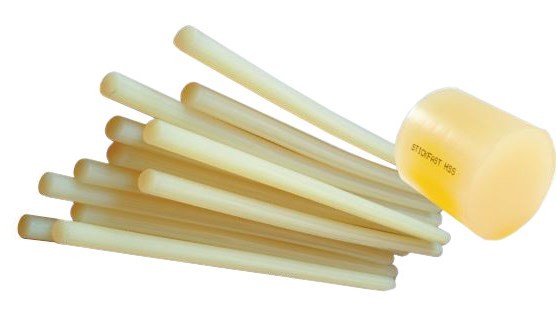
43mm - HSS43 High Strength Amber Hot Melt Glue - Long Set (Kg)
Large-diameter, long-set amber hot melt designed for higher output equipment. Useful where extended open time supports positioning and where higher bond strength is required.
2) High-performance hot melt (general industrial use)
“High performance” hot melt is often used as an all-rounder when you want dependable bonding across a range of packaging materials and operating conditions. These formulations are typically chosen for consistent flow and reliable adhesion in routine production environments.
-
300mm - High Performance Hot Melt Glue (Kg)
Long-length sticks intended for compatible applicators. A practical choice for general packaging and assembly tasks where steady performance and consistent application are priorities.
3) Clear hot melt for display and neat appearance
Clear hot melt sticks are preferred when the adhesive line may be visible, such as point-of-sale displays, presentation packaging, or light assembly where aesthetics matter. Clear formulations can also be helpful when you want to visually confirm coverage without the amber tint.
-
General Purpose Display Clear Hot Melt Glue (Kg)
Clear, general-purpose hot melt suited to display work and applications where a cleaner-looking bond line is beneficial. -
300mm - HSS12 General Purpose Clear Hot Melt Glue (Kg)
Long-length clear sticks designed for compatible equipment. Suitable for general bonding where clarity and consistent flow are desired. -
43mm - General Purpose Clear Hot Melt Glue (Kg)
Large-diameter clear hot melt for higher output use. A good fit for general packaging tasks where you want clear adhesive in a larger stick format.
4) Fast-set hot melt for quick cycle times
Fast-set hot melt is used when you need rapid handling strength—helpful for quick pack-out, short clamp times, or workflows where parts must be moved immediately after bonding. Fast set can improve throughput, but it also reduces working time, so alignment needs to be quick and repeatable.
-
18mm - Fast Set Glue (Kg)
Fast-setting hot melt sticks intended for faster-paced work. Useful when you want bonds to grab quickly and reduce waiting time before handling.
5) Multi-purpose clear hot melt (balanced performance)
Multi-purpose clear hot melt aims to balance open time, set speed, and adhesion across common materials. It’s often chosen when you run varied jobs and want one adhesive that performs reliably without frequent changeovers.
-
300x12mm MPS12 Multi Purpose Clear Hot Melt Glue (Kg)
12mm diameter, 300mm length clear sticks designed for versatile use. A practical option for mixed packaging and light assembly tasks where a balanced adhesive is preferred.
Process Notes: What Changes When You Change Glue Type
Hot melt performance is strongly influenced by both formulation and process settings. If you switch from a general-purpose clear stick to a fast-set or high-strength long-set adhesive, expect changes in how the glue flows, how long it stays workable, and how quickly it develops handling strength. The most common process variables to review are:
- Open time: How long the adhesive remains tacky and able to wet-out surfaces before it skins over.
- Set time: How quickly the bond develops enough strength to handle or move the part.
- Viscosity/flow: How easily the molten adhesive dispenses and spreads; affects bead shape and coverage.
- Heat sensitivity of substrates: Thin films, foams, and coated papers can deform or wrinkle if temperature is too high.
- Environmental conditions: Cold substrates can shorten open time; dusty surfaces reduce adhesion; humidity can affect some materials.
Case Study: Reducing Rework on Carton Closures
A packing line sealing small cartons experienced occasional “pop-open” failures during handling. Operators were applying adhesive consistently, but the cartons were being moved almost immediately after closing. The adhesive used had a longer working time, which helped alignment but delayed handling strength.
By switching to a faster-setting hot melt and adjusting the application pattern to a slightly thinner, continuous bead, the cartons achieved handling strength sooner. The team also standardized compression time (brief, consistent pressure after closing) and ensured cartons were stored at room temperature before sealing. The result was fewer re-closures and more consistent seals without changing the carton design.
How to Choose the Correct Hot Melt Glue Stick
Use the steps below to select a glue stick that matches your equipment and your application requirements.
Step 1: Confirm stick size compatibility
Glue sticks must match the applicator’s accepted diameter and length. This collection includes multiple formats (including long-length sticks and larger diameters). If the stick is too large, it won’t feed; if it’s too small, it may not seal properly in the feed mechanism and can cause inconsistent dispensing.
- Diameter: Commonly used sizes include 12mm and 18mm, while larger diameters (such as 43mm) are typically used with higher output equipment.
- Length: Longer sticks (such as 300mm) can reduce changeovers in continuous work.
Step 2: Decide whether appearance matters
If the adhesive line may be visible (display packaging, presentation boxes, craft-style assembly), clear hot melt is often preferred. For hidden bonds (inside cartons, under flaps), appearance may be less important than speed or strength.
Step 3: Match open time and set speed to your workflow
- Fast set: Best when parts must be handled quickly and alignment is simple and repeatable.
- General purpose / multi-purpose: Good for mixed jobs and everyday packaging tasks.
- Long set / longer open time: Helpful for larger surfaces, repositioning, or when you need more time to close and compress.
Step 4: Consider substrate and stress on the bond
Bond strength needs vary widely. Light paper-to-paper bonds may work well with general-purpose clear hot melt, while heavier corrugated closures, coated surfaces, or parts under peel stress may benefit from higher strength formulations and optimized bead patterns.
Step 5: Validate with a simple line trial
Before standardizing, run a short trial and check: (1) bead consistency, (2) wet-out on both surfaces, (3) time to handling strength, and (4) bond performance after cooling. If failures occur, adjust temperature, bead size, compression time, or adhesive type—changing only one variable at a time.
Application Tips for Better Bonds
- Surface prep: Remove dust and loose fibers; hot melt bonds best to clean, dry surfaces.
- Temperature control: Too cool can cause poor wet-out; too hot can char adhesive, string excessively, or damage substrates.
- Bead pattern: A continuous bead improves sealing; dots can reduce adhesive use but may lower peel resistance.
- Compression: Apply firm, even pressure immediately after joining to maximize contact and wet-out.
- Storage: Keep sticks clean and dry; contamination can affect feeding and bond quality.
- Maintenance: Periodically clean nozzles and check feed mechanisms to prevent inconsistent flow.
Troubleshooting Common Hot Melt Issues
Stringing (fine threads of glue)
Stringing can be influenced by temperature, viscosity, and trigger technique. Lowering temperature slightly (within equipment limits), improving cut-off technique, or selecting a formulation with different flow characteristics can reduce stringing.
Poor adhesion or bonds that peel apart
Common causes include insufficient temperature (poor wet-out), dusty surfaces, too little adhesive, or moving parts before adequate set. Increase compression time, verify substrate temperature, and consider a higher strength or faster set adhesive depending on the failure mode.
Charring or burnt odor
Overheating or leaving adhesive molten for extended periods can degrade hot melt. Reduce temperature if possible, avoid long idle times at high heat, and follow equipment guidance for standby settings and cleaning.
Inconsistent bead size
Check for partial nozzle blockage, inconsistent feed, or mismatched stick size. Ensure sticks are the correct diameter for the applicator and that the feed path is clean.
Q&A
How do I choose between fast-set and long-set hot melt glue?
Choose fast-set when parts must be handled quickly and alignment is simple, because it develops handling strength sooner. Choose long-set when you need more working time to position parts or close larger surfaces, since it stays tacky longer before setting.
What does “clear” hot melt glue change in real use?
Clear hot melt is mainly about appearance when the adhesive line may be visible, such as displays or presentation packaging. Performance still depends on formulation, but clear sticks can make glue lines less noticeable and help you visually confirm coverage on light materials.
Why do some glue sticks come in different diameters and lengths?
Stick size must match the applicator’s feed system and melt capacity. Smaller diameters are common for handheld tools, while larger diameters and longer lengths are used for higher output equipment to reduce changeovers and maintain steadier dispensing during continuous work.
What causes hot melt glue to string, and how can I reduce it?
Stringing often happens when adhesive is too hot, too fluid, or when the cut-off action is slow. Try reducing temperature slightly, improving trigger release technique, and keeping the nozzle clean. If needed, test a formulation with different viscosity or set behavior.
How can I improve bond strength on corrugated cartons?
Improve strength by ensuring clean, dry surfaces and adequate melt temperature for good wet-out. Use a consistent bead pattern and apply firm compression immediately after closing. If cartons are moved too soon, consider a faster-setting adhesive or increase compression time.