
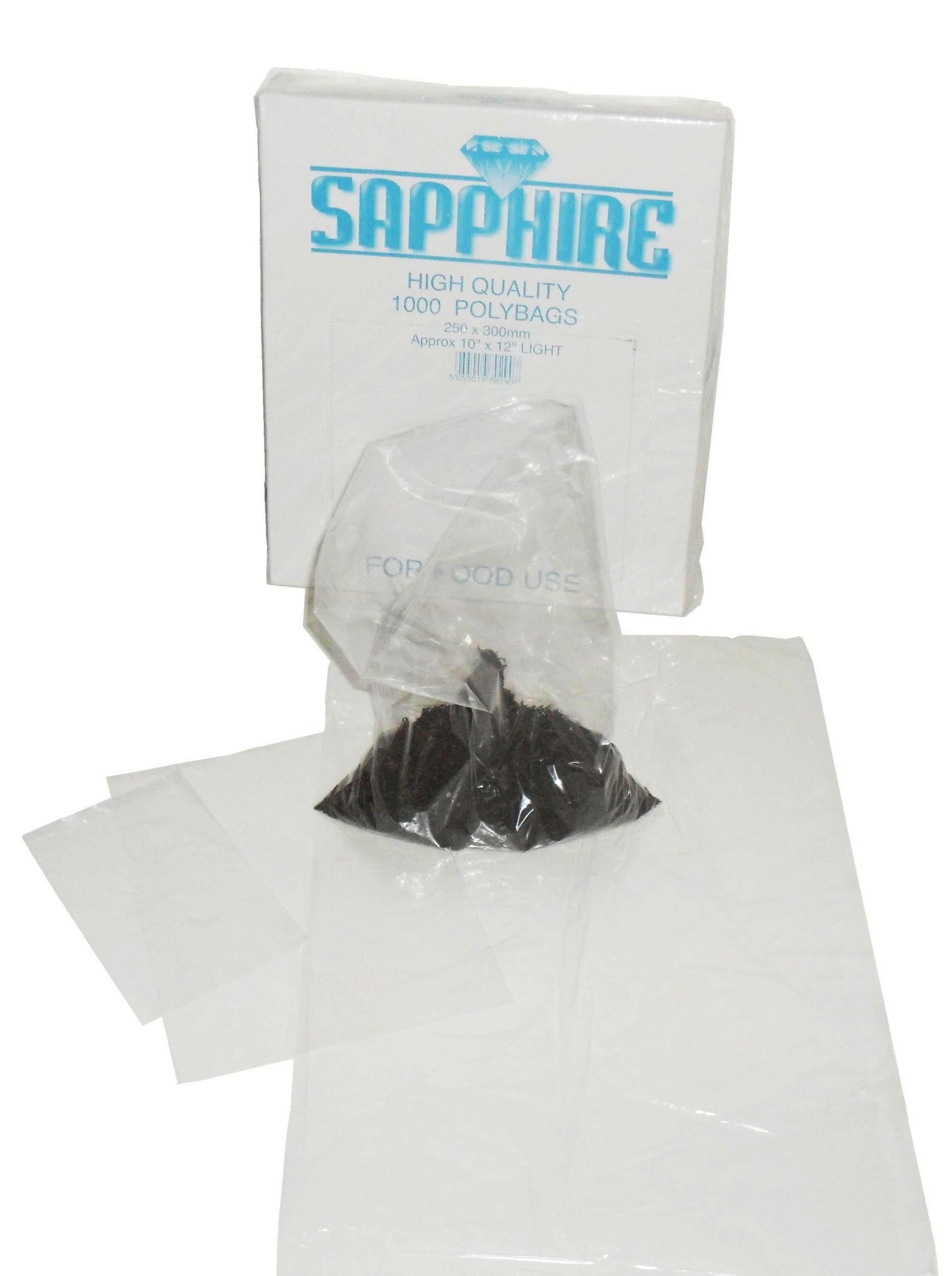
Polythene Bags Lightweight & 100g (25mu)
-
20x30 - Light Clear Poly Bags (508x762mm)Regular price From £39.75 GBPRegular priceUnit price per
-
15x20 - Light Clear Poly Bags (381x508mm)Regular price From £46.83 GBPRegular priceUnit price per
-
24x36 - Light Clear Poly Bags (610x914mm)Regular price From £62.88 GBPRegular priceUnit price per
-
12x18 - Light Clear Poly Bags (305x457mm)Regular price From £31.14 GBPRegular priceUnit price per
-
8x10 - Light Clear Poly Bags (203x254mm)Regular price From £13.50 GBPRegular priceUnit price per
-
10x15 - Light Clear Poly Bags (254x381mm)Regular price From £23.02 GBPRegular priceUnit price per
-
24x24 - Light Clear Poly Bags (610x610mm)Regular price From £72.66 GBPRegular priceUnit price per
-
12x15 - Light Clear Poly Bags (305x381mm)Regular price From £26.52 GBPRegular priceUnit price per
-
10x12 - Light Clear Poly Bags (254x305mm)Regular price From £18.29 GBPRegular priceUnit price per
-
6x8 - 100g Clear Poly Bags (152x203mm)Regular price From £8.70 GBPRegular priceUnit price per
-
6x8 - Light Clear Poly Bags (152x203mm)Regular price From £7.35 GBPRegular priceUnit price per
-
7x9 - Light Clear Poly Bags (175x225mm)Regular price From £9.62 GBPRegular priceUnit price per
-
4x6 - Light Clear Poly Bags (102x152mm)Regular price From £6.20 GBPRegular priceUnit price per
-
6x18 - Light Clear Poly Bags (152x457mm)Regular price From £0.76 GBPRegular priceUnit price per
-
5x7 - Light Clear Poly Bags (127x178mm)Regular price From £7.43 GBPRegular priceUnit price per
-
6x9x12 - Light Clear Poly Bags~Regular price From £9.87 GBPRegular priceUnit price per
-
24x36 - 100g Clear Poly Bags (610x914mm)Regular price From £68.56 GBPRegular priceUnit price per
-
24x30 - Light Clear Poly Bags (610x762mm)Regular price From £5.01 GBPRegular priceUnit price per
-
18x24 - Light Clear Poly Bags (457x610mm)Regular price From £33.42 GBPRegular priceUnit price per
-
14x18 - 100g Clear Poly Bags (356x457mm - 25mu)Regular price From £41.82 GBPRegular priceUnit price per
-
12x20 - Light Clear Poly Bags (305x508mm)Regular price From £61.58 GBPRegular priceUnit price per
-
12x15 - 100g Clear Poly Bags (305x381mm)Regular price From £30.79 GBPRegular priceUnit price per
-
8x12 - 100g Clear Poly Bags (203x305mm)Regular price From £17.74 GBPRegular priceUnit price per
-
12x20 - 100g Poly Bags (300x500mm - 25mu) - Paper WrappedRegular price From £105.20 GBPRegular priceUnit price per
-
10x15 - 100g Clear Poly Bags - PERFORATED (254x381mm - 25mu)Regular price From £29.97 GBPRegular priceUnit price per
-
8x12x22 - 100g Clear Poly BagsRegular price From £46.41 GBPRegular priceUnit price per
-
6x10x18 - Clear Poly BagsRegular price From £33.97 GBPRegular priceUnit price per
-
6x9x14 - Light Clear Poly Bags~Regular price From £12.29 GBPRegular priceUnit price per
-
14x24 - Light Clear Poly Bags (356x610mm)Regular price From £2.34 GBPRegular priceUnit price per
-
20x30 - 100g Clear Poly Bags (508x762mm)Regular price From £49.02 GBPRegular priceUnit price per
-
20x22 - 100g Clear Poly Bags (508x559mm - 25mu)Regular price From £36.60 GBPRegular priceUnit price per
-
18x24 - 100g Clear Poly Bags (457x610mm - 25mu)Regular price From £35.97 GBPRegular priceUnit price per
-
15x20 - 100g Clear Poly Bags (381x508mm)Regular price From £49.02 GBPRegular priceUnit price per
-
12x18 - 100g Clear Poly Bags (305x457mm - 25mu)Regular price From £36.31 GBPRegular priceUnit price per
-
6x12x18 - 100g Clear Poly Bags (152x305mm)Regular price From £35.97 GBPRegular priceUnit price per
-
10x15 - 100g Clear Poly Bags (254x381mm)Regular price From £25.36 GBPRegular priceUnit price per


* Many of our poly bags are suitable for food use, however there may be exceptions and if you specifically require this then it is best to get specific confirmation of this.
| Order Code | Size (Inches) | Size (mm) | Pack Quantity |
| 04L01 | 3 x 14 | 75 x 350 | 1000 |
| 04L25 | 3 x 18 | 150 x 450 | 1000 |
| 04L02 | 4 x 6 | 100 x 150 | 1000 |
| 04L03 | 6 x 8 | 150 x 200 | 1000 |
| 04L05 | 6 x 15 | 150 x 375 | 1000 |
| 04L06 | 7 x 9 | 175 x 225 | 1000 |
| 04L07 | 8 x 10 | 200 x 250 | 1000 |
| 04L08 | 8 x 12 | 200 x 300 | 1000 |
| 04L09 | 9 x 12 | 225 x 300 | 1000 |
| 04L11 | 10 x 12 | 250 x 300 | 1000 |
| 04L12 | 10 x 15 | 250 x 375 | 1000 |
| 04L13 | 12 x 15 | 300 x 375 | 1000 |
| 04L14 | 12 x 18 | 300 x 450 | 1000 |
| 04L15 | 12 x 24 | 300 x 600 | 1000 |
| 04L16 | 14 x 18 | 350 x 450 | 1000 |
| 04L24 | 14 x 24 | 350 x 600 | 1000 |
| 04L17 | 15 x 20 | 375 x 500 | 1000 |
| 04L18 | 18 x 24 | 450 x 600 | 500 |
| 04L19 | 20 x 30 | 500 x 750 | 500 |
| 04L21 | 24 x 24 | 600 x 600 | 500 |
| 04L22 | 24 x 30 | 600 x 760 | 500 |
| 04L23 | 24 x 36 | 600 x 900 | 500 |
| 04L96 | 8 x 12 x 22 | 200 x 300 x 560 | 1000 |
123
Lightweight Polythene Bags (100g / 25 micron) — Quick Overview
Lightweight polythene bags in the 100g (25 micron) range are a practical choice when you need a clear, flexible bag for everyday packing, portioning, and protection from dust and light moisture. This thickness is commonly described as “lightweight” because it balances easy opening and handling with enough strength for many non-sharp items. The products in this collection are supplied in bulk pack quantities, making them suitable for routine use where consistency of size and film thickness matters.
These bags are often used as inner packaging to keep items grouped, clean, and easy to identify. They can also be used as a simple barrier layer inside cartons, trays, or outer mailing packs. As with any plastic packaging, suitability depends on the specific application (item weight, shape, temperature, and whether the contents have sharp edges).
Polythene Bags Lightweight & 100g (25mu) — Helpful Guide
This collection focuses on lightweight, clear polythene bags (100g / 25 micron). Below is a practical guide to the bag types and sizes shown on this page, how they’re typically used, and how to choose the right size for your product.
Type: Lightweight flat polythene bags (100g / 25 micron)
Flat polythene bags are simple, versatile bags without side gussets. They’re commonly used for portioning, protecting, and organising items. The lightweight film makes them easy to open and quick to pack, especially for high-throughput environments.
- 04L01 (3 x 14) — A long, narrow format often chosen for slim items that need length more than width (for example, long components, narrow bakery items, or grouped parts). The extended length can help with folding over or tying.
- 04L25 (3 x 18) — Similar narrow width with extra length for longer products or where you want more film to fold over for closure. Useful when the contents vary slightly in length.
- 04L02 (4 x 6) — A compact general-purpose size for small items, samples, fixings, and small portions. Often used where neat presentation and quick identification are important.
- 04L03 (6 x 8) — A popular mid-size option for slightly bulkier items, small food portions, or grouped components. Provides a bit more room for easy loading without excessive spare film.
- 04L05 (6 x 15) — A longer mid-width bag for items that are narrow but tall/long. The extra length can be helpful for folding over, heat sealing, or accommodating products with variable height.
- 04L06 (7 x 9) — A slightly wider mid-size bag that can suit items needing a little more width for easy insertion, while still keeping the pack compact.
- 04L07 (8 x 10) — A versatile size for general packing and protection. Often chosen when you want a straightforward bag that loads easily and gives a tidy finish.
Note on internal links: The product codes and sizes above are taken from the items listed on this category page. Use the table on this page to confirm the exact size in inches and millimetres and the pack quantity for each order code.
Understanding 100g / 25 micron film (what it means in practice)
Film thickness is one of the biggest drivers of performance. At around 25 micron, the film is typically flexible and easy to handle, which helps speed up packing. It’s commonly used for light-duty protection and portioning, but it is not designed for heavy loads or sharp-edged products. If your items are heavy, have corners, or are likely to puncture the film, a thicker grade is usually more appropriate.
Because “food suitability” can depend on the exact specification and intended use, it’s sensible to confirm suitability if you specifically require food-contact use. Temperature, fat/oil content, and the way the bag is sealed or stored can all affect what is appropriate for your process.
Case study: Reducing packing time for small parts and portions
A small operation packing mixed small items (for example, components, samples, or portioned goods) often faces two recurring issues: slow packing due to bags that are hard to open, and inconsistent pack appearance due to oversized bags. Switching to a lightweight 25 micron bag in a closer-fitting size can improve workflow because the film opens easily and the bag holds its shape well enough for quick loading.
In practice, the improvement usually comes from standardising a small set of sizes (for example, one compact size for small items and one mid-size for bulkier items) and training staff to leave a consistent headspace for closure. The result is typically faster packing, fewer re-bags, and more consistent storage in bins or cartons.
How to choose the correct lightweight polythene bag
1) Choose the right width first
Bag width is the most common cause of fit problems. Measure the widest point of your product (or the bundle) and add clearance so the item slides in without stretching the film. If you’re packing multiple items together, measure the combined width at the widest point.
2) Then choose the length (allow for closure)
Length should cover the product height/length plus extra film for your chosen closure method. If you plan to fold over, tie, tape, or heat seal, allow additional headspace. Longer bags (such as narrow-long formats) can be useful when you need extra film to fold over without increasing width.
3) Consider the product’s shape and edges
Lightweight film is ideal for smooth, non-sharp items. If your product has corners, burrs, or sharp edges, consider either a thicker bag or adding a protective inner wrap. Even small sharp points can cause pinholes during handling or transit.
4) Think about handling conditions
How the bag is used matters as much as what goes inside it. If bags are opened and filled quickly, lightweight film can be a benefit. If bags are dragged across rough surfaces, stacked under weight, or handled in cold conditions where some films can feel stiffer, you may need to test a sample size and thickness.
5) Match pack quantity to your workflow
Bulk pack quantities can reduce changeovers and keep packing stations stocked. If you have multiple packing points, consider standardising on a few sizes so replenishment is simpler and you avoid running out of a niche size mid-shift.
Practical tips for better results
- Prevent overfilling: Overfilling increases stress on seams and makes closure harder. A small amount of headspace improves consistency.
- Keep sizes consistent: Standardising sizes helps with storage, labelling, and carton packing.
- Use a clean, dry packing area: Dust and moisture can make lightweight film harder to separate and open.
- Test with your real product: A quick trial with the actual item (including any inserts or labels) is the best way to confirm fit and handling.
Storage, compliance, and food-contact considerations
Store polythene bags in a clean, dry area away from direct sunlight and excessive heat to help maintain film performance. If you require bags for food-contact use, confirm suitability for your specific application (including temperature range and the type of food). Requirements can vary depending on how the packaging is used and the regulatory framework that applies to your business.
Questions & Answers
What does “100g” or “25 micron” mean for these polythene bags?
These terms describe the film thickness. “25 micron” is a direct thickness measurement (0.025 mm). “100g” is a common way of describing a lightweight grade in the same range. Thickness affects strength, puncture resistance, and how easily the bag opens and handles.
Are lightweight 25 micron polythene bags suitable for food?
Many polythene bags are used for food handling, but suitability depends on the specific bag specification and intended use. If you require food-contact use, confirm compliance for your application, including temperature, storage time, and whether the contents are oily, acidic, or hot.
How do I choose the right bag size for my product?
Measure the widest point of the item (or bundle) and add clearance so it slides in without stretching the film. Then choose a length that covers the product plus extra headspace for your closure method (folding, tying, taping, or sealing). Testing with the real product is best.
When should I choose a thicker bag instead of 25 micron?
Choose a thicker bag when items are heavy, have sharp edges, or will be handled roughly in storage or transit. Thicker film generally improves puncture and tear resistance. If you see pinholes, split seams, or frequent re-bagging, it’s a sign to review thickness and fit.
What’s the difference between inches and millimetres in the size table?
The table lists the same bag dimensions in two units: inches and millimetres. This helps match product measurements regardless of your preferred unit system. When comparing sizes, ensure you’re using the same unit for your product measurements and allow extra space for closure and easy loading.