
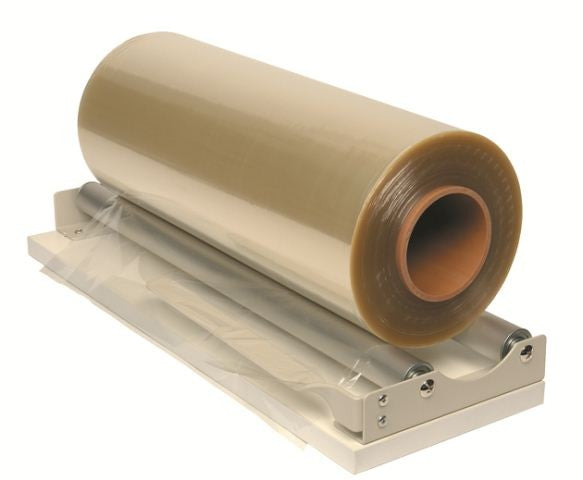
Equipment / Unrolling Device
-
24" - Unrolling DiviseRegular price From £59.73 GBPRegular priceUnit price per
-
18" - Unrolling DiviseRegular price From £49.02 GBPRegular priceUnit price per
-
12" - Unrolling DiviseRegular price From £42.42 GBPRegular priceUnit price per


Equipment / Unrolling Device
Equipment / Unrolling Device
Unrolling devices are simple, mechanical tools designed to hold a roll of packaging material and let it unwind smoothly, safely, and with consistent tension. In day-to-day packing and shipping, they help reduce roll “telescoping,” edge damage, and wasted film caused by uneven pulling. They also improve ergonomics by keeping the roll supported while the operator guides the material around a product, carton, or pallet.
This category focuses on compact unrolling devices sized to common roll widths. They are typically used with stretch film and similar roll-stock materials where controlled dispensing matters. Choosing the right width and setup helps keep packaging operations predictable—especially when multiple operators share the same station.
Unrolling Devices — Helpful Guide
Below is a practical guide to the unrolling devices in this collection, how they’re commonly used, and how to match the device width to your roll stock and workflow.
Types of unrolling setups (and where these products fit)
- Bench-top / station-based unrolling: A fixed device supports the roll while the operator pulls film from a consistent position. This is useful for repeatable packing at a table, for kitting, or for wrapping smaller loads where you want stable tension.
- Light-duty roll dispensing: For smaller rolls or intermittent use, a compact unrolling device can reduce fatigue and help prevent the roll from “running away” when pulled quickly.
- Width-matched dispensing: The most important “type” in this collection is simply selecting the correct width so the roll sits properly and unwinds without rubbing, binding, or walking side-to-side.
Products in this category (by roll width)
These unrolling devices are organized by the roll width they are intended to support. Use the links below to view the exact product pages.
-
12" - Unrolling Divise
Best for narrow rolls used for bundling, small cartons, or partial wrapping where a compact film width is preferred. A 12-inch device is also helpful when you want tighter control around corners and irregular shapes. -
18" - Unrolling Divise
A common “general purpose” width for many hand-wrapping tasks. An 18-inch device balances coverage and control, making it suitable for mixed carton sizes and routine warehouse packing. -
24" - Unrolling Divise
Designed for wider rolls where faster coverage is the priority. A 24-inch device is often chosen when wrapping larger cartons or stabilizing loads where fewer passes are desired.
What an unrolling device helps you control
- Tension consistency: A supported roll unwinds more evenly than a loose roll carried by hand, helping reduce thin spots and film breaks.
- Tracking and edge protection: Proper support helps keep the roll aligned so edges don’t scuff against nearby surfaces, which can create tears that propagate during wrapping.
- Operator ergonomics: Keeping the roll on a device reduces wrist and shoulder strain, especially during repetitive wrapping.
- Work area cleanliness: A dedicated dispenser location reduces the chance of rolls being set on dusty floors or damaged by impacts.
Case Study: Reducing Film Waste at a Packing Bench
A small fulfillment team was wrapping outgoing cartons at a shared bench. Operators were pulling film directly from loose rolls, which led to inconsistent tension and frequent edge tears—especially when the roll was set down between cartons and picked up again. The team also noticed that different operators wrapped differently, creating variability in load stability.
By moving to a station-based unrolling approach and matching device width to the film they used most often, the roll stayed aligned and unwound smoothly. Operators could pull film from a consistent position, which reduced sudden jerks that cause film to snap or neck down. The result was fewer restarts mid-wrap, less film discarded due to tearing, and more consistent wrapping patterns across shifts.
While the exact savings depend on film type and wrapping method, the operational improvement came from two fundamentals: (1) keeping the roll supported and (2) selecting a device width that fits the roll properly.
How to Choose the Correct Unrolling Device
Use the checklist below to select the best option for your packaging line. The goal is to ensure the roll fits correctly, unwinds smoothly, and supports your typical wrapping motion.
1) Match the device width to your roll width
Start with the roll width you use today (or plan to use). A device that is too narrow won’t seat the roll properly; too wide can allow side-to-side movement that affects tracking.
- Choose 12" if you primarily wrap small cartons, bundles, or need precise control around tight shapes.
- Choose 18" for general packing where you want a balance of coverage and maneuverability.
- Choose 24" when you want faster coverage on larger cartons or broader surfaces.
2) Consider your wrapping pattern and coverage needs
Wider film can reduce the number of passes needed, but it can also be harder to control on small items. Narrower film is easier to steer and can reduce overwrap on small cartons. If your shipments vary widely, many operations standardize on a mid-width option for flexibility.
3) Think about tension and film behavior
Stretch film and similar materials can “neck down” (narrow) when pulled aggressively. If operators frequently pull hard, a stable unrolling setup helps keep the roll from jerking and reduces sudden tension spikes. For delicate products or sharp corners, smoother unwinding can also reduce tearing.
4) Evaluate the work area and handling
- Shared stations: A dedicated unrolling device keeps the roll in one place and reduces time spent searching for supplies.
- High-touch environments: If the roll is frequently set down, a device helps prevent contamination and edge damage.
- Training: Standardizing the dispensing method makes it easier to train new operators and maintain consistent wrap quality.
5) Confirm compatibility with your roll core and roll diameter
Roll-stock products can vary by core size and outside diameter. Before standardizing, confirm that your typical rolls fit the device’s spindle/holder and that the roll can rotate freely without rubbing. If you use multiple roll sizes, choose a setup that accommodates your largest common diameter to avoid binding.
Best Practices for Using an Unrolling Device
Set up for smooth unwinding
- Place the device on a stable, level surface so the roll doesn’t drift during pulling.
- Ensure the roll is centered and spins freely before starting a wrap cycle.
- Pull film in a straight line from the roll when possible; sharp angles can cause edge scuffing and tears.
Reduce tearing and film breaks
- Avoid letting the film snap back onto the roll edge; repeated snapping can nick the edge and start a tear.
- When wrapping around corners, use controlled tension and consider adding an extra pass rather than pulling harder.
- If tearing is frequent, inspect the roll edge for damage and check whether the roll is rubbing against the device.
Improve consistency across operators
- Define a standard number of wraps (top, middle, bottom) for common carton sizes.
- Train operators to maintain steady pull speed rather than alternating between slack and sudden tension.
- Keep the device in the same location relative to the packing surface to build repeatable motion.
Common Applications
- Carton stabilization: Holding film steady while wrapping cartons to reduce shifting during transit.
- Bundling: Grouping multiple items together for easier handling and labeling.
- Work-in-process protection: Temporary wrapping to keep dust off parts or protect surfaces between operations.
- Returns processing: Re-wrapping opened cartons or consolidating items for restocking.
Maintenance and Safety Notes
- Keep rotating points clean: Dust and debris can increase friction and make unwinding jerky.
- Inspect for burrs or sharp edges: Any sharp contact point can cut film and create recurring tears.
- Use safe cutting practices: If you cut film at the station, use appropriate cutters and store them safely to reduce injury risk.
- Replace worn components: If the roll no longer spins smoothly, address the cause (misalignment, wear, contamination) to restore consistent tension.
Questions & Answers
What roll width should I choose: 12", 18", or 24"?
Choose the device that matches your film roll width. A 12-inch option offers more control for small cartons and bundling. An 18-inch option suits general packing. A 24-inch option covers larger surfaces faster and can reduce the number of passes.
Will an unrolling device reduce film tearing?
It can help by keeping the roll supported and aligned, which reduces edge scuffing and sudden tension spikes. Tearing can still occur from sharp corners, damaged roll edges, or pulling at steep angles, so setup and technique remain important.
Do I need a station-based unrolling device if I only wrap occasionally?
Occasional wrapping can still benefit from a dedicated unrolling setup because it keeps the roll clean, prevents damage from being set down, and makes tension more predictable. For very low volume, the main advantage is convenience and consistency.
What should I check if the roll doesn’t unwind smoothly?
Confirm the roll is centered and the width matches the device. Check for rubbing against the frame, debris on rotating surfaces, or a roll that is out-of-round from storage. Also verify the core fits properly so the roll can rotate freely.
How do I improve wrap consistency across different operators?
Standardize the station layout and define a simple wrapping method, such as a set number of passes and a steady pull speed. A fixed unrolling device helps by keeping the roll position consistent, making it easier for operators to repeat the same motion.