
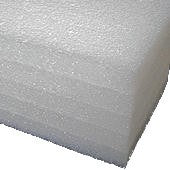
Protective / Poly Laminated Foam
-
1200x2000x25mm - LD White Poly Laminated Foam SheetsRegular price £1,310.40 GBPRegular priceUnit price per
-
95x95x50mm - LD White Poly Lam. Foam Blocks with S/A on 1 faceRegular price From £0.68 GBPRegular priceUnit price per
-
1200x2000x10mm - LD White Poly Laminated Foam SheetsRegular price From £166.40 GBPRegular priceUnit price per
-
250x206x200mm - LD White Poly Lam. Foam Corner Blocks - Set of 4Regular price From £37.95 GBPRegular priceUnit price per


Protective / Poly Laminated Foam
Poly laminated foam is a lightweight cushioning material designed to protect products from scuffs, abrasion, and minor impacts during handling, storage, and transport. In this collection, the foam is a low-density (LD) polyethylene foam with a smooth poly film laminated to the surface. The laminated skin helps the foam slide against products and cartons more easily, reduces dusting, and improves resistance to tearing compared with unlaminated foam. These characteristics make poly laminated foam a practical choice for protecting finished surfaces such as painted, coated, polished, or printed items.
Protective / Poly Laminated Foam — Helpful Guide
This category includes several common formats used in protective packaging. The right format depends on whether you need broad surface protection, spacing and separation, or stable corner support inside a carton.
1) Poly Laminated Foam Sheets (surface protection and cushioning)
Foam sheets are used as interleaving layers, wrap sheets, carton liners, or pads between stacked items. They help prevent rubbing and surface marring while adding a compressible cushion that can absorb small shocks.
-
1200x2000x10mm - LD White Poly Laminated Foam Sheets
Thin laminated foam sheet suited to interleaving, lining cartons, and protecting delicate finishes where minimal thickness is preferred. -
1200x2000x25mm - LD White Poly Laminated Foam Sheets
Thicker laminated foam sheet for higher cushioning needs, spacing, and improved protection for heavier or more fragile items.
2) Foam Corner Blocks (edge and corner protection)
Corner blocks are designed to cradle products at the corners, helping keep items centered in the carton and reducing the chance of corner damage. They can also create a consistent clearance gap between the product and the outer box, which is useful when you need room for additional cushioning or to prevent contact with carton walls.
-
250x206x200mm - LD White Poly Lam. Foam Corner Blocks - Set of 4
Corner block set intended to stabilize and protect corners during shipment by distributing loads and maintaining spacing inside the carton.
3) Foam Blocks with Self-Adhesive Face (positioning and anti-scuff pads)
Adhesive-backed foam blocks are used when you need the foam to stay in a specific location—on a product, on an inner pack, or on a carton wall. The self-adhesive face helps with quick placement and repeatable positioning, which can be helpful for kitting, packing lines, or when consistent protection points are required.
-
95x95x50mm - LD White Poly Lam. Foam Blocks with S/A on 1 face
Compact laminated foam block with a self-adhesive face for fixed-point cushioning, spacing, or creating protective stand-offs.
Where poly laminated foam is commonly used
- Finished surfaces: Helps reduce abrasion on painted, coated, polished, or printed items by providing a smooth laminated contact surface.
- Interleaving and separation: Sheets can separate stacked parts to reduce rubbing and vibration-related scuffing.
- Void management and spacing: Thicker sheets and blocks can create clearance gaps and help prevent product-to-carton contact.
- Corner stabilization: Corner blocks can help keep products centered and reduce edge/corner impacts.
- Assembly and kitting: Adhesive-backed blocks can be applied consistently at defined protection points.
Case study: reducing corner damage and surface scuffs in transit
A shipper of finished panels experienced two recurring issues: (1) corner dents from side impacts and (2) surface scuffs caused by vibration and rubbing inside the carton. The packing method used loose fill and thin paper interleaving, which did not reliably hold the product in place.
A revised pack design used laminated foam sheets as a carton liner and interleaving layer, combined with laminated foam corner blocks to maintain a consistent clearance gap. For areas where the product tended to shift, adhesive-backed foam blocks were applied as positioning stops. The result was improved stability, reduced movement, and fewer cosmetic defects because the laminated foam surface helped minimize abrasion at contact points.
How to choose the correct poly laminated foam
Step 1: Identify the primary risk
- Scuffing / abrasion: Use laminated foam sheets as interleaving or wrap layers to reduce rubbing.
- Minor impacts / vibration: Increase thickness (for example, moving from 10mm to 25mm sheets) to add cushioning and reduce transmitted shock.
- Corner/edge damage: Use corner blocks to protect vulnerable corners and maintain spacing.
- Product shifting: Use adhesive-backed blocks to create repeatable stops and keep protection where it’s needed.
Step 2: Choose a format (sheet, corner block, or adhesive block)
Sheets are best for broad coverage and separation. Corner blocks are best for stabilizing and protecting corners while maintaining clearance. Adhesive blocks are best when you need the foam to stay fixed to a surface for consistent protection points.
Step 3: Select thickness and compression needs
Foam performance depends on thickness and how much it compresses under load. Thinner sheets are often used for surface protection and light cushioning. Thicker sheets provide more deflection distance and can better absorb small shocks. For heavier items, ensure the foam does not compress fully (“bottom out”) under stacking or transit loads.
Step 4: Consider fit, clearance, and carton strength
Corner blocks and thicker foam can increase the overall pack size. Confirm that the carton has adequate strength for the final packed weight and that the foam geometry maintains the intended clearance gap without forcing the carton outward. A stable pack typically keeps the product centered and limits movement in all directions.
Step 5: Think about application method and repeatability
- Manual packing: Pre-cut sheets and standard blocks can simplify training and reduce packing variability.
- Higher throughput: Adhesive-backed blocks can speed placement and improve consistency at defined contact points.
- Reusability: Laminated foam components can sometimes be reused if they remain clean and undamaged, depending on the application and handling requirements.
Best practices for using poly laminated foam in packaging
- Avoid over-compression: Foam should cushion, not act as a rigid spacer. If it is compressed too much, it may transmit shock rather than absorb it.
- Protect the corners first: Many products fail at corners and edges. Use corner blocks when corner damage is a known risk.
- Use sheets as a system component: Sheets work well as liners, interleaving, and wrap layers alongside blocks or corner supports.
- Keep contact points clean: For cosmetic surfaces, ensure the laminated face and the product surface are free of grit to reduce the chance of abrasion.
- Test and iterate: Small changes in thickness, block placement, or clearance can significantly affect transit performance. Trial packs and drop/handling tests help validate the design.
Common mistakes to avoid
- Using foam only as void fill: Foam performs best when it supports and positions the product, not when it is loosely placed without controlling movement.
- Insufficient clearance: If the product can contact the carton wall, impacts may transfer directly to the product. Corner blocks can help maintain spacing.
- Too little thickness for the load: Thin foam may compress fully under heavier items, reducing cushioning effectiveness.
- Adhesive blocks placed on dusty or textured surfaces: Adhesive performance depends on surface condition; poor adhesion can lead to shifting protection points.
Q&A
What does “poly laminated foam” mean in protective packaging?
It refers to polyethylene foam with a thin poly film laminated to the surface. The laminated skin creates a smoother contact layer that can reduce abrasion, improve tear resistance, and help the foam slide during packing while still providing cushioning and separation.
When should I use foam sheets versus corner blocks?
Use foam sheets for broad surface protection, interleaving between items, and lining cartons. Use corner blocks when you need to stabilize a product, protect vulnerable corners, and maintain a consistent clearance gap between the product and the carton walls.
How do I decide between 10mm and 25mm laminated foam sheets?
Choose 10mm when you mainly need surface protection and light cushioning with minimal added bulk. Choose 25mm when you need more shock absorption, spacing, or vibration damping. Heavier or more fragile items typically benefit from greater thickness.
What is the purpose of a self-adhesive face on foam blocks?
A self-adhesive face helps the foam stay in a fixed position on a product, inner pack, or carton wall. This improves repeatability and can prevent shifting during transit, especially when specific contact points need consistent cushioning or spacing.
Can poly laminated foam help prevent scuffs on finished surfaces?
Yes. The laminated surface is designed to provide a smoother interface than bare foam, which can reduce rubbing-related marks when used as interleaving or wrap layers. For best results, keep both surfaces clean and avoid trapping grit between layers.