
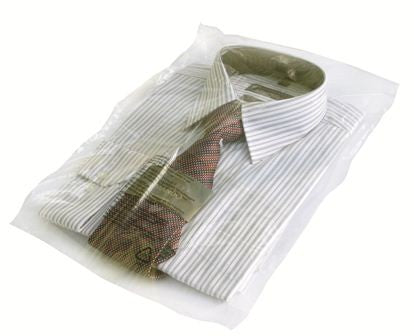
Bags / Garment Bags & Covers / Shirt Bags - Polythene
-
355x430+40mm (14x17+1.5) Quality PE-LD 100% Recycled Shirt Bags Resealable 22L Warning NoticeRegular price From £57.62 GBPRegular priceUnit price per
-
355x430+38mm-37mic(14x17+1.5-150g) Clear Poly Bags, S&RS Perforated 5 Language Warning NoticeRegular price From £89.93 GBPRegular priceUnit price per
-
14x17 (355x430+50mm) - 30mic Clear Re-Sealable, Perforated & Registered Single L PWN Poly BagsRegular price From £72.15 GBPRegular priceUnit price per
-
300x381+50mm-37mic (12x15x1.5 150g) Clear Poly Bags, S&RS Perforated 5 Language Warning NoticeRegular price From £58.61 GBPRegular priceUnit price per
-
 380x510+50mm-30mic (15x20+1.5 -120g) Clear S&RS Poly Bags, Perf'd & Reg. Single PWN Poly BagsRegular price From £76.19 GBPRegular priceUnit price per
 -
300x381+50mm - 30mic (12x15) Clear Re-Sealable, Perforated & Registered Single L PWN Poly BagsRegular price From £38.96 GBPRegular priceUnit price per
-
15.5x22+2.5 - 120g Clear 30% Recy Poly Bag Reseal (390x560+65mm-30mic)Regular price From £84.60 GBPRegular priceUnit price per
-
22x28+2 - 120g Clear Poly Bag Reseal (550x710mm+50mm - 30mu)Regular price From £139.57 GBPRegular priceUnit price per


Bags / Garment Bags & Covers / Shirt Bags - Polythene
Polythene Shirt Bags for Garment Packing
Polythene shirt bags (often called clear garment packing bags or resealable apparel bags) are designed to protect folded clothing from dust, handling marks, and moisture during storage, picking, and dispatch. In this collection you’ll find clear, resealable bags made for quick garment packing, typically featuring a self-seal flap, printed suffocation warning notice options, and perforation/vent holes to help air escape so garments sit flatter and pack more neatly.
These bags are commonly used for shirts, blouses, knitwear, uniforms, and other folded garments where presentation matters. Clear film helps with fast identification and barcode scanning, while a resealable flap supports quality checks and returns handling without needing extra tape.
Clear Re-Sealable Poly Shirt Bags — Helpful Guide
This guide explains the main bag styles in this category and how to match them to your packing process. Product names below are linked to the relevant product pages already available within this collection.
1) Clear resealable shirt bags with single-language warning notice
These are clear bags with a resealable flap and a printed warning notice in a single language format. They’re typically chosen when you want a clean, simple presentation while still including a warning notice on-pack. Many options also include perforation holes to release trapped air during packing.
-
14x17 (355x430+50mm) - 30mic Clear Re-Sealable, Perforated & Registered Single L PWN Poly Bags
Clear 30 micron resealable shirt bag with perforations for air release and a registered single-language printed warning notice; suited to folded shirts and similar garments. -
300x381+50mm - 30mic (12x15) Clear Re-Sealable, Perforated & Registered Single L PWN Poly Bags
Compact clear resealable bag for smaller folded garments; perforations help reduce “ballooning” and improve carton efficiency. -
380x510+50mm-30mic (15x20+1.5 -120g) Clear S&RS Poly Bags, Perf'd & Reg. Single PWN Poly Bags
Larger format resealable bag for bulkier folds or multi-item packs; clear film supports quick identification.
2) Clear resealable shirt bags with 5-language warning notice
Multi-language warning notice bags are often used where goods may be distributed across multiple regions or where a broader language set is preferred for compliance and clarity. Like other shirt bags in this category, they are designed for fast packing and typically include perforation holes to let air escape.
-
355x430+38mm-37mic(14x17+1.5-150g) Clear Poly Bags, S&RS Perforated 5 Language Warning Notice
Clear resealable bag with perforations and a 5-language warning notice; a practical choice for standard folded shirts and light garments. -
300x381+50mm-37mic (12x15x1.5 150g) Clear Poly Bags, S&RS Perforated 5 Language Warning Notice
Smaller multi-language warning notice option; useful for compact folds, children’s sizes, or accessories packed with garments.
3) Recycled-content resealable shirt bags (clear PE-LD)
Where recycled content is required for internal sustainability targets or procurement specifications, recycled-content clear PE-LD shirt bags can be a good fit. They still provide the core functional benefits—clarity, protection, and resealability—while supporting recycled material use. As with other garment packing bags, vent holes/perforations help remove air quickly.
-
355x430+40mm (14x17+1.5) Quality PE-LD 100% Recycled Shirt Bags Resealable 22L Warning Notice
Clear resealable shirt bag made from 100% recycled PE-LD, designed for efficient garment packing with a printed warning notice.
4) Larger clear resealable garment bags for bulky folds
Some garments—hoodies, heavier knitwear, multi-piece sets, or larger folded items—benefit from a larger bag footprint to avoid overstuffing and to keep seams and collars from creasing. Larger resealable bags can also reduce handling time by making insertion easier.
-
15x20+2 - 120g Clear Poly Bag Reseal (550x710mm+50mm - 30mu)
Large clear resealable bag for bigger folds or multi-item packs; helps keep garments protected during storage and transit. -
15.5x22+2.5 - 120g Clear 30% Recy Poly Bag Reseal (390x560+65mm-30mic)
Large resealable bag with recycled content; useful where a bigger size is needed while still meeting recycled-content requirements.
Case Study: Reducing Packing Time and Improving Presentation
A clothing fulfilment team packing folded shirts and light knitwear often faces two recurring issues: trapped air that makes packs bulky, and inconsistent presentation when bags are sealed at different positions. Switching to resealable shirt bags with vent holes/perforations can streamline the workflow. Packers can insert the garment, press out air through the perforations, and close the flap consistently at the same seal line. The result is flatter packs that stack better in totes and cartons, fewer reworks at quality control, and clearer SKU identification because the garment sits smoothly behind the film.
For operations handling mixed destinations, using a multi-language warning notice option can also reduce the need to hold separate packaging variants for different regions. Where procurement requires recycled content, recycled PE-LD options can be introduced for selected lines without changing the overall packing method.
How to Choose the Correct Shirt Bag
Step 1: Confirm garment dimensions and fold style
Measure the folded garment width and height (including collars, cuffs, or any inserts). Choose a bag width that allows easy insertion without forcing the garment, and a length that accommodates the fold plus the flap. If you routinely pack thicker items, allow extra clearance so the flap closes without strain.
Step 2: Select film type and thickness (micron)
Film thickness is commonly specified in microns (mic). Thicker films generally offer improved puncture resistance and stiffness, which can help presentation and reduce tearing during fast packing. Thinner films can be suitable for lighter garments and may reduce material use. Match thickness to your handling intensity, garment hardware (buttons, zips), and transit conditions.
Step 3: Decide on warning notice format
If your process or destination requirements call for a printed warning notice, choose between single-language and multi-language formats. Multi-language notices can simplify stockholding when shipping across regions. Ensure the notice is positioned so it remains visible after packing and does not obscure key garment details if presentation is important.
Step 4: Consider vent holes/perforations
Vent holes (often two perforation holes) allow air to escape quickly, helping garments sit flatter and reducing carton volume. They can also make it easier to close the flap neatly. If you pack items that trap air (puffy knits, layered folds), perforations can noticeably improve packing speed and consistency.
Step 5: Resealability and workflow
A resealable flap supports quality checks, returns processing, and re-packing without additional tape. For high-throughput environments, resealability can reduce consumable use and keep the pack looking tidy. Train packers to avoid touching the adhesive area excessively to maintain consistent closure.
Best Practices for Efficient Garment Packing
- Keep bags accessible and pre-opened: Using a simple staging method (e.g., fanning bags) can reduce pick-and-pack time.
- Press out air before sealing: Use the vent holes/perforations to flatten the pack; this improves stacking and reduces shipping volume.
- Avoid overfilling: Overstuffing can stress seams and compromise the seal; size up if you frequently struggle to close the flap.
- Protect sharp points: Buttons, buckles, and tags can puncture film; consider tissue wrap or adjust fold orientation for items with hardware.
- Maintain presentation: Align collars and edges before sealing so the garment sits square behind the clear film.
Storage, Handling, and Compliance Notes
Store garment packing bags in a clean, dry area away from direct sunlight and heat sources to help maintain film performance and adhesive consistency. If you use printed warning notice bags, ensure your packing process keeps the notice visible and legible. For any packaging used with children’s products or where regulations apply, confirm that your chosen warning notice format and placement meet your internal compliance requirements.
Common Use Cases
- Retail presentation: Clear film supports neat shelf-ready or warehouse-ready packing.
- E-commerce fulfilment: Resealable flaps help with QC checks and returns handling.
- Uniform and workwear packing: Helps keep garments clean and separated by size/role.
- Bulk distribution: Perforations reduce trapped air for tighter carton packing.
Questions & Answers
What are vent holes/perforations on shirt bags used for?
Vent holes (often two perforations) let trapped air escape after a garment is inserted. This helps the bag sit flatter, improves stacking in cartons, and can make sealing easier. They are especially useful for thicker folds that otherwise “balloon” inside the bag.
How do I choose the right size shirt bag for folded garments?
Measure the folded garment’s width and height, then choose a bag that provides comfortable clearance for insertion and sealing. Allow extra space for thicker items or multi-packs. A bag that is too tight can crease garments and strain the flap seal.
What does “micron” mean on garment packing bags?
Micron (mic) is a unit used to describe film thickness. Higher micron films are generally stiffer and more resistant to tearing or punctures, which can help during fast packing. Lower micron films may suit lighter garments where handling is gentler.
Why do some shirt bags have single-language versus multi-language warning notices?
Warning notice formats vary to suit different distribution needs. Single-language notices can keep the pack design simple, while multi-language notices can be practical when shipping to multiple regions. Choose the format that aligns with your compliance and stockholding requirements.
Are resealable shirt bags suitable for returns and quality checks?
Yes. A resealable flap allows packs to be opened for inspection and reclosed without tape, which can reduce rework and keep presentation consistent. For best results, avoid contaminating the adhesive area with dust or fibres and seal along the intended line.