
Equipment / Ladders
-
Platform Step Ladder - 10 TreadRegular price £0.00 GBPRegular priceUnit price per
-
Platform Step Ladder - 8 TreadRegular price £0.00 GBPRegular priceUnit price per
-
Platform Step Ladder - 7 TreadRegular price £0.00 GBPRegular priceUnit price per
-
Platform Step Ladder - 6 TreadRegular price £0.00 GBPRegular priceUnit price per
-
Platform Step Ladder - 5 TreadRegular price £0.00 GBPRegular priceUnit price per
-
Access Ladder - 12 TreadRegular price £0.00 GBPRegular priceUnit price per
-
Access Ladder - 10 TreadRegular price £0.00 GBPRegular priceUnit price per
-
Access Ladder - 8 TreadRegular price £0.00 GBPRegular priceUnit price per
-
Access Ladder - 7 TreadRegular price £0.00 GBPRegular priceUnit price per
-
Access Ladder - 6 TreadRegular price £0.00 GBPRegular priceUnit price per


Equipment / Ladders
Equipment / Ladders
Warehouse ladders are purpose-built access equipment designed to help teams reach shelving, mezzanines, pick faces, and maintenance points more safely and efficiently than improvised climbing solutions. In this collection you’ll find rolling access ladders and platform step ladders in multiple tread counts, suited to stockrooms, fulfillment areas, back-of-house retail, and light industrial environments where frequent up-and-down travel is part of the workflow.
Unlike a basic household step ladder, warehouse-style ladders typically emphasize stable climbing geometry, wider treads, and continuous hand support. Many designs also incorporate a top standing platform and guard/handrail systems to reduce fatigue during repetitive picking or inspection tasks. Rolling configurations add mobility so the ladder can be repositioned along aisles without carrying, while still providing a stable stance when in use.
Equipment / Ladders — Helpful Guide
This guide explains the ladder types in this category and how to match tread count and configuration to your application. It also links directly to the products shown on this page so you can compare options quickly.
1) Platform Step Ladders (work-position platform + hand support)
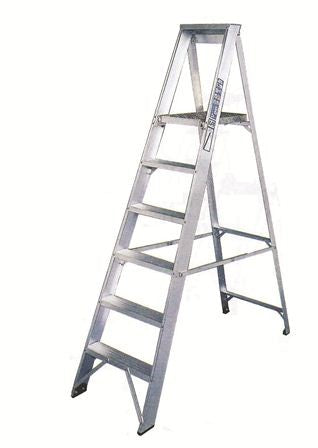
Platform step ladders are designed for tasks where the user benefits from a larger standing area at the top, such as cycle counting, order picking, label changes, light maintenance, and inspections. The platform helps reduce foot fatigue compared with standing on a narrow rung, and the ladder’s geometry is intended to provide a stable, predictable climb.
- Platform Step Ladder - 5 Tread — Compact option for lower pick faces and shorter reach needs; useful where aisle space is limited.
- Platform Step Ladder - 6 Tread — A balanced choice for frequent access to mid-level shelving; often selected for general stockroom use.
- Platform Step Ladder - 7 Tread — Adds additional working height while keeping a manageable footprint for many warehouse aisles.
- Platform Step Ladder - 8 Tread — Common for higher pick locations and maintenance points where a platform stance improves comfort during longer tasks.
- Platform Step Ladder - 10 Tread — For higher access requirements; typically chosen when top shelves or elevated fixtures are reached routinely.
2) Rolling Access Ladders (mobile positioning for aisle-to-aisle work)
Rolling access ladders are intended for environments where the ladder must be moved frequently along shelving runs or between work areas. Mobility features vary by design, but many warehouse ladders use caster systems that allow repositioning and then stabilize when weight is applied. This can improve productivity in picking and replenishment workflows by reducing the time spent carrying or resetting equipment.
- Access Ladder - 6 Tread — Mobile access for mid-level shelving; a practical option for frequent repositioning in tighter spaces.
- Access Ladder - 7 Tread — Adds reach for higher pick faces while maintaining a mobile, aisle-friendly setup.
- Access Ladder - 8 Tread — Often used where higher storage locations are accessed repeatedly across multiple bays.
- Access Ladder - 10 Tread — For higher access points and longer vertical travel; suited to taller shelving and elevated work areas.
- Access Ladder - 12 Tread — Maximum reach option in this set; typically selected for tall racking, mezzanine-adjacent work, or high fixtures.
Case Study: Improving Pick Efficiency and Reducing Repositioning Time
Consider a small fulfillment operation that stores fast-moving items across multiple shelf bays. Staff may climb dozens of times per hour to retrieve cartons, labels, or components. When the ladder is too short, workers may be tempted to overreach; when it’s too tall or bulky, it can be difficult to maneuver and may end up parked far from where it’s needed.
In a typical improvement project, the team maps the most common pick heights and the aisle widths where access is required. They then standardize on two ladder configurations: a platform step ladder for stationary tasks (cycle counts, relabeling, inspections) and a rolling access ladder for frequent bay-to-bay picking. The result is usually fewer interruptions, less time spent relocating equipment, and a more consistent climbing posture because the ladder is better matched to the work zone.
The key takeaway is that “best ladder” depends on the workflow: if the task is short and repeated across many locations, mobility matters; if the task involves longer dwell time at height, a comfortable platform stance and continuous hand support become more important.
How to Choose the Correct Ladder
Step 1: Start with the working height (not just tread count)
Tread count is a convenient way to compare models, but the real requirement is the height of the point you need to reach safely. Identify the typical and maximum reach points (top shelf, light fixture, sign, maintenance access). Then choose a ladder that allows the user to work without standing on restricted steps or overreaching. If multiple users will share the ladder, consider the range of user heights and typical tasks.
Step 2: Decide between platform step vs. rolling access
- Choose a platform step ladder when the ladder will be used in one spot for longer tasks, when a larger standing area improves comfort, or when the work involves frequent turning/handling of items at the top.
- Choose a rolling access ladder when the ladder must be repositioned frequently along aisles, when the workflow involves many short climbs, or when the ladder needs to travel between bays without being carried.
Step 3: Evaluate stability and user interface features
For warehouse ladders, stability is influenced by base design, tread width, and how the ladder interfaces with the floor. Look for slip-resistant tread surfaces and a climbing angle that feels natural for repeated use. Hand support is also critical: continuous handrails help maintain three points of contact during ascent and descent, especially when carrying small items or tools.
For rolling ladders, pay attention to how the caster system behaves during movement and during use. Many designs use mechanisms that allow rolling when unloaded and stabilize when weight is applied. In practice, the goal is simple: easy repositioning without sacrificing a secure stance while climbing.
Step 4: Match the ladder to the environment
- Aisle width and turning radius: Taller ladders generally require more clearance to maneuver. Measure the narrowest areas where the ladder must pass.
- Floor condition: Smooth concrete, sealed floors, and transitions (dock plates, thresholds) can affect rolling behavior and stability.
- Frequency of use: High-frequency picking benefits from ergonomic features (comfortable treads, stable platform, easy mobility) that reduce fatigue over a shift.
- Storage location: Consider where the ladder will be parked when not in use so it doesn’t obstruct egress routes or work zones.
Step 5: Confirm safety and compliance expectations
Many warehouse ladder designs are marketed as meeting common workplace safety expectations and may reference standards such as OSHA requirements for walking-working surfaces and ANSI ladder standards. Always verify that the ladder configuration, intended use, and site policies align—especially for tasks involving elevated work, frequent movement, or shared equipment across departments.
Operational Tips for Safer, More Efficient Use
- Maintain three points of contact: Keep two hands and one foot (or two feet and one hand) in contact while climbing whenever possible.
- Avoid overreaching: Reposition the ladder instead of leaning sideways to reach the work area.
- Keep treads clean: Dust, shrink film, and debris can reduce traction; include ladder treads in routine housekeeping.
- Inspect regularly: Check fasteners, rails, treads, and caster function; remove damaged equipment from service.
- Train for the task: Ensure users understand how the ladder is intended to be moved and stabilized before climbing.
Common Applications
These ladders are commonly used for:
- Order picking and replenishment in shelving aisles
- Cycle counting and inventory audits
- Labeling, signage changes, and planogram updates
- Light maintenance (filters, fixtures, overhead access points)
- Backroom retail and stockroom operations
Questions & Answers
What is the practical difference between a platform step ladder and a rolling access ladder?
A platform step ladder is typically used in a fixed position and emphasizes a comfortable top standing area for longer tasks. A rolling access ladder is designed to be repositioned frequently along aisles, using caster systems to improve mobility while still providing stable climbing support.
How do I choose the right tread count for my warehouse ladder?
Start by identifying the height of the locations you need to reach and how often you’ll work there. Choose a tread count that allows safe access without standing on restricted steps or overreaching. If multiple users share the ladder, consider different user heights and tasks.
Are rolling ladders safe to use on smooth concrete floors?
They can be, provided the ladder is designed to stabilize during use and the floor is kept clean and dry. Evaluate how the caster system behaves when unloaded versus when weight is applied, and avoid using rolling ladders on uneven surfaces or across obstacles without guidance.
What features matter most for frequent order picking?
For repetitive picking, prioritize stable, slip-resistant treads, continuous hand support, and a configuration that matches aisle width and pick height. If the ladder must move bay-to-bay, mobility and easy repositioning are important. If tasks require longer dwell time, a platform stance helps reduce fatigue.
What routine checks should be done on warehouse ladders?
Inspect treads for wear and contamination, confirm rails and fasteners are secure, and verify the ladder sits level. For rolling models, check caster function and any stabilizing mechanism. Remove damaged ladders from service and follow site procedures for inspection frequency and documentation.