
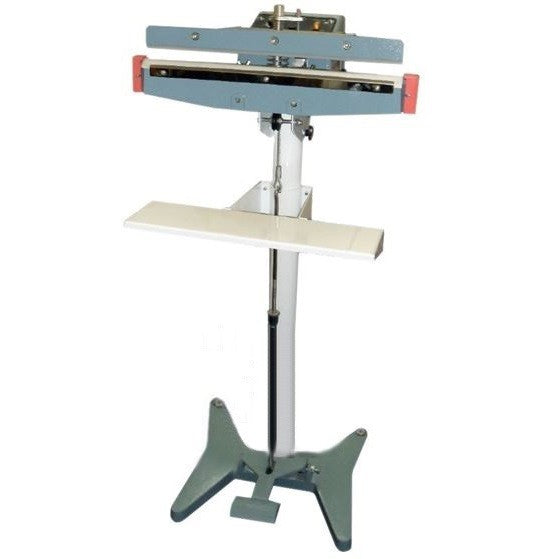
Polythene / Heat Sealers
-
300mm - Hand Opp. Heat SealerRegular price From £84.11 GBPRegular priceUnit price per
-
600mm - L-Sealer Spares KitRegular price From £46.83 GBPRegular priceUnit price per
-
450mm - L-Sealer Spares KitRegular price From £46.83 GBPRegular priceUnit price per
-
300mm - L-Sealer Spares KitRegular price From £46.83 GBPRegular priceUnit price per
-
800mm - L-Sealer With Unrolling DeviceRegular price From £216.00 GBPRegular priceUnit price per
-
600mm - L-Sealer With Unrolling DeviceRegular price From £216.00 GBPRegular priceUnit price per
-
300mm - L-Sealer With Unrolling DeviceRegular price From £216.00 GBPRegular priceUnit price per
-
800mm - Bar Sealer Spares KitRegular price From £46.83 GBPRegular priceUnit price per
-
600mm - Bar Sealer Spares KitRegular price From £46.83 GBPRegular priceUnit price per
-
450mm - Bar Sealer Spares KitRegular price From £46.83 GBPRegular priceUnit price per
-
600mm Bar Sealer With Unrolling DeviceRegular price From £216.00 GBPRegular priceUnit price per
-
500mm Bar Sealer With Unrolling DeviceRegular price From £216.00 GBPRegular priceUnit price per
-
450mm Bar Sealer With Unrolling DeviceRegular price From £216.00 GBPRegular priceUnit price per
-
150mm - Hand Held Heat SealerRegular price From £95.75 GBPRegular priceUnit price per
-
400mm - Hand Opp. Heat Sealer With CutterRegular price From £151.17 GBPRegular priceUnit price per
-
400mm - Hand Operated Heat Sealer (Eco)Regular price From £138.02 GBPRegular priceUnit price per
-
400mm - Hand Operated Heat SealerRegular price From £142.05 GBPRegular priceUnit price per
-
300mm - Hand Opp. Heat Sealer With CutterRegular price From £205.60 GBPRegular priceUnit price per
-
200mm - Hand Opp. Heat SealerRegular price From £58.19 GBPRegular priceUnit price per


Heat sealers are used to seal products, packaging, and other thermoplastic materials using heat. This process involves melting the thermoplastic material and then fusing it together to create an airtight and watertight seal.
Polythene / Heat Sealers
Heat sealers are a practical way to close and secure thermoplastic packaging by applying controlled heat and pressure to fuse the material into a consistent seal. In day-to-day packing, they are commonly used for sealing polythene bags, shrink films, and other heat-sealable materials where you want a tidy finish, reduced contamination risk, and improved handling during storage and transit.
Polythene / Heat Sealers — Helpful Guide
This category brings together compact hand-operated sealers, longer bar sealers for wider bags, L-sealers used for seal-and-cut operations (often as part of shrink wrapping workflows), and the spares kits that keep these machines running reliably. The key is matching the sealer type and seal length to your bag width, film type, and throughput needs.
Types of heat sealers in this category
- Hand-operated impulse heat sealers (bench sealers) — typically used for sealing polythene bags quickly with a timed heat pulse.
- Bar sealers with unrolling device — longer sealing bars designed for wider bags and repeat work, with a film support/unrolling arrangement to help manage material.
- L-sealers with unrolling device — L-shaped seal-and-cut machines commonly used to create a sealed pouch around a product (often paired with shrink film workflows).
- Spares kits — replacement consumables and service parts (commonly including heating element wire and PTFE tape/cover components) to restore seal quality and reduce downtime.
Hand impulse heat sealer (compact bench sealing)
If you are sealing standard polythene bags at a packing bench, a hand impulse sealer is often the simplest approach: place the bag mouth across the sealing area, close the arm, and the machine applies a short heat pulse to fuse the film. Impulse sealing is widely used because it heats only during the sealing cycle, helping reduce idle heat exposure to the film and the operator area.
- 300mm - Hand Opp. Heat Sealer — a compact option suited to smaller bag openings and general bench packing where space is limited.
Best for: small-to-medium bag sealing, parts packing, general warehouse and dispatch use where you want a consistent seal line without complex setup.
Bar sealers with unrolling device (longer seals for wider bags)
When bag openings get wider, seal consistency becomes more dependent on even pressure and stable film handling. A longer bar sealer helps by providing a wider sealing length, while an unrolling device can make it easier to feed and position film or bag material consistently for repeat sealing tasks.
- 600mm Bar Sealer With Unrolling Device — designed for wider bag mouths and repeat sealing where a longer bar improves productivity and reduces repositioning.
Best for: wider polythene bags, liners, and packing tasks where you frequently seal near the maximum width of smaller machines.
L-sealers with unrolling device (seal-and-cut workflows)
L-sealers are commonly used when you want to create a sealed “envelope” around a product using film, sealing and cutting in one action along an L-shaped frame. The unrolling device supports film handling so operators can position products consistently. In many packaging setups, L-sealers are used as part of a shrink wrapping process, but they are also useful whenever you need repeatable seal-and-cut results.
- 300mm - L-Sealer With Unrolling Device — suited to smaller items and compact packing areas.
- 600mm - L-Sealer With Unrolling Device — a versatile mid-size option for a broader range of product sizes.
- 800mm - L-Sealer With Unrolling Device — intended for larger products or wider film requirements where extra sealing capacity is essential.
Best for: repeatable seal-and-cut packaging, grouped items, and workflows where film handling and consistent presentation matter.
Spares kits (keeping seal quality consistent)
Heat sealers rely on consumable components that wear over time. Two of the most common service items are the heating element wire (often nichrome) and the non-stick PTFE (Teflon) tape/cover that prevents film sticking and protects the sealing surface. When PTFE becomes worn or damaged, film can stick and seals can become inconsistent; when the heating element wire degrades or breaks, sealing performance drops sharply. Many maintenance guides recommend using model-matched replacement parts because wire gauge and electrical characteristics affect heating performance and reliability.
- 450mm - Bar Sealer Spares Kit — replacement kit for 450mm bar sealer configurations.
- 600mm - Bar Sealer Spares Kit — replacement kit for 600mm bar sealer configurations.
- 800mm - Bar Sealer Spares Kit — replacement kit for 800mm bar sealer configurations.
- 300mm - L-Sealer Spares Kit — replacement kit for 300mm L-sealer configurations.
- 450mm - L-Sealer Spares Kit — replacement kit for 450mm L-sealer configurations.
- 600mm - L-Sealer Spares Kit — replacement kit for 600mm L-sealer configurations.
Practical tip: if you are troubleshooting poor seals, inspect the PTFE tape/cover first. Worn PTFE can cause sticking and residue, and it can also accelerate heating element wear. Replacing PTFE and the heating element together is often an efficient way to restore consistent sealing.
Case study: reducing rework on a busy packing bench
A dispatch team sealing polythene bags by hand noticed an increase in rework: seals looked uneven, some bags opened during handling, and occasional film sticking slowed the line. The issue was not the bag material itself, but gradual wear of the non-stick PTFE layer and contamination buildup on the sealing area. After replacing the worn consumables using the correct spares kit and resetting the sealing time to suit the film thickness, seal consistency improved and rework dropped. The team also introduced a simple routine: allow the bar to cool before cleaning, wipe the sealing area regularly, and keep spare PTFE and heating wire on hand to avoid downtime.
How to choose the correct heat sealer
1) Choose the right sealing length (300mm vs 450mm vs 600mm vs 800mm)
Seal length should be driven by the widest bag opening (or film width) you expect to seal. As a practical rule, choose a sealing length that gives you comfortable clearance beyond the bag mouth so you are not sealing right at the edge of the bar. This reduces operator frustration and helps maintain consistent pressure across the seal.
- 300mm — suitable for smaller bags and compact bench work where space is limited.
- 450mm — a common general-purpose size for medium bag openings and varied packing tasks.
- 600mm — useful when you regularly seal wider bags or want flexibility for future packaging sizes.
- 800mm — best reserved for genuinely wide packaging needs; longer bars can require more careful setup to maintain even pressure across the full length.
2) Match the machine type to your workflow
- Sealing bag mouths only: a hand impulse sealer or bar sealer is typically the most direct solution.
- Seal-and-cut around products: an L-sealer is designed for repeatable sealing and cutting in one action.
- Repeat work with film handling needs: machines with an unrolling device can improve consistency and reduce handling time.
3) Consider film type and thickness
Different thermoplastic films respond differently to heat. Thicker films generally require more energy (time/temperature) to fuse properly, while thinner films can distort or stick if overheated. If you change bag thicknesses frequently, choose a machine with straightforward control of sealing time and maintain the sealing surface so heat transfer remains consistent.
4) Plan for maintenance and consumables
Most sealing issues are maintenance-related rather than machine-related. Common wear items include heating element wire and PTFE tape/cover. Keeping the correct spares kit for your sealer length can reduce downtime and help maintain consistent seal quality. Also check that contact points are clean and secure, as poor electrical connections can create hot spots and premature element failure.
Troubleshooting: common sealing problems and likely causes
Film sticking to the sealing bar
- PTFE tape/cover is worn, torn, or contaminated.
- Sealing time is too long for the film thickness.
- Residue buildup on the sealing surface is transferring to the film.
Weak seals or seals that peel open
- Sealing time is too short or pressure is uneven.
- Film is not positioned flat (wrinkles reduce seal integrity).
- Heating element wire is worn or not heating evenly.
Burn-through or distorted film
- Sealing time is too long for the film.
- PTFE layer is damaged, causing localized overheating and sticking.
Seal is inconsistent across the width
- Uneven pressure along a long bar (more common on wider sealers).
- Film is being pulled during sealing; an unrolling device can help stabilize feed.
- Sealing surface is worn or misaligned.
Good practice for consistent results
- Keep the sealing area clean: allow the machine to cool, then wipe the sealing surface to remove residue that can cause sticking and uneven heat transfer.
- Replace PTFE before it fails completely: worn PTFE often shows up as sticking or dull, patchy seal lines.
- Use model-matched spares: heating element wire gauge and fit matter for reliable performance.
- Standardise settings: record sealing time settings for each film thickness used on site to reduce trial-and-error.
- Train operators on positioning: flat, wrinkle-free film placement improves seal strength and appearance.
Questions & Answers
What materials can a heat sealer seal?
Heat sealers are designed for thermoplastic materials that soften and fuse under heat and pressure. Common examples include polythene films and many heat-sealable packaging films. Results depend on film type and thickness, so sealing time and pressure should be adjusted to suit the material.
How do I choose between a hand sealer, bar sealer, and an L-sealer?
Choose a hand or bar sealer when you mainly close the open end of bags. Choose an L-sealer when you need a seal-and-cut action to form a pouch around products using film. For repeat work, an unrolling device can improve handling consistency.
What sealing length do I need (300mm, 450mm, 600mm, 800mm)?
Select a sealing length that comfortably exceeds your widest bag opening or film width so you are not sealing at the limit of the bar. Smaller lengths suit compact bags and benches, while 600–800mm options are intended for wider packaging and larger items.
Why is my film sticking to the sealer bar?
Sticking is commonly caused by worn or damaged PTFE tape/cover, residue buildup on the sealing surface, or excessive sealing time for the film thickness. Inspect and replace PTFE when it shows wear, clean the sealing area after cooldown, and reduce the heat/time setting if needed.
When should I replace a spares kit, and what does it usually address?
Replace consumables when seals become weak, uneven, or the film starts sticking, or if the heating element wire breaks. Spares kits typically restore the heating element and non-stick PTFE layer that directly affect seal quality. Using the correct kit for your machine length helps maintain reliability.