
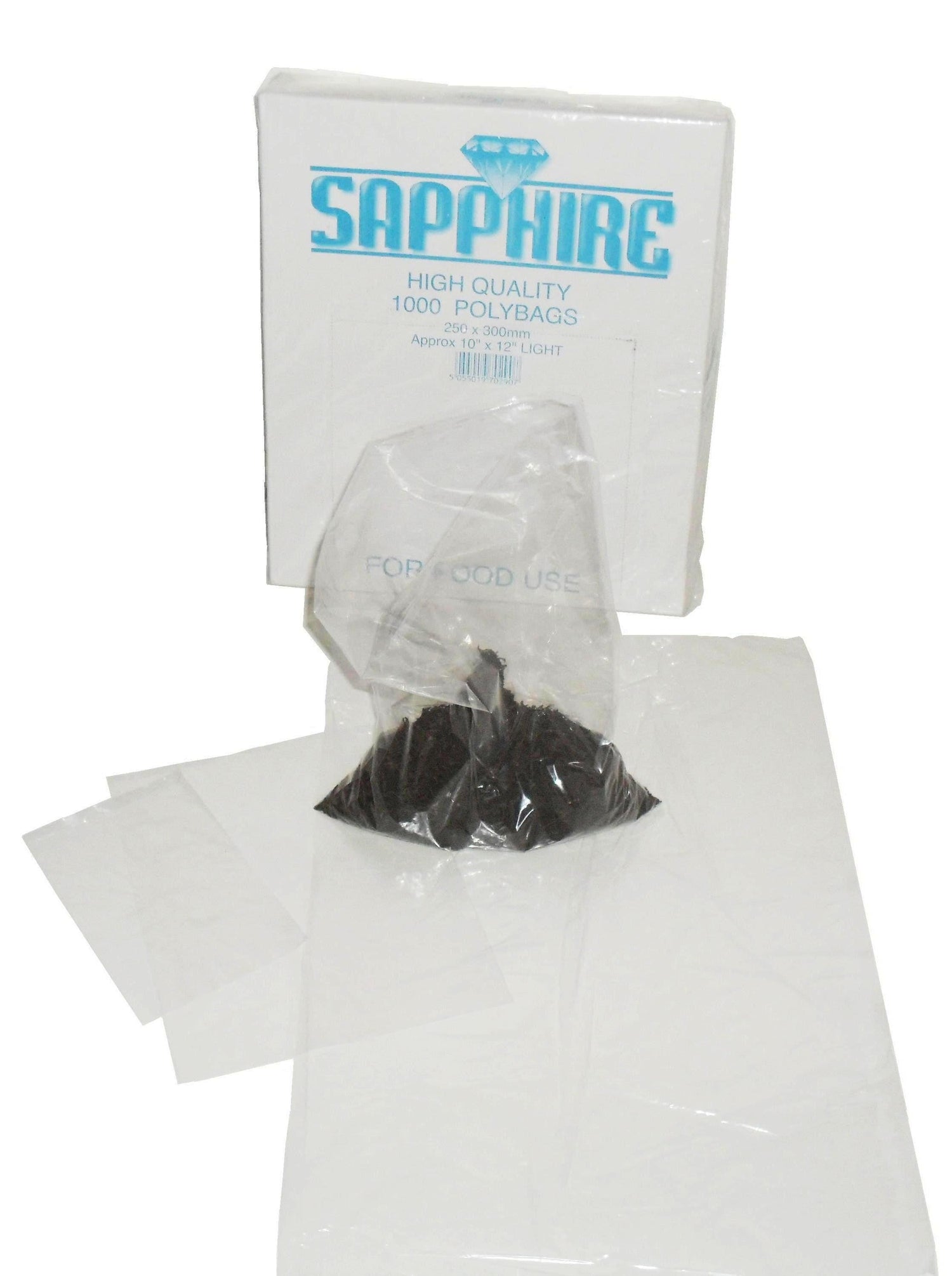
Bags / Polythene (Popular) / 150G (38mu)
-
12x18 - 150g Clear Poly Bags (305x457mm - 38mu)Regular price From £25.94 GBPRegular priceUnit price per
-
10x15 - 150g Clear Poly Bags (254x381mm - 38mu)Regular price From £38.63 GBPRegular priceUnit price per
-
8x12 - 150g Clear Poly Bags (203x305mm - 38mu)Regular price From £24.37 GBPRegular priceUnit price per
-
18x24 - 150g Clear Poly Bags (450x600mm - 38mu)Regular price From £52.66 GBPRegular priceUnit price per
-
2.75x6 - 150g Clear S/W Poly Bags (70x152mm - 38mu)Regular price From £16.33 GBPRegular priceUnit price per
-
6x20 - 150g Clear Poly Bags (152x508mm - 38mu)Regular price From £30.22 GBPRegular priceUnit price per
-
14x18 - 150g Clear Poly Bags (356x457mm - 38mu)Regular price From £51.19 GBPRegular priceUnit price per
-
50x36 - 150g Clear Poly Bags (1270x914mm - 38mu)Regular price From £0.47 GBPRegular priceUnit price per
-
9x18 - 150g Clear Poly Bags (229x457mm - 38mu)Regular price From £28.84 GBPRegular priceUnit price per
-
8x20 - 150g Clear Poly Bags (203x508mm - 38mu)Regular price From £39.75 GBPRegular priceUnit price per
-
3.25x10 - 150g Clear Poly Bags (83x254mm - 38mu)Regular price From £31.50 GBPRegular priceUnit price per
-
44x62x90 - 150g Clear Poly BagsRegular price From £49.02 GBPRegular priceUnit price per
-
18x29x39 - 160g Clear Food Grade Poly Bags (457x725x975mm - 40mu)Regular price From £55.04 GBPRegular priceUnit price per
-
10x12 - 150g Clear Poly Bags (254x305mm - 38mu)Regular price From £31.60 GBPRegular priceUnit price per
-
2x24 - 150g Clear poly Sleeves (50x600mm - 38mu)Regular price From £3.73 GBPRegular priceUnit price per
-
3x6 - 150g Clear B/W Poly Bags (76x152mm - 38mu)Regular price From £16.57 GBPRegular priceUnit price per
-
18x29x39 - 160g Clear Poly Bags Prosac06 ( 457x725x975mm - 40mu)Regular price From £0.20 GBPRegular priceUnit price per
-
3x4 - 150g Clear S/W Poly Bags (76x102mm - 38mu)Regular price From £11.96 GBPRegular priceUnit price per
-
15x20 - 150g Clear Poly Bags (381x508mm - 38mu)Regular price From £39.07 GBPRegular priceUnit price per
-
10x18 - 185g Clear Poly Bgs (254x457mm - 47mu)Regular price From £44.41 GBPRegular priceUnit price per
-
10x16 - 150g Clear Poly Bags (254x406mm - 38mu)Regular price From £26.52 GBPRegular priceUnit price per
-
7x14 - 150g Clear B/W Poly Bags (178x356mm - 38mu) - Paper WrappedRegular price From £27.73 GBPRegular priceUnit price per
-
6x12 - 150g Clear Poly Bags (152x305mm - 38mu)Regular price From £18.43 GBPRegular priceUnit price per
-
4.5x6 - 150g Clear Poly Bags (114x152mm - 38mu)Regular price From £7.01 GBPRegular priceUnit price per
-
3x10 - 150g Clear S/W Poly Bags (76x254mm - 38mu)Regular price From £12.78 GBPRegular priceUnit price per
-
2.9x8 - 150g Clear S/W Poly Bags (74x203mm - 38mu)Regular price From £14.22 GBPRegular priceUnit price per
-
2.25x6 - 150g Clear S/W Poly Bags (57x152mm - 38mu)Regular price From £13.43 GBPRegular priceUnit price per
-
2.25x4.25 - 150g Clear Poly Bags (57x108mm - 38mu)Regular price From £7.43 GBPRegular priceUnit price per


Bags / Polythene (Popular) / 150G (38mu)
* Many of our poly bags are suitable for food use, however there may be exceptions and if you specifically require this then it is best to get specific confirmation of this.
Clear Polythene Bags (150g / 38mu) — Practical Overview
This category contains clear polythene bags made from lightweight, flexible film specified as 150g (38mu). In packaging terms, 38 microns (38µm) is a thickness measurement and is commonly treated as approximately 150 gauge (about 1.5 mil). These bags are widely used for protecting, grouping, and presenting products where visibility matters and a clean, low-bulk wrap is preferred.
Because the bags are clear, they are often chosen when you want quick identification of contents, tidy presentation, and a simple barrier against dust and handling marks. They are also a common choice for packing multiple items together (kitting), keeping components organised, and reducing scuffs during storage or transit.
Food-use note: Many polythene bags can be suitable for food use, but there may be exceptions. If you specifically require direct food contact suitability, it’s best to obtain confirmation for the exact product you intend to use.
Clear Polythene Bags (150g / 38mu) — Helpful Guide
Within this collection, the main “type” is clear polythene bags at a consistent thickness (38mu), offered in a wide range of widths and lengths. The most important decision is choosing the correct size for your product and how you intend to close the bag (for example, tying, taping, heat sealing, or using a label).
Type: Clear Polythene Bags (38mu)
These are general-purpose clear poly bags designed for everyday packing and protection. Use them when you need a straightforward, transparent bag with a practical balance of flexibility and strength for light-to-medium duty applications.
-
10x15 - 150g Clear Poly Bags (254x381mm - 38mu)
Useful for medium items such as folded garments, printed materials, boxed components, or grouped parts where you want a neat presentation and quick visibility. -
12x18 - 150g Clear Poly Bags (305x457mm - 38mu)
A versatile larger format for bulkier folded items, multi-packs, or products that need extra length for folding over and sealing. -
8x12 - 150g Clear Poly Bags (203x305mm - 38mu)
Commonly used for smaller folded items, accessories, documents, and general stock protection. -
18x24 - 150g Clear Poly Bags (450x600mm - 38mu)
Suitable for larger items, bigger bundles, or products that need generous clearance for easy insertion and closure. -
2.75x6 - 150g Clear S/W Poly Bags (70x152mm - 38mu)
A compact size for small parts, samples, fixings, and components where you want visibility and quick sorting. -
6x20 - 150g Clear Poly Bags (152x508mm - 38mu)
Ideal for long, narrow items such as trims, rolled materials, or products that benefit from a slim profile. -
14x18 - 150g Clear Poly Bags (356x457mm - 38mu)
Good for larger folded items and multi-item kits where you still want a tidy, transparent pack. -
50x36 - 150g Clear Poly Bags (1270x914mm - 38mu)
An extra-large option for oversized items, protective covering, or large bundles where a single clear bag is preferred. -
9x18 - 150g Clear Poly Bags (229x457mm - 38mu)
Useful for narrow products needing extra length, or for items where you want more fold-over space for sealing. -
8x20 - 150g Clear Poly Bags (203x508mm - 38mu)
Another long format for slim products, rolled items, or grouped components that need length rather than width.
Tip: If you are packing a product with sharp corners, abrasive surfaces, or heavy concentrated weight, consider allowing extra clearance so the film is not under tension at the edges. Tension at corners is a common cause of splits during handling.
Case Study: Reducing Picking Errors in a Small Warehouse
A small parts distributor was experiencing frequent picking errors and time lost searching for components. They moved to a simple “bag-and-label” approach using clear polythene bags so staff could visually confirm contents without opening packs. Each kit was grouped into a correctly sized bag, then labelled on the outside. The result was faster picking, fewer mix-ups, and cleaner storage because parts were protected from dust and handling marks.
Key takeaways from this approach:
- Choose a bag size that allows easy insertion without forcing the product in.
- Leave enough headspace for the chosen closure method (fold-over, tape, or seal).
- Use consistent bag sizes for common SKUs to simplify training and replenishment.
How to Choose the Correct Bag Size and Thickness
1) Measure your product correctly
Measure width, length, and thickness (or height) of the item as it will sit inside the bag. For soft goods, measure the folded size. For rigid items, measure the maximum dimensions including protrusions. If you are packing multiple items together, measure the combined bundle.
2) Allow for clearance and closure
As a practical rule, add clearance so the bag is not stretched tight. You also need extra length for closure. If you plan to fold the top over and tape or label it, allow additional length for a neat fold. If you plan to heat seal, allow a sealing margin at the top.
3) Understand what “38mu” means
Micron (µm) is a metric thickness measurement for plastic film. 38µm is commonly treated as approximately 150 gauge (about 1.5 mil). Thickness affects how the bag feels and performs: thicker films generally resist punctures and tearing better, while thinner films are more flexible and use less material.
4) Match the bag to the handling conditions
- Light handling / short storage: 38µm is often suitable for general protection and presentation.
- Frequent handling / sharp edges: consider more clearance, careful packing, and a closure method that avoids stressing the film.
- Dust protection: ensure the closure is secure; even a simple fold-over and label can reduce ingress.
Common Uses for Clear Polythene Bags (38mu)
- Product presentation: keep items clean and visible for retail, trade counters, or internal distribution.
- Parts organisation: separate components by job, order, or SKU while keeping them easy to identify.
- Kitting and bundling: group multiple items into one pack to simplify fulfilment.
- Protection in storage: reduce dust, scuffs, and handling marks on finished goods.
- Documents and inserts: protect paperwork included with products (where appropriate for your process).
Handling, Sealing, and Labelling Tips
Sealing options
- Fold-over and label: quick and tidy for many warehouse workflows; also helps keep packs closed during handling.
- Tape closure: useful when you need a stronger hold or when labels are not suitable.
- Heat sealing: creates a tamper-evident style closure when you have the right equipment and process controls.
Labelling for traceability
Clear bags make it easy to combine visual identification with external labelling. For traceability, include SKU, batch/lot (if applicable), quantity, and date packed. Place labels on a flat area to reduce wrinkles and improve scan reliability.
Storage and temperature considerations
Store bags in a clean, dry area away from direct sunlight and excessive heat. Keeping packaging materials in stable conditions helps maintain consistent performance and reduces issues such as film becoming overly soft or difficult to handle.
Frequently Asked Questions (Q&A)
What does 38mu mean on a polythene bag?
38mu (38µm) refers to the thickness of the plastic film. It is a metric measurement used for packaging films and is commonly treated as roughly equivalent to 150 gauge (about 1.5 mil). Thickness influences strength, puncture resistance, and how the bag feels.
How do I choose the right bag size for my product?
Measure the product’s maximum width and length, then add clearance so the bag isn’t stretched tight. Also allow extra length for your closure method (fold-over, tape, or heat seal). For bundles, measure the combined pack size rather than individual items.
Are clear polythene bags suitable for food contact?
Some polythene bags can be suitable for direct food contact, but suitability depends on the specific product specification and intended use. If you require food-contact compliance, confirm it for the exact bag you plan to use, especially for fatty foods or heated applications.
Is 38µm thick enough to prevent tearing or punctures?
38µm is commonly used for general-purpose protection and presentation, but performance depends on the product and handling. Sharp corners, heavy concentrated weight, or abrasive surfaces increase puncture risk. Using a larger bag for less tension and careful packing often improves results.
What’s the best way to close and label these bags for warehouse use?
For many workflows, a fold-over closure secured with a label is fast and tidy, and it supports barcode scanning. Tape can provide extra hold, while heat sealing offers a more permanent closure. Place labels on a smooth, flat area to reduce wrinkles and improve scan accuracy.