
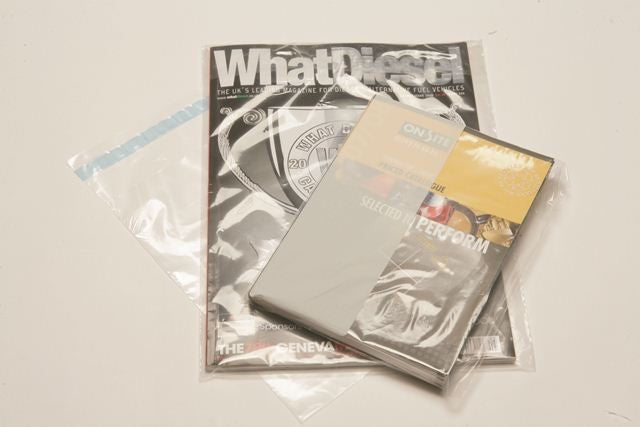
Bags / Polythene (Popular) / Clear Poly Mailers
-
12x16+2 - 200g Clear Poly Mailers (305x406mm - 51mu)Regular price From £51.04 GBPRegular priceUnit price per
-
21x22+2 - 200g Clear Poly Mailers (533x559mm - 51mu)Regular price From £127.25 GBPRegular priceUnit price per
-
12x16+2 - 150g Clear Poly Mailers (305x406mm - 38mu)Regular price From £47.44 GBPRegular priceUnit price per
-
10x15+2 - 150g Clear Poly Mailers (254x381mm - 38mu)Regular price From £72.15 GBPRegular priceUnit price per
-
9x12+2 - 200g Clear Poly Mailers (229x305mm - 51mu)Regular price From £37.95 GBPRegular priceUnit price per
-
9x12+2 - 150g Clear Poly Mailers (229x305mm - 38mu)Regular price From £52.94 GBPRegular priceUnit price per
-
6.5x9+2 - 150g Clear Poly Mailers (165x229mm - 38mu)Regular price From £80.17 GBPRegular priceUnit price per
-
7x10+2 - 150g Clear Poly Mailers (178x254mm - 38mu)Regular price From £28.84 GBPRegular priceUnit price per
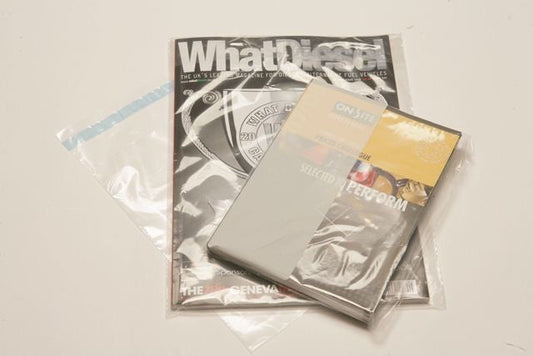
Bags / Polythene (Popular) / Clear Poly Mailers
| Order Code | Description | Internal Dimensions (mm) | Royal Mail PIP | Pack Quantity |
| 04S01 | Clear poly mailing bag | 7 x 10 + 2 - 150g | letter | 1000 |
| 04S04 | Clear poly mailing bag | 9 x 12 + 2 - 150g | large letter | 1000 |
| 04S05 | Clear poly mailing bag | 9 x 12 + 2 - 200g | large letter | 1000 |
| 04S06 | Clear poly mailing bag | 10 x 15 + 2 - 150g | packet | 1000 |
| 04S07 | Clear poly mailing bag | 12 x 16 + 2 - 150g | packet | 1000 |
| 04S10 | Clear poly mailing bag | 12 x 16 + 2 - 200g | packet | 500 |
| 04S08 | Clear poly mailing bag | 21 x 22 + 2 - 200g | packet | 5000 |
Clear Poly Mailers (Transparent Polythene Mailing Bags)
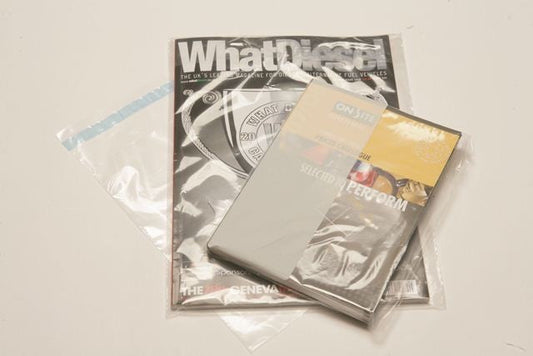
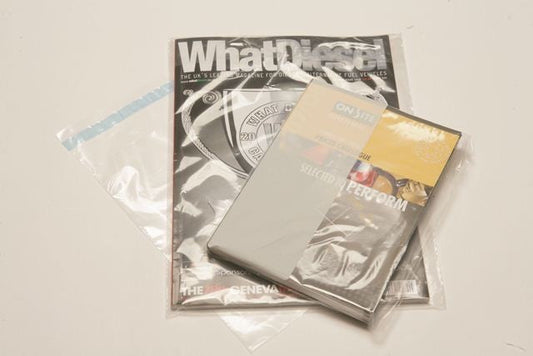
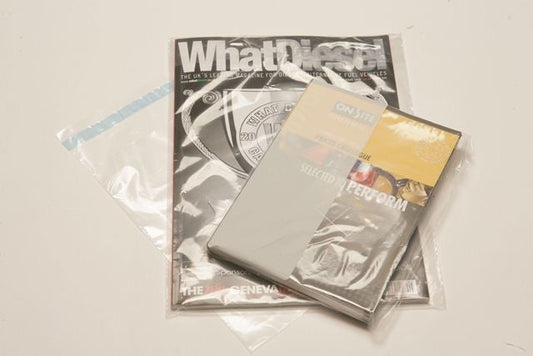
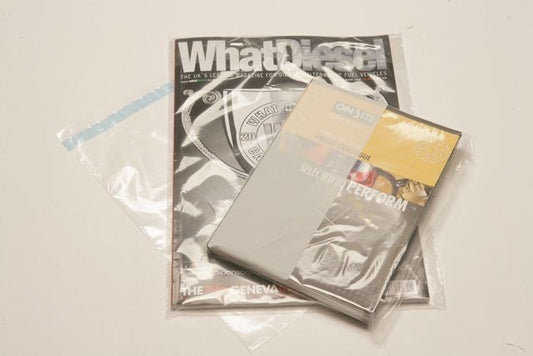
Clear poly mailers are lightweight, transparent polythene mailing bags designed to protect items from handling marks, dust and moisture during storage and transit while keeping the contents visible for quick identification. They are commonly used for documents, printed materials, textiles and other non-fragile items where a rigid outer carton is not required. This collection focuses on clear poly mailing bags in practical sizes with a flap for closure and a choice of film weights (including 150g and 200g options shown in the size table on this page).
Because these bags are flexible, the final postal format depends on the packed item’s external dimensions (length, width and thickness) rather than the flat bag size alone. If you are aiming to send as a Royal Mail Letter or Large Letter, it is important to measure the finished pack once filled and sealed. Royal Mail’s published size guide lists Letter as up to 240 x 165 x 5 mm and Large Letter as up to 353 x 250 x 25 mm; items exceeding those limits move into parcel formats such as Small Parcel (up to 450 x 350 x 160 mm).
Clear Poly Mailers — Helpful Guide
What “size + flap” means
Mailing bag sizes are often shown as width x length plus a flap (for example, “7 x 10 + 2”). The first two numbers describe the usable face of the bag, while the “+ 2” indicates the flap length used to close the bag. When planning fit, focus on the usable width and length for the item, then allow extra room for easy insertion and for any thickness created by folds, seams or bundled contents.
Film weight / thickness: choosing between 150g and 200g
Clear poly mailers are typically specified by film thickness (often expressed as micron or gauge). A commonly used packaging conversion is 150 gauge ≈ 37.5 micron and 200 gauge ≈ 50 micron, meaning 200 gauge is thicker and generally more resistant to tearing than 150 gauge.
- 150g (lighter film): often suitable for flat, lightweight items such as paperwork, leaflets, thin booklets, photos (with backing board), and light textiles where you want to minimise added bulk.
- 200g (heavier film): often preferred for heavier contents, sharper corners, or when you want a sturdier bag that is less likely to puncture during handling.
Note: the bag film contributes only a small amount to overall thickness; the contents and how they are folded or stacked usually determine whether a pack stays within Letter/Large Letter thickness limits.
Types of packaging in this category
- Clear poly mailing bags (transparent mailers): flexible, lightweight bags for non-fragile items where visibility is helpful. The products in this collection are listed in the table above as “Clear poly mailing bag” with multiple sizes and film weights.
Case study: reducing returns caused by label and picking errors
A small fulfilment team shipping mixed SKUs (for example, printed inserts, apparel and accessories) often faces two recurring issues: (1) picking the wrong item, and (2) applying the wrong label to the right item. Switching some lines to transparent mailers can reduce both problems because the contents can be visually verified at the packing bench and again at dispatch without opening the package. In practice, teams typically combine a clear mailer with an internal packing slip and a consistent folding method so that the barcode/identifier is visible through the film. The result is fewer “wrong item” incidents and less time spent reopening and resealing packs for checks.
Clear mailers are not a substitute for protective cushioning when shipping fragile goods. In the case study above, fragile items were routed to padded mailers or cartons, while clear poly mailers were reserved for soft goods and flat printed materials.
How to choose the correct clear poly mailer
1) Measure the packed item, not the flat item
Start by measuring the item as it will be shipped (folded, stacked, or bundled). Add allowance for any inserts (returns form, leaflet), and consider whether the item will “spring” thicker after sealing. If you are trying to meet a specific postal format, measure the final sealed pack at its thickest point.
2) Match the bag width to the item’s widest point
Choose a bag width that comfortably fits the item without forcing it. Overfilling increases the risk of seam stress and can make the pack thicker than expected. As a rule of thumb, allow a little extra width for easy insertion, especially for textiles or multi-item orders.
3) Choose length with the flap in mind
The flap is there to close the bag; it does not increase the usable internal length in the same way as the main panel. Ensure the item sits below the flap fold line so the closure can be made cleanly without creasing the contents.
4) Consider postal format targets (Letter, Large Letter, Packet)
If you are aiming for Royal Mail Letter or Large Letter, the key constraint is usually thickness. Royal Mail’s published guide lists Letter up to 240 x 165 x 5 mm and Large Letter up to 353 x 250 x 25 mm; if your sealed pack exceeds those limits it will be treated as a parcel format such as Small Parcel (up to 450 x 350 x 160 mm).
- Letter: best suited to very flat contents (documents, thin booklets, photos with a slim board).
- Large Letter: suitable for thicker printed materials and folded textiles, provided the final thickness stays within the limit.
- Packet / Small Parcel: appropriate when thickness or dimensions exceed Large Letter; clear mailers can still be used for non-fragile items, but many shippers move to stronger outer packaging for heavier goods.
5) Select film weight based on handling risk
Choose the lighter film for low-risk, flat shipments and the heavier film when you expect more handling stress, heavier contents, or sharper edges. If you are close to a thickness threshold, focus first on reducing the bulk of the contents (folding method, removing unnecessary inserts) rather than relying on film weight alone.
Packing tips for clear poly mailing bags
- Use a backing board for prints and photos: a thin board helps prevent bending while keeping the pack relatively flat.
- Keep edges smooth: sharp corners from boxed items can puncture film; consider an inner wrap or choose a thicker film.
- Seal on a clean, dry surface: dust or moisture can reduce closure reliability.
- Place labels on a flat area: avoid seams and folds so barcodes scan reliably.
- Don’t overfill: overfilling increases the chance of tearing and can push the pack into a higher postal format due to thickness.
Common uses for transparent mailers
- Documents and paperwork: keeping contents visible can help with sorting and internal distribution.
- Printed materials: brochures, manuals and booklets (often with a board for stiffness).
- Textiles: t-shirts, scarves and other soft goods where moisture resistance is helpful.
- Parts and accessories: non-fragile items that benefit from quick visual identification.
Environmental and compliance considerations
Clear poly mailers are typically made from polyethylene film. For organisations with recycling or waste policies, it can be helpful to separate film packaging from paper/card components at the point of unpacking. If you need to meet specific internal sustainability requirements, consider documenting how film packaging is collected and handled in your facility and whether alternative formats (paper mailers, cartons) are required for certain shipments.
Questions & Answers
How do I choose the right clear poly mailer size for my item?
Measure the item as it will be shipped (folded or stacked), then choose a bag with enough width and length for easy insertion. Ensure the item sits below the flap fold line so the closure can seal properly without creasing or stressing the film.
What is the difference between 150g and 200g clear poly mailing bags?
They indicate different film weights/thicknesses. A heavier option (often comparable to about 200 gauge / 50 micron) is generally more resistant to tearing and punctures than a lighter option (often comparable to about 150 gauge / 37.5 micron). Choose based on handling risk.
Will a clear poly mailer qualify as a Royal Mail Letter or Large Letter?
It depends on the final sealed pack size, especially thickness. Royal Mail’s guide lists Letter up to 240 x 165 x 5 mm and Large Letter up to 353 x 250 x 25 mm. If your packed item exceeds those limits, it moves into parcel formats.
Does the flap length affect the usable internal length of the bag?
The flap is primarily for closure and does not provide the same usable space as the main panel. When selecting length, ensure your item fits within the main body of the bag with clearance below the flap fold line so the seal can be made cleanly.
Are clear poly mailers suitable for fragile items?
Clear poly mailers provide a moisture and dust barrier but limited impact protection. For fragile items, use cushioning (such as bubble wrap) and consider a padded mailer or a carton. Clear mailers are best for non-fragile, flexible, or flat contents.