
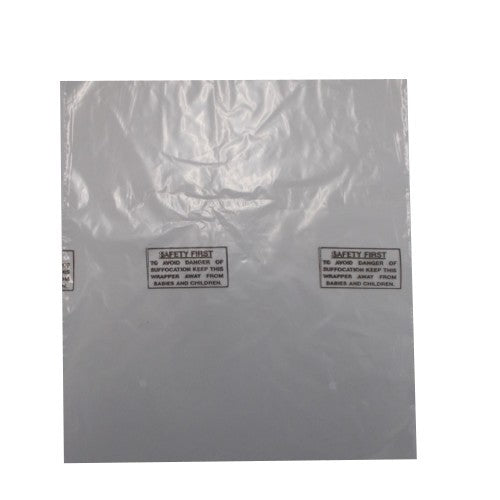
Bags / Polythene (Popular) / Printed Warning Notice Bags
-
355x430+40mm (14x17+1.5) Quality PE-LD 100% Recycled Shirt Bags Resealable 22L Warning NoticeRegular price From £57.62 GBPRegular priceUnit price per
-
300x400+40mm (12x16+1.5) Quality PE-LD 100% Recycled Shirt Bags Resealable 22L Warning NoticeRegular price From £45.00 GBPRegular priceUnit price per
-
250x300+40mm (10x12+1.5) Quality PE-LD 100% Recycled Shirt Bags Resealable 22L Warning NoticeRegular price From £33.88 GBPRegular priceUnit price per
-
208x285+40mm (8x11.5+1.5) Quality PE-LD 100% Recycled Shirt Bags Resealable 5L Warning NoticeRegular price From £28.84 GBPRegular priceUnit price per
-
15x20 - 100g Clear PERFORATED PWN Poly Bags (375x500mm - 25mu)Regular price From £59.42 GBPRegular priceUnit price per
-
22x36 - 150g Clear PWN Poly Bags (559x914mm - 38mu)Regular price From £35.70 GBPRegular priceUnit price per
-
18x24 - 100g Clear PERFORATED PWN Poly Bags (457x610mm - 25mu)Regular price From £47.58 GBPRegular priceUnit price per
-
14x18 - 150g Clear PERFORATED PWN Poly Bags (305x457mm - 38mu)Regular price From £8.65 GBPRegular priceUnit price per
-
12x18 - 150g Clear PERFORATED PWN Poly Bags (305x457mm - 38mu)Regular price From £8.65 GBPRegular priceUnit price per
-
14x18 - 100g Clear PERFORATED PWN Poly Bags (305x457mm - 25mu)Regular price From £8.65 GBPRegular priceUnit price per
-
10x15 - 100g Clear PERFORATED PWN Poly Bags (250x375mm - 25mu)Regular price From £27.82 GBPRegular priceUnit price per
-
12x15 - 100g Clear PERFORATED PWN Poly Bags (300x375mm - 25mu)Regular price From £17.10 GBPRegular priceUnit price per
-
10x12 - 100g Clear PERFORATED PWN Poly Bags (250x300mm - 25mu)Regular price From £22.99 GBPRegular priceUnit price per
-
11x15 - 100g Clear PERFORATED PWN Poly Bags (279x381mm - 25mu)Regular price From £15.90 GBPRegular priceUnit price per
-
30x44 - 120g Clear Poly Bags 100% Recycled Random PWN (762x1118mm - 30mu)Regular price From £0.30 GBPRegular priceUnit price per
-
20x32 - 500g Clear PWN Poly Bags (508x813mm - 127mu)Regular price From £37.95 GBPRegular priceUnit price per
-
14x20 - 150g Clear PWN Poly Bags (356x508mm - 38mu)Regular price From £49.02 GBPRegular priceUnit price per
-
12x18 - 100g Clear PERFORATED PWN Poly Bags (305x457mm - 25mu)Regular price From £24.14 GBPRegular priceUnit price per
-
12x16 - 150g Clear Multi Language Printed Warning Notice Poly Bags (300x400mm - 38mu)Regular price From £22.93 GBPRegular priceUnit price per
-
600x900+50mm (24x36+2) Quality PE-LD 100% Recycled Shirt Bags Resealable 22L Warning NoticeRegular price From £170.12 GBPRegular priceUnit price per
-
457x560+50mm (18x22+2) Quality PE-LD 100% Recycled Shirt Bags Resealable 22L Warning NoticeRegular price From £90.89 GBPRegular priceUnit price per
-
122x172+40mm (5x7+1.5) Quality PE-LD 100% Recycled Shirt Bags Resealable 5L Warning NoticeRegular price From £18.29 GBPRegular priceUnit price per


Bags / Polythene (Popular) / Printed Warning Notice Bags
Printed warning notice bags are clear polythene bags that include a safety warning message on the film. They are commonly used for packaging garments, textiles, and other soft goods where a thin plastic bag could present a suffocation risk if misused. In practical terms, these bags help businesses apply consistent safety messaging while keeping products clean, protected from dust, and easy to identify at a glance.
Printed Warning Notice Bags — Helpful Guide
This collection includes two main formats of printed warning notice (PWN) polythene packaging:
- Resealable shirt bags (with a flap and adhesive strip) for folded garments and apparel presentation.
- Flat poly bags (some perforated) for general-purpose protection, grouping, and outer over-bagging of products.
1) Resealable printed warning notice shirt bags (recycled LDPE)
These are designed for folded shirts, knitwear, and similar apparel. The resealable flap helps keep items tidy during handling, picking, and storage. Sizes in this range are listed in millimetres with an added flap measurement (e.g., “+40mm”), which indicates the closure flap depth.
-
355x430+40mm (14x17+1.5) Quality PE-LD 100% Recycled Shirt Bags Resealable 22L Warning Notice
Large-format resealable shirt bag for bulkier folded garments, hoodies, or multi-item packs where extra width and length reduce creasing and make packing faster. -
300x400+40mm (12x16+1.5) Quality PE-LD 100% Recycled Shirt Bags Resealable 22L Warning Notice
Versatile mid-large size for folded shirts, light knitwear, and apparel sets. The reseal flap supports repeated opening during quality checks. -
250x300+40mm (10x12+1.5) Quality PE-LD 100% Recycled Shirt Bags Resealable 22L Warning Notice
Compact resealable option for smaller folded garments, children’s clothing, accessories, or single-item presentation packs. -
208x285+40mm (8x11.5+1.5) Quality PE-LD 100% Recycled Shirt Bags Resealable 5L Warning Notice
Smaller resealable bag suited to lightweight items such as socks, underwear, small accessories, or components that benefit from a neat, sealed presentation.
2) Flat printed warning notice poly bags (clear; some perforated)
Flat PWN poly bags are commonly used as protective outer bags for garments, textiles, and boxed items, or for grouping multiple components into one pack. Perforated versions allow air to escape more easily during packing and can reduce ballooning in transit, which helps when you need a flatter, more stackable pack.
-
15x20 - 100g Clear PERFORATED PWN Poly Bags (375x500mm - 25mu)
Perforated clear bag for medium-to-large soft goods or grouped items where you want easier air release and a flatter finished pack. -
22x36 - 150g Clear PWN Poly Bags (559x914mm - 38mu)
Extra-large clear bag for bulky textiles, large garments, or protective over-bagging of boxed products. Heavier gauge supports more demanding handling. -
18x24 - 100g Clear PERFORATED PWN Poly Bags (457x610mm - 25mu)
Perforated option for larger folded garments, bedding components, or multi-item packs where trapped air can be an issue. -
14x18 - 150g Clear PERFORATED PWN Poly Bags (305x457mm - 38mu)
Heavier perforated bag for robust protection and improved puncture resistance, useful for items with sharper corners or denser packs. -
12x18 - 150g Clear PERFORATED PWN Poly Bags (305x457mm - 38mu)
Heavier-gauge perforated bag for compact garments or grouped components where durability matters during fulfilment and returns processing. -
14x18 - 100g Clear PERFORATED PWN Poly Bags (305x457mm - 25mu)
Lighter perforated bag for everyday protection of garments and textiles, balancing clarity, packability, and material use.
Case study: reducing packing time and returns handling issues
A clothing fulfilment operation typically handles three recurring problems: (1) dust and scuffing during storage, (2) packs that “puff up” with trapped air and waste carton space, and (3) returns that arrive with missing components or unclear re-pack status. A practical approach is to standardise two bag styles: resealable shirt bags for presentation and repeat opening during checks, and perforated flat bags for outer protection where air release matters. The result is usually a flatter pack profile, faster sealing, and clearer visual confirmation that the item has been protected throughout handling.
In day-to-day use, resealable bags can support quality control steps (size/colour verification, barcode checks, accessory inclusion) without needing to replace the bag each time. Perforated flat bags can help when packing compressible items such as knitwear or textiles, because air can escape as the bag is closed and stacked. This can improve carton utilisation and reduce the chance of bags bursting due to internal pressure during transit.
How to choose the correct printed warning notice bag
Step 1: Confirm what you are packing (and how it will be handled)
- Folded garments for retail presentation: choose a resealable shirt bag so the pack can be opened and reclosed neatly.
- Bulk textiles or grouped components: choose a flat poly bag; consider perforation if trapped air is a recurring issue.
- Heavier or cornered items: consider a heavier gauge option for improved puncture resistance.
Step 2: Choose the right size (width, length, and flap)
For resealable shirt bags, the “+40mm” indicates the flap depth. Ensure the usable internal length (overall length minus flap) comfortably fits the folded item without forcing the closure. For flat bags, match the bag width to the widest part of the packed item and allow extra room for easy insertion and a clean seal or closure method.
If you are between sizes, selecting the next size up can reduce packing friction and minimise creasing. However, excessive empty space can lead to shifting in transit, so aim for a balanced fit.
Step 3: Decide whether perforation is beneficial
Perforated bags are often chosen when you want air to escape during packing, producing a flatter pack that stacks well. They can also help reduce “ballooning” in cartons. If you need a more airtight barrier for dust control or to retain a specific pack feel, a non-perforated option may be preferable.
Step 4: Consider film type and gauge (thickness)
Film gauge is commonly shown in microns (mu). In general, a higher micron figure indicates a thicker film that can offer improved durability and puncture resistance, while a lower micron figure can be easier to fold and may use less material. Choose the gauge that matches your handling conditions: manual packing, automated bagging, long-distance shipping, or frequent returns processing.
Common applications
- Apparel fulfilment: shirts, knitwear, uniforms, and multi-item clothing sets.
- Textiles: linens, pillowcases, throws, and fabric components.
- Parts and accessories: grouped components where visibility and organisation matter.
- Warehouse protection: dust cover for items stored on shelving or in totes.
Handling, storage, and packing tips
- Keep bags clean and dry: store cartons off the floor and away from direct sunlight to maintain film clarity and performance.
- Reduce static where possible: in dry environments, static can make thin film cling; using consistent packing surfaces and controlled humidity can help.
- Use a consistent folding method: standard folds improve fit, reduce creasing, and make size selection more predictable.
- Don’t overfill: overstuffing increases the chance of seam stress and can compromise closure performance on resealable styles.
- Label placement: if applying barcode or shipping labels to the bag, place them on a flat area to reduce wrinkles and scanning issues.
Safety and compliance notes (general)
Printed warning notice bags are used to communicate a suffocation hazard associated with thin plastic film. Always ensure the warning message remains visible and legible after packing, and follow any applicable local regulations or customer requirements for packaging warnings, language, and placement. If you are supplying multiple markets, confirm whether additional languages or specific wording is required.
Questions & Answers
What does “printed warning notice” mean on these poly bags?
It means the bag film includes a safety warning message intended to highlight the suffocation hazard associated with thin plastic bags. The print helps keep messaging consistent across packed items and can support internal packaging standards and external compliance requirements.
When should I choose a resealable shirt bag instead of a flat poly bag?
Choose a resealable shirt bag when you need a neat presentation and the ability to open and reclose the pack during checks, picking, or returns. Flat poly bags are better for simple protective over-bagging or grouping items without repeated access.
What is the benefit of perforated printed warning notice bags?
Perforations allow trapped air to escape during packing, which can reduce ballooning and help create a flatter, more stackable pack. This can improve carton utilisation and reduce pressure on seams during transit, especially for compressible textiles and garments.
How do I interpret sizes like “355x430+40mm”?
The first two numbers are the bag width and length in millimetres. The “+40mm” indicates the flap depth used for the resealable closure. When sizing, ensure the usable internal length (excluding the flap) fits the folded item comfortably.
Does a higher micron (mu) thickness always mean a better bag?
Not always. Higher micron film is typically more durable and puncture resistant, but it can be stiffer and may use more material. Lower micron film can be easier to fold and pack. The best choice depends on handling, shipping distance, and product edges.