
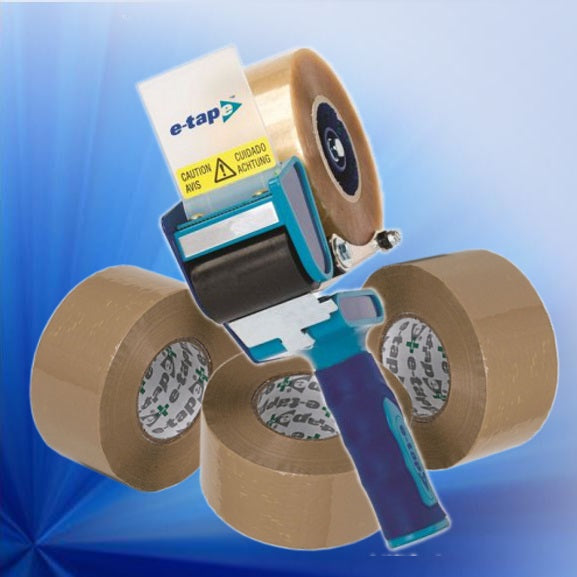
Tapes / Packing Tape (Popular) / E-tape 150Meter (Popular)
-
50mmx150m - Clear E-Tape PlusRegular price From £2.63 GBPRegular priceUnit price per
-
50mmx150m - Brown/Buff E-Tape PlusRegular price From £2.63 GBPRegular priceUnit price per
-
50mmx150m - Brown/Buff Vinyl 'E-Tape'Regular price £0.00 GBPRegular priceUnit price per
-
50mmx150m - Clear 'E-Tape' - TwoRegular price From £2.02 GBPRegular priceUnit price per
-
50mmx150m White Vinyl 'E-Tape'Regular price £0.00 GBPRegular priceUnit price per
-
50mmx150m - Clear Vinyl 'E-Tape'Regular price £0.00 GBPRegular priceUnit price per
-
50mmx150m - Clear LowNoise/LN 'E-Tape'Regular price £0.00 GBPRegular priceUnit price per
-
50mmx150m - Brown/Buff LowNoise/LN 'E-Tape'Regular price £0.00 GBPRegular priceUnit price per
-
50mmx150m - White PVC 'E-Tape' - Printed in 2 ColoursRegular price From £5.58 GBPRegular priceUnit price per
-
50mmx150m - White 'E-Tape' - Printed in 2 ColoursRegular price From £4.18 GBPRegular priceUnit price per
-
50mmx150m - Fragile 'E-Tape' - PlusRegular price From £1.88 GBPRegular priceUnit price per
-
50mmx150m - Brown/Buff 'E-Tape' - TwoRegular price From £2.02 GBPRegular priceUnit price per
-
50mmx150m - White 'E-Tape' - One - Printed in 3 ColoursRegular price £0.00 GBPRegular priceUnit price per
-
50mmx150m Orange E-Tape PrintedRegular price From £6.17 GBPRegular priceUnit price per
-
50mmx150m - Clear 'E-Tape' - OneRegular price From £2.56 GBPRegular priceUnit price per
-
50mmx150m - Brown/Buff 'E-Tape' - OneRegular price From £113.34 GBPRegular priceUnit price per


Tapes / Packing Tape (Popular) / E-tape 150Meter (Popular)
|
Time saving - Unique 150m length roll reduces roll changes and down time |
|
Space saving - 127% more tape on the same size roll |
|
Environmentally friendly - 56% reduction in waste |
|
Premium quality - Tape available in 4 grades, ensures an extra strong grip |
| Specially designed - To provide maximum user benefits and exceptional value |
| Free dispensers - With your first order |
| Well balanced - And lightweight – a natural 1st choice |
| High Performance - Reliable industrial packaging tape for every requirement |
| Product Code | Description |
| 13E1B | 50mmx150m - Buff 'E-Tape' - One |
| 13E1C | 50mmx150m - Clear 'E-Tape' - One |
| 13E3B | 50mmx150m - Buff E-Tape Plus |
| 13E3C | 50mmx150m - Clear E-Tape Plus |
| 13E2F | 50mmx150m - Fragile 'E-Tape' - Plus |
50mm x 150m E‑Tape Packing Tape (Popular) — Overview
This collection focuses on long-length carton sealing tape in a 50mm x 150m format. The key practical advantage of a 150m roll is fewer roll changes during repetitive box sealing, which can reduce interruptions on busy packing benches and in despatch areas. The range includes buff and clear options for general sealing, plus a printed fragile option for parcels that benefit from clear handling cues.
Because tape performance depends on both the film backing and the adhesive system, it helps to think about your application first: carton weight, surface type (new corrugated board vs. recycled/dusty board), storage temperature, and whether the parcel will face vibration, compression, or temperature swings in transit. The products listed here are designed as industrial packaging tapes for everyday sealing tasks, with multiple grades available to match different demands.
E‑Tape 150Meter (Popular) — Helpful Guide
What’s in this category
- Standard long-length carton sealing tape (buff or clear): general-purpose sealing for regular cartons and routine despatch.
- Higher-grip “Plus” grade tape (buff or clear): intended for more demanding sealing where extra holding power is helpful.
- Printed warning/handling tape: communicates handling guidance while still functioning as a carton sealing tape.
Products in this collection (with quick use-notes)
-
50mmx150m - Buff 'E-Tape' - One
Buff (tan) long-length packing tape for everyday carton sealing where an opaque finish is preferred. -
50mmx150m - Clear 'E-Tape' - One
Clear long-length packing tape that keeps labels, barcodes, and carton print visible while sealing. -
50mmx150m - Buff E-Tape Plus
Buff long-length tape in a higher-performance grade for tougher sealing conditions and heavier packs. -
50mmx150m - Clear E-Tape Plus
Clear higher-performance grade tape for demanding sealing while maintaining visibility of carton information. -
50mmx150m - Fragile 'E-Tape' - Plus
Printed fragile tape in a plus grade, combining carton sealing with a clear handling message.
Why 150m rolls can improve packing efficiency
In many operations, the hidden cost of carton sealing is not the tape itself but the stop-start rhythm of packing. A longer roll length can reduce the frequency of roll changes, which helps maintain a consistent workflow. It can also simplify stock handling because fewer rolls may be needed for the same throughput. For teams using handheld dispensers, fewer changeovers can also reduce the chance of mis-threading or wasted tape at the start of a new roll.
Long-length formats are also commonly chosen where multiple packers share a station or where peak periods create sustained sealing demand. If your process involves sealing hundreds of cartons per shift, the difference between standard-length and long-length rolls becomes more noticeable in day-to-day productivity.
Understanding tape performance: backing, adhesive, and carton surface
1) Backing (film) and thickness
Carton sealing tapes typically use a plastic film backing that provides tensile strength and tear resistance. In practical terms, the backing influences how the tape handles on a dispenser, how it resists splitting during application, and how it performs when cartons flex under load. Thicker or stronger backings can be beneficial for heavier cartons or where the tape may be exposed to abrasion during transit.
2) Adhesive “grab” vs. long-term hold
Two behaviours matter when sealing cartons: initial tack (how quickly the tape grabs the surface) and holding power (how well it stays bonded over time under stress). A tape that feels “sticky” immediately may still fail if the carton surface is dusty, cold, or highly recycled. Conversely, a tape with strong long-term hold may need firm pressure during application to wet-out properly on the board. Higher-performance grades are often selected when you need more reliable bonding across variable conditions.
3) Carton surface quality
New corrugated cartons with clean liners are generally easy to seal. Recycled cartons, cartons stored in dusty environments, or cartons with high ink coverage can be more challenging. If you regularly seal cartons with rougher liners or inconsistent surfaces, consider stepping up to a higher-grip grade and ensure the tape is applied with adequate pressure along the full length of the seam.
How to choose the correct 50mm x 150m tape for your operation
Step 1: Identify your carton weight and stress level
- Light to medium cartons, routine courier networks: standard buff or clear is often suitable.
- Heavier cartons, high-value goods, or long transit routes: a “Plus” grade can provide extra security against seam lift.
Step 2: Decide between buff and clear
- Buff: helps conceal old markings on reused cartons and provides a traditional packing appearance.
- Clear: keeps carton print, handling icons, and labels visible; useful where scanning and identification are important.
Step 3: Consider whether a printed message is appropriate
Printed fragile tape can help communicate handling expectations, especially for mixed loads or multi-carrier despatch. It should be treated as a handling cue rather than a guarantee of special treatment. For best results, combine printed tape with appropriate internal protection (void fill, cushioning) and correct carton selection.
Step 4: Check temperature and storage conditions
Temperature affects both carton surfaces and adhesive behaviour. Cold cartons can reduce initial tack, while very warm environments can soften adhesives and increase the risk of tape creep under load. Store tape in a clean, dry area and allow it to acclimatise to the packing area temperature before use. If you seal cartons in unheated warehouses or cold rooms, test a plus grade and apply firm pressure to ensure good adhesion.
Application best practices (to reduce failures and waste)
- Prepare the surface: ensure the carton seam is dry and free from dust where possible.
- Use consistent pressure: press the tape down along the full seam to improve adhesive wet-out.
- Use the right tape width: 50mm is a common standard for carton seams; ensure full coverage of the join.
- Choose an appropriate sealing method: for heavier cartons, consider an “H-seal” (centre seam plus edge seams) to reduce corner lift.
- Avoid stretching excessively: over-stretching can cause the tape to retract and lift at the edges.
- Keep blades sharp: dull dispenser blades can tear film unevenly and create weak tape ends.
Case study: reducing downtime on a busy packing bench
A small fulfilment team shipping a mix of apparel and boxed accessories noticed that peak-day output was limited by frequent tape roll changes and inconsistent sealing quality between packers. By standardising on a long-length 50mm x 150m format and setting a simple rule—use clear for branded cartons and buff for reused cartons—the team reduced changeovers and improved consistency. They also introduced a quick seal check: press along the seam once after application and use an H-seal for heavier cartons. The result was fewer re-tapes, fewer seam lifts reported in transit, and smoother handovers between shifts.
Troubleshooting common carton sealing issues
Tape lifting at the ends
This is often caused by insufficient pressure, dusty carton liners, or excessive stretching during application. Apply firm pressure at the start and end of the run, avoid pulling the tape too tight, and consider a higher-performance grade if cartons vary in quality.
Tape not sticking in cold conditions
Cold reduces adhesive tack and can make carton liners less receptive. Store tape at room temperature where possible, allow cartons to acclimatise, and apply extra pressure. If cold sealing is routine, test a plus grade and validate performance on your actual cartons.
Tape splitting or tearing during application
Check dispenser alignment and blade condition. Uneven cutting or snagging can start a tear. Also ensure the tape roll is seated correctly and that the dispenser brake is not set too tight, which can increase stress on the film.
Storage, handling, and sustainability considerations
To maintain consistent performance, store tape away from direct sunlight and heat sources, and keep it in its original packaging until use to reduce dust contamination. Rotate stock so older rolls are used first. Reducing rework (re-taping, replacing damaged cartons) is one of the most practical ways to cut material waste in a packing process. Selecting a grade that matches your cartons and transit conditions can help prevent seal failures that lead to returns or repacking.
Q&A
Is 50mm x 150m tape compatible with standard handheld dispensers?
Many 50mm tapes fit common handheld dispensers, but roll diameter and core size can vary by long-length format. Check your dispenser’s maximum roll diameter and core specification. If the roll is larger, you may need a compatible dispenser designed for long-length rolls.
When should I choose a “Plus” grade instead of a standard grade?
Choose a higher-performance grade when cartons are heavier, surfaces are more variable (recycled, dusty, high ink coverage), or shipments face longer transit and handling stress. A plus grade can improve adhesion reliability and reduce the risk of seam lift or re-taping.
Does clear tape seal better than buff tape?
Colour alone does not determine sealing strength. Performance depends on the backing and adhesive formulation. Clear tape is often chosen for visibility of labels and carton print, while buff can help cover old markings. Select based on application needs and grade, not colour.
What is the best way to seal heavier cartons with packing tape?
For heavier cartons, use a consistent method such as an H-seal: apply tape along the centre seam and across both edge seams. Ensure the tape is pressed down firmly along its full length. Consider a higher-performance grade if cartons are rough or loads are high.
Why does tape sometimes lift or fail on recycled cartons?
Recycled cartons can have rougher liners, more dust, and coatings or inks that reduce adhesion. Temperature can also reduce tack. Improve results by applying firm pressure, avoiding over-stretching, and selecting a higher-grip grade. Testing on your actual cartons is recommended.