
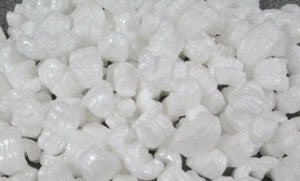
Protective / Void Fill / Poly Chips
-
15cuft - Pelespan Poly ChipsRegular price From £17.10 GBPRegular priceUnit price per
-
15cuft - Fastfil - Poly ChipsRegular price From £15.11 GBPRegular priceUnit price per
-
15cuft - Biofil - Biodegradable ChipsRegular price From £19.62 GBPRegular priceUnit price per


Protective / Void Fill / Poly Chips
Protective / Void Fill / Poly Chips
Loose-fill poly chips (also called packing peanuts) are a lightweight void-fill material used to cushion products inside shipping cartons. They work by filling empty space so items don’t shift in transit, while also providing impact absorption around corners and edges. This category includes three common loose-fill options in convenient 15 cubic foot bags: traditional polystyrene chips, fast-fill style chips designed for efficient packing, and biodegradable loose fill for operations that prefer plant-based disposal options.
Poly Chips — Helpful Guide
Choosing the right loose fill is mostly about three things: how fragile the item is, how much void space you need to fill, and what handling/disposal requirements your facility or customers have. Below is a practical breakdown of the main types in this collection and when each is typically used.
1) Standard polystyrene loose fill (general-purpose cushioning)
Polystyrene chips are widely used for everyday void fill because they are light, resilient, and provide consistent cushioning for many non-extreme shipping conditions. They are commonly used for boxed goods, parts, and general e-commerce shipments where the goal is to prevent movement and reduce shock.
- 15cuft - Pelespan Poly Chips — General-purpose polystyrene loose fill for cushioning and void fill in cartons. Best for filling irregular spaces around products and reducing shifting during handling.
2) Fast-fill style polystyrene loose fill (efficient packing and flow)
Some operations prefer a loose fill that pours and settles quickly, helping packers fill cartons faster and more consistently. Fast-fill style chips are often selected for higher-throughput packing stations where speed and repeatability matter, while still providing the familiar cushioning performance of polystyrene.
- 15cuft - Fastfil - Poly Chips — Polystyrene loose fill designed for efficient carton filling and quick settling around products, helping reduce packing time while maintaining void-fill performance.
3) Biodegradable loose fill (plant-based, water-dispersible options)
Biodegradable loose fill is typically starch-based and is often chosen when end users prefer a material that can break down more readily than traditional polystyrene. In many cases, starch-based chips are also water-dispersible, which can simplify cleanup and disposal for recipients (always confirm local disposal guidance and your specific use case).
- 15cuft - Biofil - Biodegradable Chips — Biodegradable loose fill intended for void fill and cushioning where a plant-based alternative is preferred.
How loose fill protects products (and when it doesn’t)
Loose fill protects by creating a compressible buffer between the product and the carton walls. When the box is dropped or bumped, the chips compress and redistribute energy. Loose fill also reduces abrasion by limiting movement. However, it is not a rigid immobilization system. Very heavy items, sharp-edged parts, or products that must not move at all may require additional packaging methods (such as molded cushioning, foam-in-place, or corrugated inserts) in addition to void fill.
How to choose the correct poly chips for your shipment
Step 1: Identify the product’s risk profile
- Lightweight, non-fragile items: Standard polystyrene chips are often sufficient to prevent shifting.
- Fragile items (glass, ceramics, delicate assemblies): Use generous fill depth on all sides and consider double-boxing. Loose fill can work well when the item is first wrapped and centered.
- Heavy or dense items: Loose fill may migrate under weight. Consider combining with stronger blocking/bracing or switching to a different cushioning method.
Step 2: Match the fill behavior to your packing process
- Manual packing stations: A general-purpose chip is easy to scoop and top off.
- High-throughput packing: A fast-fill style chip can help cartons fill quickly and consistently, reducing the need for repeated topping-off.
Step 3: Consider recipient expectations and disposal preferences
- Traditional polystyrene: Lightweight and resilient; disposal and recycling options vary by region.
- Biodegradable loose fill: Often selected when customers prefer plant-based materials; performance can differ with humidity and handling, so test for your application.
Step 4: Estimate how much you need
Loose fill is commonly sold by volume. A 15 cubic foot bag is a practical size for many packing areas and can be staged near a bench or used with a hopper. Actual usage depends on carton size, product geometry, and how tightly you pack. For planning, remember that void fill is consumed by empty space, not by product weight.
Packing best practices (to reduce damage and mess)
- Create a base layer: Add a cushion layer in the bottom of the carton before placing the product.
- Center the item: Keep the product away from carton walls; aim for cushioning on all sides.
- Fill all voids: Pour chips into corners and around protrusions so the item cannot shift.
- Top off before sealing: Add a final layer so the contents are slightly “proud” before closing; the flaps should compress the fill gently.
- Use inner wrapping for fragile goods: Wrap the item first (paper, bubble, or foam) to prevent abrasion and to help chips flow around it.
- Choose the right carton strength: Loose fill works best when the outer box is appropriately sized and strong enough for stacking and handling.
Case study: reducing breakage in mixed-item shipments
A small fulfillment team shipping mixed orders (hard goods plus accessories) noticed that items were arriving scuffed or with minor corner damage. The root cause wasn’t severe drops—it was movement inside oversized cartons. By switching to a consistent loose-fill process—base layer, centered placement, full perimeter fill, and a compressed top-off—the team reduced internal shifting. They also standardized carton sizing to minimize empty space. The result was fewer damage claims and less time spent repacking returns. The key takeaway: loose fill performs best when it is used to eliminate voids, not merely sprinkled on top.
Operational tips for warehouses and packing benches
Storage and handling
Keep bags sealed until use to reduce static cling and contamination. Store away from sharp objects that can puncture bags. If you use a hopper or dispenser, keep the area clean so chips don’t pick up debris that could transfer to products.
Static and housekeeping
Loose fill can cling due to static, especially in dry environments. Simple steps—like maintaining moderate humidity, using grounded metal hoppers, and keeping a dedicated cleanup routine—can reduce mess. For recipients, including a brief unpacking note (open box slowly, remove items over a bin) can also help.
Compatibility with other protective packaging
Loose fill pairs well with many protective materials. For example, wrapping a product first and then using chips to fill the remaining void space can improve both cushioning and presentation. For multi-item cartons, consider separating items with inner packaging so they don’t collide, then use chips to lock everything in place.
Common mistakes to avoid
- Using too little fill: If the item can move, it can be damaged. Fill until movement is eliminated.
- Over-boxing without filling: A larger carton increases void space and requires more fill; right-size cartons whenever possible.
- Relying on loose fill for very heavy items: Dense products can settle and create empty space at the top; use blocking/bracing or alternative cushioning.
- Ignoring sharp edges: Protect sharp corners with wraps or edge protection so they don’t cut through the carton or migrate through the fill.
Frequently asked questions
How do I know if loose-fill poly chips are enough protection for my product?
Loose fill works best when it fully surrounds the item and prevents movement inside the carton. If the product is lightweight to moderate weight and can tolerate slight compression, chips are often suitable. Very heavy, sharp, or highly fragile items may need additional cushioning or blocking.
What’s the difference between standard poly chips and fast-fill style chips?
Both are used to fill empty space and cushion products, but fast-fill style chips are typically chosen for how they pour and settle during packing. They can help packers fill cartons more quickly and consistently. Performance depends on the shipment and packing method, so testing is recommended.
Are biodegradable packing chips safe to use for shipping?
Biodegradable loose fill is commonly used for void fill and cushioning, especially when a plant-based option is preferred. Because starch-based materials can behave differently with humidity and compression, it’s wise to test them with your product, carton size, and shipping lanes before standardizing.
How much loose fill do I need for a typical box?
Usage depends on the amount of empty space in the carton, not the product’s weight. Larger boxes and irregularly shaped items consume more fill. A good rule is to create a base layer, surround the item on all sides, and top off so the flaps compress the fill slightly when sealed.
Can I combine poly chips with other protective packaging materials?
Yes. Many shippers wrap the product first to prevent abrasion, then use loose fill to eliminate remaining void space and stop movement. For multi-item cartons, separating items with inner packaging and then filling gaps with chips can reduce collisions and improve overall protection.