
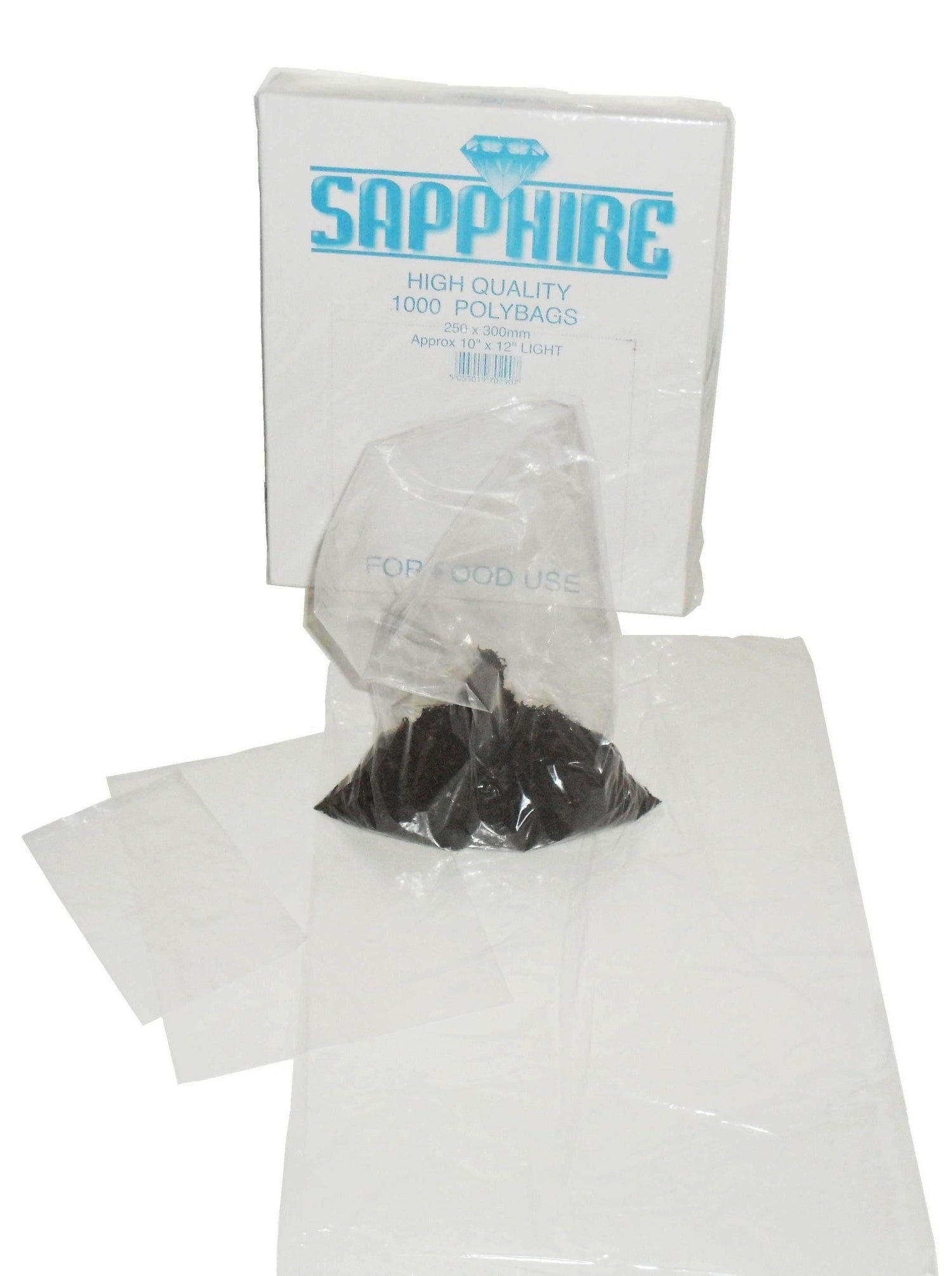
Bags / Polythene (Popular) / Medium 200G (50mu)
-
7x9 - 200g Clear Poly Bags (178x229mm - 51mu)Regular price From £20.66 GBPRegular priceUnit price per
-
12x15 - 200g Clear Poly Bags (305x381mm - 51mu)Regular price From £28.84 GBPRegular priceUnit price per
-
10x15 - 200g Clear Poly Bags (254x381mm - 51mu)Regular price From £24.19 GBPRegular priceUnit price per
-
10x12 - 200g Clear Poly Bags (254x305mm - 51mu)Regular price From £18.88 GBPRegular priceUnit price per
-
6x8 - 200g Clear Poly Bags (152x203mm - 51mu)Regular price From £14.94 GBPRegular priceUnit price per
-
18x24 - 200g Clear Poly Bags (457x610mm - 51mu)Regular price From £35.97 GBPRegular priceUnit price per
-
4x6 - 200g Clear Poly Bags (102x152mm - 51mu)Regular price From £8.87 GBPRegular priceUnit price per
-
8x10 - 200g Clear Poly Bags (203x254mm - 51mu)Regular price From £28.07 GBPRegular priceUnit price per
-
12x18 - 200g Clear Poly Bags (305x457mm - 51mu)Regular price From £37.00 GBPRegular priceUnit price per
-
15x20 - 200g Clear Poly Bags (381x508mm - 51mu)Regular price From £49.49 GBPRegular priceUnit price per
-
22x30 - 200g Clear Poly Bags (559x762mm - 51mu)Regular price From £23.95 GBPRegular priceUnit price per
-
8x12 - 200g Clear Poly Bags (203x305mm - 51mu)Regular price From £31.14 GBPRegular priceUnit price per
-
6x12 - 200g Clear Poly Bags (152x305mm - 51mu) - Paper WrappedRegular price From £11.08 GBPRegular priceUnit price per
-
9x12 - 200g Clear Poly Bags (229x305mm - 50mu)Regular price From £38.29 GBPRegular priceUnit price per
-
20x30 - 200g Clear Poly Bags (508x762mm - 51mu)Regular price From £47.93 GBPRegular priceUnit price per
-
24x36 - 200g Clear Poly Bags (610x914mm - 51mu)Regular price From £70.61 GBPRegular priceUnit price per
-
12x12 - 200g Clear Poly Bags (305x305mm - 51mu)Regular price From £31.14 GBPRegular priceUnit price per
-
7.5x20 - 200g Clear Poly Bags (191x508mm - 51mu)Regular price From £33.42 GBPRegular priceUnit price per
-
7x60 - 200g Clear Poly Bags (178x1524mm - 51mu)Regular price From £24.19 GBPRegular priceUnit price per
-
3.7x17 - 200g Clear Poly Bags (94x432mm - 51mu)Regular price From £33.42 GBPRegular priceUnit price per
-
2.5x3.5 - 200g Clear S/W Poly Bags (64x89mm - 51mu)Regular price From £11.62 GBPRegular priceUnit price per
-
3.5x10 - 200g Clear S/W Poly Bags (89x254mm - 51mu)Regular price From £44.41 GBPRegular priceUnit price per
-
3.5x6 - 200g Clear S/W Poly Bags (89x152mm - 51mu)Regular price From £27.31 GBPRegular priceUnit price per
-
13x8 - 200g Clear Poly Bags (320x200mm - 51mu)Regular price From £52.20 GBPRegular priceUnit price per
-
48x60" - 200g Clear Poly Bags-On-Roll (1219x1524mm - 51mu)Regular price From £88.62 GBPRegular priceUnit price per
-
36x66 - 200g Clear Poly Bags (914x1676mm - 51mu)Regular price From £74.71 GBPRegular priceUnit price per
-
36x48 - 200g Clear Poly Bags (914x1219mm - 51mu)Regular price From £38.72 GBPRegular priceUnit price per
-
12x24 - 200g Clear Poly Bags (305x610mm - 51mu)Regular price From £42.42 GBPRegular priceUnit price per
-
24x54 - 200g Clear Poly Bags (600x1370mm - 51mu)Regular price From £80.74 GBPRegular priceUnit price per
-
10x47.5 - 200g Clear Poly Bags (254x1207mm - 51mu)Regular price From £55.49 GBPRegular priceUnit price per
-
15x48 - 200g Clear Poly Bags (381x1219mm - 51mu)Regular price From £188.67 GBPRegular priceUnit price per
-
12x48 - 200g Clear Poly Bags (305x1219mm - 51mu)Regular price From £47.18 GBPRegular priceUnit price per
-
8x24 - 200g Clear Poly Bags (203x610mm - 51mu)Regular price From £61.58 GBPRegular priceUnit price per
-
2.75x3.15 (70x80mm) - 200g Clear S/W Poly BagsRegular price From £11.50 GBPRegular priceUnit price per
-
8x14 - 200g Clear Poly Bags (203x356mm - 51mu) - Paper WrappedRegular price From £20.66 GBPRegular priceUnit price per
-
5x7 - 200g Clear Poly Bags (127x178mm - 51mu)Regular price From £13.93 GBPRegular priceUnit price per


Bags / Polythene (Popular) / Medium 200G (50mu)
* Many of our poly bags are suitable for food use, however there may be exceptions and if you specifically require this then it is best to get specific confirmation of this.
Clear polythene bags in the “Popular” range are a practical, everyday packaging option when you need a clean presentation, quick packing, and reliable protection from dust and light moisture. This collection focuses on medium-duty clear poly bags commonly described as “200g” with a thickness around 50 microns (50mu / ~51mu). In day-to-day use, this thickness is often chosen as a balance between flexibility and puncture resistance for general retail, warehouse picking, kitting, and storage.
Because these bags are transparent, they are widely used where fast identification matters—stockrooms, dispatch benches, and production lines—helping reduce handling time and mis-picks. They are also frequently used as inner packaging to keep items grouped and protected inside cartons, mailing bags, or larger outer packs.
Medium 200g Clear Poly Bags (50mu) — Helpful Guide
What “50mu / 51mu” means in practice
Micron (mu) is a measure of film thickness. A 50–51 micron clear polythene bag is typically considered a medium gauge: thicker than lightweight garment or sandwich-style bags, but still easy to fold, open, and handle quickly. This gauge is commonly selected for mixed-use packing where you want improved tear resistance without moving to very heavy film.
What “200g” usually refers to
In many packaging ranges, “200g” is used as a shorthand category label rather than a strict weight limit. Real-world suitability depends on the item’s shape, density, and whether it has sharp corners or edges. For example, a compact metal component may stress a bag more than a soft textile of the same weight. Use thickness and dimensions as your primary selection criteria, then validate with a quick pack test.
Types of packaging in this category
- Clear flat polythene bags (open-top) — simple, versatile bags for grouping, protecting, and presenting products. They are commonly closed with tape, labels, staples (where appropriate), or heat sealing depending on your process.
- Size-graded options — the same film specification across multiple widths and lengths so you can standardise packing quality while matching different product footprints.
Products in this collection (with internal links)
The following clear poly bags are listed in this collection. Choose a size based on your product’s width, height/length, and any extra allowance needed for folds, inserts, or closure.
- 4x6 - 200g Clear Poly Bags (102x152mm - 51mu) — compact bags for small parts, samples, accessories, and small bundled items where visibility is important.
- 7x9 - 200g Clear Poly Bags (178x229mm - 51mu) — a handy mid-small size often used for small boxed items, stationery, craft components, and general kitting.
- 6x8 - 200g Clear Poly Bags (152x203mm - 51mu) — suitable for slightly smaller items than 7x9, helping reduce excess film and improve pack neatness.
- 8x10 - 200g Clear Poly Bags (203x254mm - 51mu) — a versatile size for folded items, printed materials, and grouped components.
- 10x12 - 200g Clear Poly Bags (254x305mm - 51mu) — commonly used for folded garments, documents, and medium-sized retail items needing clean presentation.
- 10x15 - 200g Clear Poly Bags (254x381mm - 51mu) — extra length for taller items or for leaving room to fold over and tape/label the opening.
- 12x15 - 200g Clear Poly Bags (305x381mm - 51mu) — a popular choice for larger folded apparel, boxed goods, and multi-item bundles.
- 12x18 - 200g Clear Poly Bags (305x457mm - 51mu) — useful when you need more length for inserts, paperwork, or bulkier folded items.
- 18x24 - 200g Clear Poly Bags (457x610mm - 51mu) — suited to larger textiles, grouped packs, and bulky items where you still want clear visibility.
- 22x30 - 200g Clear Poly Bags (559x762mm - 51mu) — a large-format option for oversized items, protective over-bagging, or bundling multiple products together.
Typical uses and where clear poly bags fit best
Clear polythene bags are widely used across retail, fulfilment, and light industrial settings because they are quick to pack and easy to inspect. Common applications include:
- Retail presentation — keeping products clean and visible on shelves or in storage bins.
- Warehouse picking and kitting — grouping components into a single pack to reduce missing parts.
- Protection during transit — acting as an inner layer to reduce scuffing and dust inside cartons.
- Document and insert protection — keeping paperwork with the product while preventing creasing or contamination.
- Short-term storage — organising items by SKU, batch, or job number with labels applied to the bag.
Case study: reducing picking errors with transparent inner packs
A small fulfilment operation handling mixed SKUs often faces two recurring issues: (1) items getting separated inside cartons, and (2) pickers needing to open packaging to confirm contents. Switching to clear inner poly bags can address both. By grouping each order line into a transparent bag, staff can visually confirm the correct item and quantity before sealing the outer carton. This can reduce rework caused by mis-picks and helps keep small components from migrating to the bottom of a box during transit.
In practice, the most effective approach is to standardise on a small set of bag sizes that cover most products, then reserve larger sizes for bulky or multi-item bundles. Adding a simple label (SKU, quantity, batch) to the outside of the clear bag further improves traceability without obscuring visibility.
How to choose the correct bag size and thickness
1) Measure the product correctly
For flat items, measure width and length at the widest points. For bulky items, measure the width and height, then consider depth (gusset allowance). These bags are flat, so bulky items may require a larger width than expected. If you plan to fold over the opening for tape or a label, add extra length.
2) Allow for closure method
Different closing methods need different allowances:
- Tape or label closure — add enough length to fold over neatly without stressing the film.
- Heat sealing — leave a sealing margin so the seal is consistent and not too close to the product.
- Stapling — only where appropriate for the product and end use; ensure staples won’t damage contents or create hazards.
3) Consider puncture risk
Film thickness is only one factor. Sharp corners, burrs, and abrasive surfaces can puncture even thicker bags. If your items have edges (e.g., metal parts, rigid plastics), consider adding an inner wrap, using corner protectors, or selecting a larger bag so the film is not stretched tight over corners.
4) Think about handling and workflow
In high-throughput packing, consistency matters. Using one gauge (around 50–51mu) across multiple sizes can simplify training and reduce mistakes. Choose sizes that open easily, fit your label area, and stack well in dispensers or on packing benches.
5) Food suitability and compliance checks
Some clear poly bags are suitable for food contact, but suitability can vary by specification and intended use. If you require food-contact compliance for a specific application, confirm the relevant documentation and ensure your handling and storage processes maintain hygiene. Also consider whether the bag will be used for direct contact or as secondary packaging.
Storage, labelling, and best practice tips
- Store in a clean, dry area away from direct sunlight and heat sources to help maintain film performance.
- Use clear labelling conventions (SKU, size, batch/date) so packed items remain traceable.
- Avoid overfilling — leaving a little headspace reduces stress on seams and makes closure easier.
- Keep openings easy to access — if bags are stacked, consider how quickly operators can separate and open them.
- Test with real products — a quick trial run often reveals whether you need more width, more length, or a different closure approach.
Frequently asked questions
What does 50mu (or 51mu) mean for a clear polythene bag?
“Mu” means micron, a measure of film thickness. Around 50–51 microns is typically considered a medium gauge, offering a balance of flexibility and improved tear resistance compared with lighter bags. It’s commonly used for general packing, storage, and inner protection.
Is “200g” the maximum weight these bags can hold?
Not necessarily. “200g” is often used as a range label rather than a strict weight rating. Real capacity depends on the product’s shape, density, and whether it has sharp edges. Use the bag’s dimensions and thickness first, then validate with a packing test.
How do I choose the right bag size for my product?
Measure the product at its widest points and add allowance for thickness, inserts, and your closure method. If you plan to fold over the opening or heat seal, add extra length for a consistent closure. For bulky items, you may need more width than expected.
Are clear polythene bags suitable for food use?
Some polythene bags are suitable for food contact, but suitability can vary by specification and intended use. If you require food-contact compliance, confirm documentation for the exact bag and ensure your handling and storage processes meet hygiene requirements, especially for direct-contact applications.
What’s the best way to close open-top clear poly bags?
Common methods include tape, labels, or heat sealing, depending on your workflow and the level of tamper evidence needed. Heat sealing provides a consistent closure when you leave a sealing margin. Tape or labels are quick for general packing when frequent access is required.