

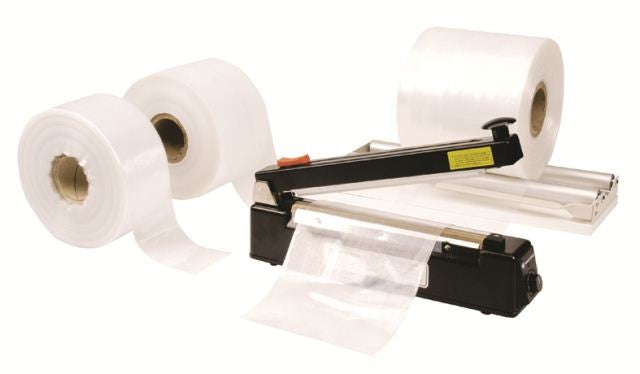
500G Lay Flat Tubing (LFT)
Lay Flat Tubing (LFT) — Flexible Polythene Tubing for Made-to-Size Bags
Lay flat tubing (often shortened to LFT) is a continuous roll of polythene tubing supplied flattened. It’s designed to let you create custom-length bags on demand: simply cut to length and seal one or both ends using a suitable heat sealer. This product listing covers Sapphire’s lay flat tubing options in the 500 gauge (approx. 127 micron) range, supplied as a convenient roll format for fast packing, protection and containment.
Because layflat tubing is supplied as a tube (not a pre-made bag), it’s ideal when you need flexibility for different product lengths, when you want to reduce the number of bag sizes you keep in stock, or when you’re packing long/awkward items that don’t suit standard bag dimensions.
Key Features
Made-to-length packaging
Cut exactly what you need and seal to create a bag length that matches your product—helpful for variable-length items and reducing wasted material.
500 gauge / ~127 micron thickness
A heavier-duty polythene thickness commonly chosen for protective packaging where improved strength and puncture resistance are beneficial.
Roll format for efficient packing
Continuous tubing supports quick workflows at packing benches: measure, cut, seal, and repeat with minimal changeover.
Protects against dust and moisture
Polythene tubing is widely used as a barrier layer to help keep products clean during storage, handling and transit.
Versatile for liners and overwrap
Use as a custom bag, a carton liner, a tray liner, or an overwrap for bundled items—depending on your packing method.
Key Features (Bullet Summary)
- Custom-length bags from one roll (cut + heat seal)
- 500 gauge / ~127 micron heavy-duty polythene option
- Ideal for long or awkward items that don’t fit standard bags
- Helps reduce SKU count versus stocking many bag sizes
- Commonly used for protection from dust, dirt and moisture
- Suitable for warehouse and industrial packing workflows
Typical Uses
- Protective bagging for industrial parts and components
- Bundling and wrapping long items (profiles, trims, rods, tubes, etc.)
- Furniture, textile and product protection during storage or transit
- Creating custom polythene bags for variable-length products
- Carton, tray or container liners (where a polythene liner is required)
- General warehouse packing and moisture/dust protection
Lay Flat Tubing — Full Product Guide
Lay flat tubing is a practical choice when you want the flexibility of a “bag on demand” system. Instead of selecting from multiple pre-made bag sizes, you keep a roll (or a small range of rolls) and create the exact length you need at the point of packing. This guide explains how layflat tubing is typically used, what to consider when choosing a gauge/thickness, and how to get consistent results in day-to-day packing.
How It Works
1) Measure
Pull out the tubing and measure the length required for your product, allowing extra length for the seal area and any desired clearance.
2) Seal
Use a suitable heat sealer to create a strong end seal. Many packers seal one end first to create a “bag,” insert the product, then seal the open end.
3) Cut
Cut the tubing to separate the finished bag from the roll. Depending on your workflow, you may cut first and then seal, or seal and then cut—either approach can work with the right equipment and technique.
4) Repeat
Because the tubing is continuous, you can produce consistent, repeatable packs quickly—especially useful for batch packing.
Materials and Construction
Layflat tubing is typically manufactured from polythene film and supplied as a flattened tube on a roll. The “layflat” measurement refers to the width of the tubing when flattened; when opened, the tubing forms a tube that can accommodate bulkier items than a flat sheet of the same width.
This listing includes a 500 gauge (approx. 127 micron) option, which is commonly selected for more demanding protective packaging tasks where a heavier film is preferred.
Understanding Gauge and Micron (Thickness)
Film thickness is often described in either gauge or micron (µm). In many packaging contexts, 500 gauge is commonly referenced as approximately 127 micron. Thickness selection affects how the tubing performs in use—particularly strength, puncture resistance, and how the film behaves during sealing.
Choosing thickness in practice
If you’re packing items with sharper edges, higher weight, or you want a more robust protective wrap, a heavier gauge is often preferred. For lighter items or where maximum clarity and flexibility are the priority, thinner films may be used (where available in your range).
Floor Type Compatibility (Packing Environment)
Layflat tubing is used across a wide range of packing environments—from small packing benches to busy warehouse dispatch areas. It can be dispensed from a bench-top position, a roll holder, or a simple spindle setup. For higher-throughput operations, pairing the roll with a stable dispenser and a reliable heat sealer helps maintain speed and consistency.
Health and Safety
Heat sealing safety
Heat sealers operate at high temperatures. Follow your equipment manufacturer’s guidance, keep hands clear of sealing jaws/wires, and allow time for seals to cool before handling if required.
Manual handling and cutting
Use appropriate cutting tools and safe cutting practices. If you’re producing many packs, consider a dispenser/cutter setup to reduce repetitive strain and improve control.
Storage
Store rolls clean and dry to avoid contamination of the film surface, which can affect sealing performance and presentation.
Ideal Applications and Use Cases
Long or awkward items
Layflat tubing is particularly useful for items that are long, irregular, or vary in length—where standard bag sizes are inconvenient.
Industrial and warehouse protection
Commonly used to protect components and parts from dust and moisture during storage and transit.
Batch packing
When packing repeated items, you can standardise a cut length and produce consistent packs quickly.
Reducing packaging SKUs
Instead of stocking multiple bag sizes, you can stock a smaller range of tubing widths and create the lengths you need.
Maintenance, Cleaning and Care
Keeping seals consistent
If seals become inconsistent, check for contamination (dust, oil, product residue) on the film or sealer surfaces. Keep the sealing area clean and ensure the correct dwell time/pressure for your film thickness.
Roll handling
Avoid crushing or deforming the roll edges, as this can affect dispensing and lead to uneven feeding.
Film presentation
For best appearance, keep the film free from scuffs and store away from sharp objects that could nick the roll.
Case Study (Typical Workflow Example)
A small dispatch team needs to pack a range of long components that vary in length. Pre-made bags would require multiple sizes and still leave excess material on many packs. By switching to layflat tubing, the team keeps one roll at the bench, seals one end to form a bag, inserts the component, then seals and cuts to finish. The result is a consistent protective pack with less wasted film and fewer packaging lines to manage.
Who Is It For?
- Warehouses and dispatch teams packing variable-length items
- Manufacturers protecting parts and components during storage
- Workshops and maintenance teams needing quick, flexible bagging
- Businesses wanting to reduce the number of bag sizes held in stock
Colours / Features Available
This product page may represent multiple variants. Please select the options shown on the page for the available configurations supplied by Sapphire for this listing.
Sizes Available
Layflat tubing is typically selected by its layflat width and supplied on a roll. This listing includes multiple variants; choose the required option from the product page. If you need a specific cut length, layflat tubing is designed to be cut to your required length at the point of use.
Need help choosing?
If you’re unsure which width or thickness is best for your product, consider the item’s maximum circumference/bulk, any sharp edges, and how you plan to seal and handle the finished pack.