

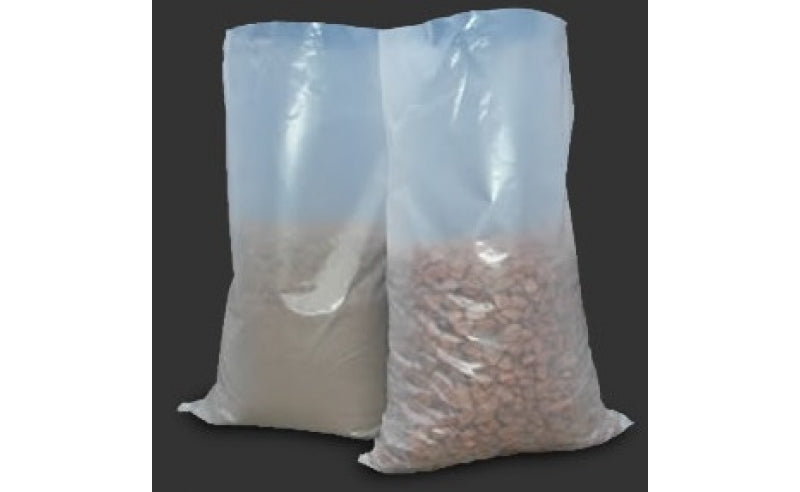
Clear Aggregate Sacks
Clear Aggregate Sacks (20" x 30", 500 gauge) — Product Overview
These clear aggregate sacks are heavy-duty polythene bags designed for containing, transporting, and storing loose materials such as aggregate, rubble, and similar building or landscaping contents. The clear film makes it easy to identify what’s inside at a glance—helpful for sorting materials on site, organising stock, and reducing handling time when multiple materials are being stored together.
Commonly used across construction, groundwork, landscaping, and facilities maintenance, aggregate sacks provide a practical way to keep loose materials contained and tidy. They’re also useful for general-purpose storage where a tough, transparent sack is preferred.
Key Features
Clear polythene for easy identification
The transparent film helps you quickly confirm contents without opening the sack—ideal for mixed-material environments and faster picking/handling.
Heavy-duty 500 gauge film
A robust gauge intended for demanding tasks such as holding sharp-edged or abrasive materials (e.g., rubble and aggregate) where lighter sacks may split.
Large, practical sack format
The 20" x 30" size is a widely used format for aggregate/rubble sacks, balancing capacity with manageable handling.
Versatile site and workshop use
Suitable for construction and landscaping waste, offcuts, and general storage—where a tough, clear sack is beneficial.
Simple, cost-effective containment
A straightforward solution for keeping loose materials contained, reducing mess, and improving site organisation.
- Clear film for quick visual checks of contents
- 500 gauge heavy-duty polythene
- 20" x 30" aggregate sack format
- Ideal for rubble/aggregate and general site storage
- Convenient pack quantities for trade and site use
Typical Uses
- Containing and transporting aggregate, rubble, and similar loose materials
- Sorting and storing materials on construction sites
- Landscaping projects (stone, gravel, and related materials)
- Workshop and warehouse storage where visibility of contents is helpful
- General-purpose heavy-duty bagging for trade environments
Clear Aggregate Sacks — Full Product Guide
Clear aggregate sacks are designed to make handling loose, heavy, or abrasive materials simpler and cleaner. Whether you’re working on a building site, managing landscaping materials, or organising stock in a yard or warehouse, a tough sack that lets you see what’s inside can save time and reduce waste. This guide explains what these sacks are, how they’re typically used, and what to consider when choosing them for your application.
How It Works
Aggregate sacks are used as a containment layer around loose materials. You fill the sack with the intended contents, then move or store it as needed. The clear film allows quick identification of the contents, which can be especially useful when multiple materials are being stored together (for example, different grades of aggregate or mixed site waste).
Because these sacks are made from polythene film, they are flexible and can conform around irregular contents. This makes them practical for rubble and aggregate where shapes and particle sizes vary.
Materials and Construction
These sacks are made from clear polythene film. The stated 500 gauge indicates a heavier-duty film specification intended for more demanding tasks than light-duty liners or thin bags. In practical terms, a heavier gauge helps the sack resist tearing and splitting when used with rough or sharp-edged contents.
Clear film also supports better site organisation: you can visually confirm what’s inside without opening the sack, which can reduce unnecessary handling and help keep materials separated.
Capacity and Handling Considerations
The 20" x 30" format is commonly used for aggregate and rubble sacks because it offers a useful balance between capacity and manageability. When working with heavy materials, it’s important to avoid overfilling—both for safe lifting and to reduce stress on the film and seams.
Practical tip: If the contents are particularly sharp or heavy, fill to a sensible level and avoid dragging the sack across rough ground. Lifting and carrying (rather than dragging) can help reduce abrasion and extend performance.
Floor Type Compatibility
Aggregate sacks are typically used in outdoor or industrial environments where floors and surfaces may be rough (concrete, tarmac, compacted ground, or gravel). On abrasive surfaces, any plastic sack can be subject to wear if dragged. For best results, lift the sack when moving it and consider placing it on a pallet or smoother surface for storage.
Health and Safety
When using sacks for heavy materials, safe handling is essential:
- Manual handling: Avoid overfilling; use correct lifting technique and team lifts where appropriate.
- Sharp contents: Take care with rubble or sharp-edged materials that may puncture film; fill carefully and avoid compressing sharp items against the sides.
- Worksite housekeeping: Bagging loose waste helps reduce trip hazards and keeps work areas clearer.
Always follow your site’s safety procedures and local regulations for waste handling and disposal.
Ideal Applications and Use Cases
These clear aggregate sacks are commonly chosen for:
- Construction and demolition: Bagging rubble, broken masonry, and general site waste.
- Groundworks: Containing aggregate and related materials during staging and transport.
- Landscaping: Managing gravel, stone, and similar loose materials.
- Facilities and maintenance: Collecting heavy waste and storing materials where visibility helps.
- Warehousing and yards: Organising stock or offcuts with quick visual identification.
Maintenance, Cleaning and Care
Aggregate sacks are typically used as consumable packaging. However, good handling practices can improve performance during use:
- Store sacks in a clean, dry area away from sharp objects.
- Avoid prolonged exposure to harsh conditions where possible (e.g., unnecessary abrasion or puncture risks).
- When filled, move sacks by lifting rather than dragging to reduce wear.
Case Study (Typical Site Scenario)
Scenario: A small building contractor is working on a refurbishment project and needs to keep the site tidy while separating different waste streams. Clear aggregate sacks are used to bag rubble and heavy debris as it’s generated. Because the sacks are transparent, the team can quickly identify which sacks contain rubble versus other materials, reducing mix-ups and improving efficiency when moving waste to the skip or designated collection area.
Outcome: Faster sorting, cleaner work areas, and fewer handling errors—without needing additional labels for every sack.
Who Is It For?
- Builders, contractors, and tradespeople needing heavy-duty bagging for rubble/aggregate
- Landscapers and groundworkers handling loose materials
- Facilities teams managing heavy waste and maintenance materials
- Warehouses and yards that benefit from clear, visible storage sacks
Colours / Features Available
This listing is for clear aggregate sacks, chosen for visibility of contents. Clear sacks are particularly useful where quick identification and sorting are important.
Sizes Available
This product is listed as 20" x 30". If you require alternative sizes or specifications for different applications, please check the wider range of sacks and rubble/aggregate bag options available.