

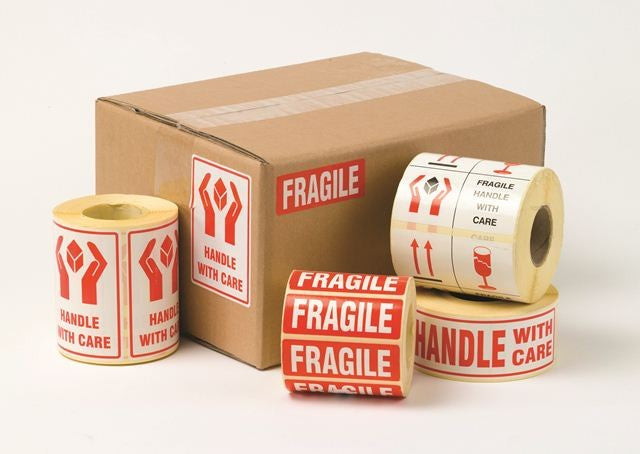
Printed Parcel Labels
Overview
These 108x79mm “DO NOT STACK” printed parcel labels are designed to give clear, immediate handling instructions on cartons, cases and pallets. The bold message helps reduce compression damage by discouraging loads being placed on top of your goods during storage, picking and transit. Supplied as convenient rolls, they’re quick to apply by hand or from a bench-top dispenser, making them a practical choice for busy packing stations and despatch areas.
Because handling labels only work when they’re seen, the large 108 x 79mm format provides strong visibility on a wide range of outer packaging—from small cartons to larger cases—without taking up excessive space. Use them as part of a consistent labelling system alongside other warning and instruction labels to support safer, more reliable deliveries.
Key Features
Clear “DO NOT STACK” instruction
A straightforward message that communicates the handling requirement at a glance, helping to prevent crushing and compression damage caused by stacking.
High-visibility label size (108 x 79mm)
A widely used parcel-label format that’s easy to spot on cartons and stretch-wrapped loads, supporting quick identification in warehouses and carrier networks.
Roll format for fast application
Supplied on rolls (commonly 500 labels per roll depending on the variant), enabling efficient peel-and-apply use at packing benches and despatch lines.
Pressure-sensitive adhesive
Designed to stick securely to typical outer packaging surfaces such as cardboard cartons and many common packaging films, helping the instruction remain in place through handling.
Supports consistent packing standards
Ideal for businesses implementing standard operating procedures (SOPs) for fragile, crush-sensitive or high-value shipments where stacking must be avoided.
- Printed parcel handling label: “DO NOT STACK”
- Label size: 108 x 79mm
- Supplied on rolls for quick dispensing
- Suitable for cartons, cases and pallet loads
- Helps reduce damage from compression/stacking
Typical Uses
- Crush-sensitive products (lightweight cartons, delicate components, retail-ready packs)
- Fragile goods where top-loading can cause breakage or deformation
- Shipments with internal void fill where stacking could shift contents
- Palletised loads where the top layer must remain clear
- Warehousing and distribution environments with mixed freight
108x79mm “Do Not Stack” Labels — Full Product Guide
Introduction
Stacking is one of the most common causes of avoidable transit damage. Even when cartons look robust, the weight of additional boxes can crush corners, deform product packaging, or compromise internal protection. “DO NOT STACK” labels provide a simple, standardised visual cue that helps handlers make better decisions quickly—especially in fast-paced environments where goods are moved multiple times before reaching the end customer.
How It Works
These labels act as a prominent instruction placed directly on the outer packaging. When positioned correctly, they help warehouse operatives, couriers and receiving teams identify that the package should not have other items placed on top. The goal is to reduce compressive forces on the carton and maintain the integrity of the contents.
For best results, apply the label where it will be seen during normal handling—typically on the top face and at least one side face of the carton, or multiple sides for palletised loads. Using more than one label can improve visibility when parcels are rotated or stacked in cages.
Materials and Construction
“DO NOT STACK” parcel labels are typically produced as printed, pressure-sensitive labels on a roll. The roll format supports quick dispensing and consistent placement. The adhesive is designed for packaging use, helping the label remain attached during routine handling, scanning and transport.
As with all packaging labels, performance depends on the surface and conditions. Clean, dry cartons generally provide the best adhesion. Dusty, damp or heavily textured surfaces may reduce bond strength, so it’s good practice to apply to a smooth area of the carton where possible.
Surface and Packaging Compatibility
These labels are commonly used on:
- Cardboard cartons and cases (most common application)
- Stretch wrap and shrink film on pallet loads (apply to a smooth, tensioned area)
- Poly mailers and plastic outer packs where a label is required for handling instructions
If you’re applying to film, ensure the film is taut and free from condensation. For cartons, avoid placing labels over seams, heavy creases, or dusty areas.
Health and Safety
Handling labels support safer manual handling by reducing the likelihood of unstable stacks and crushed cartons. They can also help receiving teams identify loads that should be stored without top-loading. However, labels are only one part of safe handling—ensure your packing method, carton strength and pallet stability are appropriate for the distribution environment.
When applying labels in a packing area, keep rolls and dispensers positioned to reduce repetitive strain. If using a dispenser, ensure it is stable and placed at a comfortable working height.
Ideal Applications and Use Cases
1) E-commerce fulfilment
For products shipped in branded retail packaging or lightweight cartons, avoiding stacking can reduce returns caused by crushed corners and damaged presentation.
2) Industrial and trade distribution
Components, parts and assemblies can be vulnerable to compression even when not “fragile” in the traditional sense. A clear instruction helps protect the shipment through multi-stop routes.
3) Palletised freight
When a pallet must not be double-stacked, applying “DO NOT STACK” labels to multiple sides can reinforce the instruction during cross-docking and storage.
4) Temperature-sensitive or specialty goods
Some products rely on internal packaging arrangements (liners, inserts, void fill). Preventing stacking helps maintain the intended protective structure.
Maintenance, Cleaning and Care
Parcel labels require minimal maintenance, but good storage and handling will help keep them in best condition:
- Store rolls in a clean, dry area away from direct sunlight and excessive heat.
- Keep rolls in their packaging until needed to reduce dust contamination on the adhesive edge.
- Use a dispenser where possible to prevent labels curling or being damaged at the bench.
- Rotate stock so older rolls are used first.
Case Study (Practical Example)
A despatch team shipping lightweight, crush-sensitive cartons noticed an increase in customer complaints about dented packaging. By introducing a simple labelling standard—placing “DO NOT STACK” labels on the top and one side of every carton, and adding additional labels to palletised loads—they improved visibility of handling requirements. Combined with consistent carton selection and void fill, the team reduced the number of damaged cartons reported on arrival and improved presentation for end customers.
Who Is It For?
- Warehouses and fulfilment centres aiming to reduce damage and returns
- Manufacturers shipping products in presentation packaging
- 3PLs and contract packers implementing consistent handling SOPs
- Retailers and distributors shipping mixed freight
- Any business sending cartons that should not be top-loaded
Colours / Features Available
This listing is for a printed “DO NOT STACK” handling label in the 108 x 79mm format. Depending on the variant selected on the page, labels may be supplied in different pack/roll quantities and pricing options. The core purpose remains the same: clear, high-visibility instruction to avoid stacking.
Sizes Available
This product is specified as 108 x 79mm. If you need alternative handling messages or different label sizes for your packing process, consider standardising across your operation so instructions remain consistent and easy to recognise.
Helpful tip: For maximum effectiveness, combine “DO NOT STACK” labels with appropriate outer packaging strength and internal protection. Labels communicate intent; good packaging design ensures the shipment can withstand the realities of distribution.