

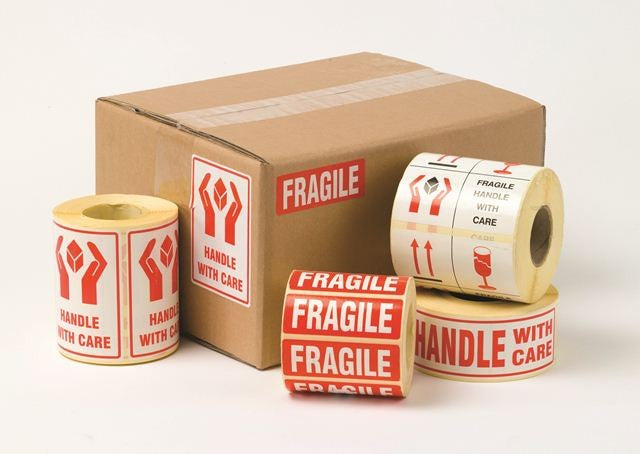
Printed Parcel Labels
6" × 4" “This Way Up” Labels — Clear Handling Guidance for Parcels
“This Way Up” labels are a simple, highly visible way to communicate correct orientation during storage, picking, and transit. Applied to the outside of cartons, crates, and outer packaging, they help handlers quickly identify which face should remain uppermost—reducing the risk of leaks, scuffs, compression damage, and product movement that can occur when a parcel is carried or stacked incorrectly.
This product is a printed parcel handling label in a widely used shipping label format. It’s designed for fast application in busy packing environments and for clear readability once the parcel enters carrier networks and distribution hubs.
Key Features
Instant orientation recognition:
The “This Way Up” message provides an immediate visual cue to keep the package upright throughout handling and transport.
Large, easy-to-spot label format:
A generous label size helps the instruction stand out on cartons and outer wraps, supporting quick identification at a glance.
Printed handling instruction:
Pre-printed labels save time versus handwriting or stamping, helping standardise packing processes and reduce errors.
Supports safer stacking and storage:
Clear orientation guidance can help reduce the chance of incorrect stacking that may lead to crushed corners, shifted contents, or compromised seals.
Useful across many industries:
Commonly used for fragile goods, liquids, electronics, medical supplies, and any shipment where upright orientation matters.
- Orientation instruction: “This Way Up”
- Label type: Printed parcel handling label
- Typical placement: Outer carton / outer packaging
- Common workflow fit: Packing benches, despatch areas, warehouses
Typical Uses
- Marking cartons containing liquids or products that must remain upright
- Helping carriers and warehouse teams identify correct handling orientation
- Reducing internal movement for packed items that can shift when inverted
- Supporting quality control and consistent packing standards
- Improving customer experience by reducing avoidable transit damage
“This Way Up” Labels — Full Product Guide
Handling labels are a small addition to a packing process, but they can make a meaningful difference to how parcels are treated in real-world logistics. The goal is simple: make the correct orientation unmistakable, so the parcel is less likely to be turned, tipped, or stacked in a way that risks damage.
Below is a practical guide to choosing, applying, and getting the best results from “This Way Up” labels in day-to-day shipping operations.
How It Works
Once applied to the outside of a parcel, the label communicates a clear instruction to anyone handling the package—pickers, warehouse operatives, couriers, and receiving teams. In busy environments, people rely on quick visual signals. A dedicated handling label helps your instruction stand out from other markings such as addresses, barcodes, and carrier labels.
For best results, apply the label to a clean, dry surface and position it where it will be seen during lifting and stacking. Many shippers choose to place orientation labels on multiple sides so the instruction remains visible regardless of how the parcel is approached.
Materials and Construction
This is a printed parcel label intended for external packaging identification. Printed handling labels are typically produced to be legible and high-contrast so the message remains clear during normal distribution handling. Because outer packaging can be exposed to rubbing, contact with other cartons, and general warehouse wear, a robust print and a well-adhered label help maintain readability from despatch to delivery.
If you are applying labels to challenging surfaces (for example, dusty cartons, textured boards, or shrink wrap), it’s good practice to test adhesion on a sample first and adjust placement or surface preparation as needed.
Floor Type Compatibility (Warehouse & Packing Areas)
While labels themselves don’t interact with floors, the way parcels move through your facility does. In warehouses where cartons are moved on trolleys, conveyors, pallet trucks, or forklifts, parcels can rotate or be reoriented during transfer. Clear “This Way Up” marking helps maintain correct orientation as items move between packing benches, staging areas, and loading bays.
If your operation uses automated conveyors or sortation, consider placing labels where they remain visible even when parcels are grouped closely together.
Health and Safety
Clear handling instructions can support safer manual handling by reducing the need for staff to rotate or re-check parcels repeatedly. When orientation is obvious, handlers can lift and place cartons more confidently and with fewer unnecessary movements.
As with all packaging labels, ensure the label does not cover critical information such as address details, carrier routing labels, or any required hazard markings. If you ship regulated goods, follow the relevant transport and labelling requirements in addition to using handling labels.
Ideal Applications and Use Cases
“This Way Up” labels are commonly used when the contents could be affected by inversion or sideways handling. Typical examples include:
- Liquids and semi-liquids: Bottles, containers, and products where seals may be stressed if inverted.
- Fragile items: Glassware, ceramics, and delicate assemblies that may shift if turned.
- Electronics and instruments: Items that benefit from stable orientation to protect internal components.
- Medical and laboratory supplies: Where upright handling supports product integrity and presentation.
- Retail and eCommerce fulfilment: Improving consistency and reducing returns due to transit damage.
Even when a carrier cannot guarantee orientation at every stage, clear labelling increases the chance that handlers will keep the parcel upright whenever practical—especially during loading, unloading, and local delivery.
Maintenance, Cleaning and Care
Handling labels are designed for single-use shipping applications, so “maintenance” is mainly about good application practice:
- Apply to a clean, dry surface for best adhesion.
- Avoid placing labels over seams, heavy corrugations, or areas likely to crease.
- Press firmly across the label to ensure full contact, especially at edges.
- If using stretch wrap, apply the label to the outermost layer so it remains visible.
For operations that pre-label cartons in advance, store cartons in a clean, dry area to keep surfaces free from dust that can reduce adhesion.
Case Study (Practical Example)
Scenario: A small fulfilment team ships mixed orders that include cosmetics and household liquids. Parcels were occasionally arriving with minor leakage or product movement, leading to customer complaints and re-shipments.
Change implemented: The team standardised packing by adding “This Way Up” labels to relevant cartons and placing them consistently on two adjacent sides. They also trained packers to check that the inner packaging supported upright orientation (for example, ensuring bottles were packed upright with void fill).
Outcome: With clearer external handling guidance and more consistent packing, the team reduced avoidable issues linked to inversion and improved overall presentation on delivery.
Note: Results vary by carrier network and packaging method, but consistent labelling and placement can improve handling outcomes in many workflows.
Who Is It For?
- Warehouses and despatch teams shipping orientation-sensitive goods
- eCommerce sellers looking to reduce damage and returns
- Manufacturers shipping finished products in outer cartons
- 3PLs and fulfilment centres standardising packing processes
- Offices and facilities teams sending equipment or supplies
Colours / Features Available
This listing is for a printed “This Way Up” handling label. If your operation uses multiple handling instructions (for example, fragile, keep dry, or do not stack), consider standardising label placement and using consistent instruction types across your packing stations.
Sizes Available
This product page may include multiple pack options/variants. Select the option that best matches your throughput and storage preferences. If you are standardising across multiple sites or packing lines, choosing a consistent label format can help simplify training and reduce packing errors.
Tip for best results: A handling label works best when the internal packaging supports the instruction. If a carton must remain upright, pack the contents so they are stable in that orientation (using dividers, void fill, or inserts as appropriate), then apply the label clearly on the outside.
References used for general product context:
https://selectumllc.com/i/incom-1064r