

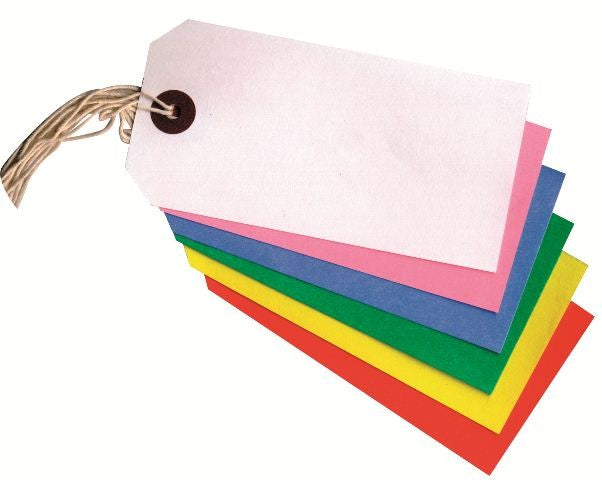
Swing Tags - Unstrung
E23 Yellow Unstrung Swing Tags (Unstung Tags) — Product Overview
E23 Yellow Unstrung Tags are practical, easy-to-use swing tags supplied without string (unstrung/unstung), giving you the flexibility to attach them using your preferred tag fasteners, loops, or tagging guns (where suitable). These bright yellow tags are commonly used for clear, high-visibility identification and messaging—ideal when you need information to stand out at a glance.
Because this is a configurable product listing with multiple pack options, this guide focuses on the product type and use rather than any single pack size. Use these tags anywhere you need a simple, writable label for pricing, product identification, stock control, inspection notes, or process status marking.
Key Features
Unstrung format (supplied without string):
Choose the attachment method that suits your workflow—string, elastic loops, cable ties, tag pins, or other fasteners—rather than being limited to a pre-strung option.
High-visibility yellow colour:
Yellow is widely used for attention and quick recognition, helping tags stand out on shelves, rails, pallets, and equipment.
Simple, versatile swing-tag style:
A straightforward tag format that works across retail, warehousing, manufacturing, and facilities—use it as a price tag, ID tag, or status marker.
Easy to write on:
Designed for handwritten notes such as prices, SKUs, batch references, dates, initials, or short instructions.
Pack options to suit different volumes:
Select the quantity that matches your usage—whether you need a smaller top-up or a larger supply for ongoing operations.
Key Features (Bullet Summary)
- Unstrung / unstung: supplied without string for flexible attachment
- Bright yellow: high visibility for quick identification
- Multi-purpose swing tag: suitable for pricing, ID, and process/status marking
- Writable surface: ideal for pens/markers for clear notes
- Multiple pack sizes: choose the quantity that fits your needs
Typical Uses
- Retail pricing & product identification: add prices, item codes, or short descriptions to garments, accessories, and boxed goods.
- Stock control & warehousing: mark pallets, bins, racks, or individual items with locations, quantities, or pick notes.
- Quality control & inspection: record check dates, inspector initials, pass/fail notes, or rework instructions.
- Manufacturing & work-in-progress: identify batches, job numbers, routing steps, or process status.
- Facilities & maintenance: tag equipment with service dates, asset IDs, or temporary warnings/instructions.
E23 Yellow Unstrung Swing Tags — Full Product Guide
Unstrung swing tags are a simple tool that can make day-to-day operations more organised. Whether you’re pricing items on a shop floor, tracking stock in a storeroom, or managing work-in-progress in a production area, a clear tag helps reduce confusion and speeds up decision-making. The E23 Yellow Unstrung Tag format is especially useful when you want a tag that is ready to label but not tied to a single attachment method.
How It Works
These tags are supplied as individual swing tags without any string or loop attached. You write the information you need on the tag, then attach it to the product, container, or fixture using your chosen fastener. Because the tag is unstrung, you can standardise on one tag style while tailoring attachment to different items—for example, using string for garments, cable ties for equipment, or tag pins for boxed goods.
In many environments, the tag becomes a quick “at-a-glance” communication tool. The yellow colour helps the tag stand out, making it easier for staff to spot key information quickly—particularly useful in busy stockrooms, on rails, or in mixed inventory areas.
Materials and Construction
This product is a classic swing-tag style label intended for general-purpose identification and pricing. As with most swing tags, the design prioritises a clean writing area and straightforward handling. If you need to use a specific pen type (for example, permanent marker vs. ballpoint), it’s a good idea to test on one tag first to confirm the writing clarity and drying time for your environment.
If your application involves moisture, oils, or heavy abrasion, consider whether you need additional protection (such as placing the tag inside a protective sleeve) or a more specialised tag material. For standard indoor retail and stockroom use, a simple swing tag is often the most efficient option.
Attachment Options (Because They’re Unstrung)
One of the main advantages of unstrung tags is flexibility. Common attachment methods include:
- String or twine: a traditional choice for garments and boxed items.
- Elastic loops: quick to apply and remove, often used in retail.
- Cable ties: secure attachment for equipment, cages, or industrial storage.
- Tag pins / fasteners: commonly used for apparel and soft goods (ensure compatibility with your tagging method).
- Wire loops: useful where extra strength or heat resistance is needed (application dependent).
Choose the attachment method based on how secure the tag needs to be, whether it must be removable, and what it will be attached to (fabric, cardboard, plastic, metal, etc.).
Visibility and Colour Coding
Yellow tags are often used as a visual cue. In practice, many teams use colour to indicate status or category—for example, yellow for “to be checked,” “priority,” “quarantine,” or “special handling.” If you already use colour coding in your workflow, yellow tags can slot into that system easily. If you don’t, introducing a simple colour rule can reduce errors and speed up training for new staff.
For best results, keep the written message short and consistent. Use standard abbreviations, date formats, and initials so that anyone reading the tag understands it immediately.
Floor Type Compatibility
These are swing tags rather than floor protection products, so “floor type compatibility” is not directly applicable. However, they are commonly used in environments with different floor types—retail floors, warehouse concrete, workshop floors—because they attach to items rather than the floor itself. If tags are used in dusty or high-traffic areas, consider using a bolder marker for readability and selecting an attachment method that prevents the tag from tearing or snagging.
Health and Safety
Tags can support safer working practices by clearly communicating handling instructions, inspection status, or temporary warnings. If you use tags for safety-related messaging, ensure the wording is unambiguous and consistent with your site procedures. Where required, pair tags with formal signage or lockout/tagout processes—tags are a helpful communication aid but should not replace mandated safety controls.
When attaching tags to products, avoid sharp fasteners where they could cause injury during handling. If tags are used on items that will be worn or handled by customers, choose an attachment method that is secure and appropriate for the product.
Ideal Applications and Use Cases
Retail & merchandising: Use as price tags, promotional identifiers, or product notes on rails, hangers, and display hooks. Yellow is particularly effective for highlighting special instructions or temporary pricing notes.
Warehousing & logistics: Mark stock locations, picking priorities, or shipment notes. Tags can be attached to cartons, pallets, or cages to reduce mis-picks and speed up dispatch.
Manufacturing: Identify work orders, batches, or routing steps. A visible tag can help teams quickly see what stage an item is at without needing to check a system.
Quality assurance: Record inspection outcomes, rework requirements, or hold status. Colour can help separate “checked” from “needs attention.”
Maintenance & asset management: Tag equipment with service dates, asset IDs, or temporary notes during repairs and inspections.
Maintenance, Cleaning and Care
As a paper/card-style swing tag, maintenance is minimal. Store unused tags in a clean, dry place to keep them flat and easy to write on. If tags are used in areas where they may get wet or dirty, consider:
- Using a more water-resistant marker for legibility.
- Placing the tag in a protective sleeve if exposure is expected.
- Choosing a stronger attachment method to prevent loss.
For best readability, write clearly and allow ink to dry before handling or stacking tagged items.
Case Study (Example Workflow)
Scenario: A small warehouse receives mixed deliveries that must be checked before going into stock.
Process: On receipt, staff attach a yellow unstrung tag to each carton or item group and write the delivery reference and date. Items awaiting checks remain tagged. Once checked, the tag is removed or updated according to the warehouse procedure.
Outcome: The yellow tag provides a quick visual indicator of status, reducing the chance of unverified stock being put away or dispatched.
Who Is It For?
- Retailers who need flexible, writable swing tags for pricing and product notes.
- Warehouse teams managing stock identification, picking, and dispatch.
- Manufacturing and assembly operations tracking work-in-progress and batches.
- Quality and inspection teams needing clear, visible status tags.
- Facilities and maintenance staff tagging assets and service notes.
Colours / Features Available
This listing is for the yellow version of the E23 unstrung swing tag. If you use colour coding, check related tag listings for other colours and formats (for example, strung vs. unstrung) to build a consistent system across your site.
Sizes Available
This product page may include multiple variants and pack options. Select the variant that matches your required quantity. If you need a specific tag size or a different tag format, review the available options on the product page or related tag categories.
Need help choosing?
If you’re unsure whether unstrung tags are best for your application, consider how you plan to attach the tag and how long it needs to remain in place. Unstrung tags are ideal when you want maximum flexibility and the ability to standardise one tag type across different attachment methods.