

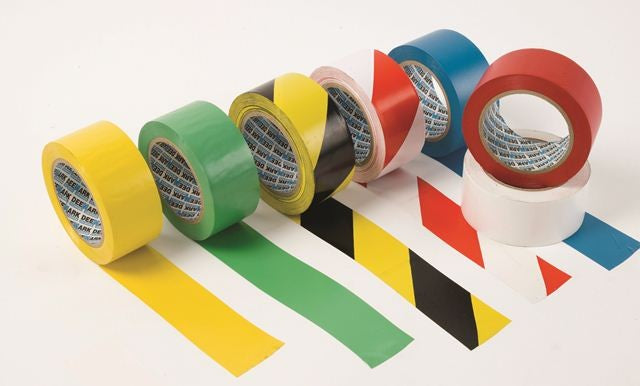
Line Marking - Hazard Tape
White Line Marking Tape (Floor & Aisle Marking)
Create clear, professional-looking guidance lines and zones with white line marking tape designed for fast, clean application in busy working environments. This style of floor marking tape is widely used to define walkways, pick/pack lanes, storage bays, staging areas and “keep clear” zones—helping teams standardise layouts and improve visual management without the downtime, fumes or curing time associated with paint.
Because line marking tape is a pressure-sensitive adhesive tape, it can be applied exactly where you need it, repositioned during installation if required, and put into service quickly. White is a popular choice for general-purpose demarcation, neutral zoning and high-contrast layouts when paired with other colours or hazard tapes.
Key Features
Fast, clean alternative to paint
Apply straight lines and crisp edges without masking, drying time or specialist equipment. Ideal when you need to mark areas quickly or update layouts as operations change.
High visibility white finish
White lines stand out on most industrial floors and are commonly used for walkways, boundaries, bay outlines and general guidance markings.
Designed for floor marking
This is a specialist line marking / hazard tape category product intended for marking aisles, lines and zones on floors in warehouses and workplaces.
Works with tape dispensers
Floor marking tapes are often applied using a dispenser to help keep lines straight and speed up installation across larger areas.
Helps standardise and organise work areas
Supports 5S and lean visual management by making locations, routes and boundaries obvious at a glance—useful for training, audits and day-to-day efficiency.
Key Features (Bullet Summary)
- Clear white line marking for aisles, bays, walkways and zones
- Quick application with no drying time compared with paint
- Commonly used in warehouses and industrial workplaces for visual management
- Suitable for dispenser use to improve speed and line accuracy
- Cleaner layout changes when you need to re-mark or re-zone areas
Typical Uses
- Warehouse aisle and pick-face lane marking
- Pedestrian walkways and route guidance
- Storage bay outlines and pallet positions
- Staging, quarantine and inspection zones
- “Keep clear” areas around doors, panels and equipment
- Workstation boundaries and tool shadow-board zones (as part of 5S)
White Line Marking Tape — Full Product Guide
Floor marking is one of the simplest ways to improve safety, flow and consistency in a working environment. A well-marked floor reduces uncertainty: people know where to walk, where to store items, and where vehicles should travel. Line marking tape is a practical option when you want a professional finish with minimal disruption.
How It Works
Line marking tape uses a pressure-sensitive adhesive layer that bonds to the floor surface when firm pressure is applied. Once positioned, the tape forms a durable, high-contrast line that visually defines boundaries and routes. Many teams prefer tape because it allows rapid changes—layouts can be updated as racking, processes or traffic patterns evolve.
Best practice: plan your layout first (including line widths, turning radii and crossing points), then apply tape in long, continuous runs where possible for a cleaner look and fewer edges.
Materials and Construction
Products in this line marking / hazard tape category are commonly manufactured as heavy-duty PVC floor marking tapes. PVC is widely used for floor marking because it provides a smooth, consistent surface and helps produce crisp edges and strong colour visibility. The adhesive is designed to hold the tape in place on suitable, properly prepared floors.
Different brands and grades can vary in thickness, abrasion resistance and adhesive strength. If your environment includes frequent pallet truck or forklift traffic, consider trialling a small area first to confirm performance for your floor type and cleaning regime.
Floor Type Compatibility
Floor marking tape generally performs best on clean, dry, sealed and smooth surfaces. Typical compatible floors include:
- Sealed concrete
- Painted floors (fully cured)
- Epoxy and resin-coated floors
- Vinyl and other smooth industrial floor finishes
Important: dusty, porous, rough or damp floors can reduce adhesion and shorten service life. If your concrete is unsealed or very textured, you may need additional preparation or a different marking method.
Health and Safety
Clear floor markings support safer movement by separating pedestrians from vehicles and defining safe working zones. White lines are often used for general guidance and boundaries, while other colours or hazard patterns may be used for warnings or restricted areas depending on your site rules.
Always follow your internal safety standards and any applicable regulations for colour coding and signage. Ensure markings do not create trip hazards—press edges down firmly and replace damaged sections promptly.
Ideal Applications and Use Cases
Warehousing & logistics: define pick aisles, staging lanes, inbound/outbound zones and pallet locations to reduce congestion and improve throughput.
Manufacturing: mark work cells, material replenishment points, WIP areas and inspection zones to support consistent processes.
Retail back-of-house: organise stock rooms, delivery areas and waste/recycling zones for faster replenishment and clearer housekeeping.
Facilities & maintenance: outline equipment footprints, access zones and “keep clear” areas around panels and emergency equipment.
Maintenance, Cleaning and Care
To maximise tape life, keep the floor clean and avoid aggressive scraping at tape edges. Routine sweeping and standard cleaning methods are typically suitable, but harsh chemicals or very hot washdowns can affect some adhesives.
- Clean before application: remove dust, oil and residues; allow the surface to dry fully.
- Apply with pressure: use a roller or firm hand pressure along the full length, paying attention to edges.
- Allow time to bond: where possible, keep traffic off the tape briefly after installation to help the adhesive set.
- Inspect high-traffic areas: replace short worn sections rather than redoing entire runs.
Case Study (Example Workflow)
A warehouse team wants to reduce congestion at goods-in. They map a simple layout: a white-lined pedestrian walkway from the entrance to the office, white bay outlines for inbound pallets, and a clearly marked “keep clear” zone in front of the fire exit. Using line marking tape, they complete the update in a short maintenance window and reopen the area quickly—without waiting for paint to dry. Over the following weeks, the team adjusts bay sizes as volumes change by lifting and reapplying sections, keeping the layout aligned with real-world operations.
Who is it for?
- Warehouse and operations managers implementing 5S / lean visual management
- Health & safety teams improving pedestrian/vehicle segregation
- Facilities teams needing quick, tidy layout updates
- Sites that want a clean alternative to painted lines
Colours / Features Available
This listing is for white line marking tape. Many sites use multiple colours to create a consistent visual language (for example, different colours for walkways, storage, quarantine or restricted zones). If you are standardising a full site layout, consider selecting complementary colours from the same line marking tape range for a consistent look and performance.
Sizes Available
This product is supplied as a roll in a line marking tape format. As this can be part of a configurable range, select the option that matches your required width and roll length from the variants shown on the product page.
Need help choosing?
If you’re unsure which floor marking tape is best for your surface or traffic level, trial a small section in a representative area (including cleaning and vehicle movement) before rolling out across the whole site.