

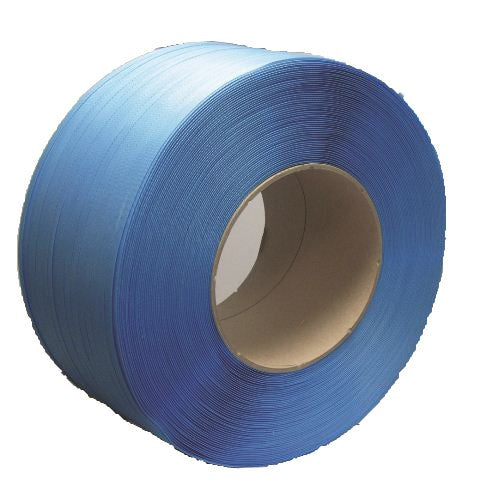
Machine Core Strapping/Banding (Cardboard Core)
Blue Machine Core Strapping (Cardboard Core) — Product Overview
This listing is for blue machine core strapping/banding supplied on a cardboard core. It is designed for use with compatible strapping machines and strapping systems where consistent feed, tensioning and sealing performance are required. Machine core strapping is commonly used to secure cartons, bundles and palletised loads for storage and transport, helping to keep goods stable and protected throughout handling.
The product name includes key specification information (strap width, roll length and thickness) to help you match the strap to your machine settings and the demands of your application. Because machine strapping is typically selected to suit a range of machines and pack formats, this guide focuses on how to choose and use the strap rather than describing a single fixed pack size.
Key Features
Machine-grade consistency:
Manufactured for reliable feeding and repeatable performance in strapping equipment, supporting smooth operation and consistent strap placement.
Cardboard core format:
Supplied on a cardboard core (machine core), suitable for many semi-automatic and automatic strapping machines that accept core-wound coils.
Blue strap for easy identification:
The blue colour can help with quick visual identification in busy packing areas and can assist with stock control where multiple strap types are used.
Optimised for packaging and logistics:
A practical choice for day-to-day warehouse, despatch and production environments where loads need to be unitised and cartons kept closed.
Specification-led selection:
Width, thickness and roll length are clearly stated in the product title to support correct matching to machine requirements and load demands.
- Machine core strapping/banding supplied on a cardboard core
- Blue strap for straightforward visual identification
- Designed for use with compatible strapping machines
- Suitable for securing cartons, bundles and pallet loads
- Specification shown in title to help match strap to equipment
Typical Uses
- Carton closure and reinforcement in packing and despatch
- Bundling products, printed materials, timber offcuts or profiles (where appropriate)
- Unitising multiple cartons together for easier handling
- Stabilising pallet loads prior to stretch wrapping or as part of a combined securing method
- General warehouse strapping tasks using semi-auto or automatic equipment
Blue Machine Core Strapping — Full Product Guide
Machine core strapping is a widely used packaging consumable for businesses that strap goods frequently and want the speed and consistency that strapping equipment provides. Selecting the right strap is important: the strap must be compatible with your machine, appropriate for the weight and nature of the load, and suitable for the sealing method used (for example, heat sealing or friction welding depending on the machine type). This guide explains the key considerations so you can choose confidently and use the strap effectively.
How It Works
In a typical strapping process, the strap is dispensed from the coil, guided around the pack or pallet, tensioned to the required level, then sealed and cut. Machine-grade strap is produced to run smoothly through the machine’s feed path and tensioning system. Consistent strap dimensions help the machine maintain stable tension and reliable sealing, reducing downtime and improving throughput.
Machine core coils are designed to sit correctly on the machine’s dispenser or within the machine’s strap bay. The strap unwinds under controlled resistance, helping to prevent overrun and tangling. In high-volume environments, this controlled dispensing is essential for maintaining a steady packing rhythm.
Materials and Construction
This product is described as machine core strapping/banding on a cardboard core. Machine strapping of this type is commonly supplied as a plastic strap wound onto a rigid core to maintain coil shape and support consistent dispensing. The strap’s width and thickness (as shown in the product title) are key construction parameters that influence performance:
- Width affects contact area on the pack and can influence how the strap sits on corners and edges.
- Thickness contributes to strength and stiffness, and can affect how the strap tensions and seals in the machine.
- Roll length influences changeover frequency—longer coils can reduce downtime from coil changes in busy operations.
Because different machines and applications require different strap grades, always confirm that the strap specification matches your equipment’s recommended range.
Machine Compatibility and Setup
Before ordering or installing a new strap, check your strapping machine’s manual or specification sheet for the acceptable strap width and thickness range, core size requirements, and sealing method. Even when the strap is the correct width, thickness can affect feed performance and sealing quality if it falls outside the machine’s intended operating window.
For best results:
- Ensure the coil is installed in the correct unwind direction for your machine.
- Set dispenser brake/tension so the strap feeds smoothly without overrun.
- Adjust tension settings to suit the pack—avoid over-tensioning fragile cartons.
- Keep the strap path clean and free of debris to reduce friction and misfeeds.
Floor Type Compatibility (Workplace Considerations)
While strapping itself is not floor-specific, the way strapping is used in a facility can be influenced by the working environment. In warehouses with smooth floors, coil handling and machine positioning are typically straightforward. In areas with uneven surfaces, ensure the strapping machine is stable and that the strap feed path is not disturbed by vibration or movement. Good housekeeping—keeping strap offcuts and packaging debris cleared—helps reduce slip and trip risks around packing stations.
Health and Safety
Strapping is a tensioned packaging material and should be handled with care. Follow your site’s safety procedures and consider the following good practices:
- Wear appropriate PPE where required (for example, gloves and eye protection) when handling strapping and cutting tools.
- Use proper cutters designed for strapping; avoid improvised cutting methods.
- Stand to the side when cutting tensioned strap to reduce the risk of recoil.
- Dispose of strap offcuts promptly to prevent trip hazards and machine contamination.
- Train operators on correct machine use, tension settings and jam-clearing procedures.
Ideal Applications and Use Cases
Blue machine core strapping is commonly used across warehousing, manufacturing and distribution. It is particularly useful where packs need to be secured quickly and consistently:
- Despatch and fulfilment: strap cartons or bundles to keep orders consolidated.
- Manufacturing: unitise components or finished goods for internal movement.
- Print and paper handling: bundle stacks for easier handling (where appropriate for the product).
- General logistics: stabilise loads prior to wrapping or as part of a multi-layer securing approach.
If your packs have sharp edges or delicate surfaces, consider edge protectors or corner boards to help distribute strap pressure and reduce the risk of damage.
Maintenance, Cleaning and Care
To keep strapping operations running smoothly, combine the right consumable with routine machine care:
- Store strapping in a clean, dry area to help maintain coil condition.
- Keep coils in their packaging until use to reduce dust contamination.
- Inspect the strap path, rollers and guides regularly for wear and debris build-up.
- Check sealing components (as applicable) and follow the machine manufacturer’s maintenance schedule.
- Replace worn parts promptly—feed issues are often caused by worn guides or dirty rollers.
When changing coils, avoid dropping or crushing the coil, as deformation can lead to poor dispensing and increased risk of tangles.
Case Study (Typical Scenario)
A busy despatch team processing mixed carton sizes often needs a strapping solution that is fast, repeatable and easy for multiple operators to use. By standardising on a machine-grade strap that matches the strapping machine’s specification, the team can reduce misfeeds and improve sealing consistency. The result is smoother throughput at peak times, fewer interruptions for re-threading, and more uniform strap tension across outgoing cartons—helping loads arrive in better condition.
Who Is It For?
- Warehouses and distribution centres running semi-automatic or automatic strapping machines
- Manufacturers needing consistent unitising for internal logistics
- Packaging lines where speed and repeatability are important
- Operations that want a clearly identifiable strap colour for stock control
Colours / Features Available
This product is supplied in blue. If you use multiple strap types on site, colour can be a helpful way to differentiate between widths, thicknesses or intended applications. If you require a different colour or strap grade, check the wider range of machine strapping options available.
Sizes Available
This listing represents a machine core strapping option where the key dimensions are shown in the product title (width, roll length and thickness). Many strapping ranges are available in multiple widths and thicknesses to suit different machines and load requirements. If you are unsure which size is correct for your equipment, compare the strap specification in the title with your machine’s recommended strap range before ordering.
Need help choosing?
If you can share your strapping machine make/model and the type of packs you strap (cartons, bundles, pallet loads), it’s easier to confirm the most suitable strap width and thickness for reliable feeding and sealing.