

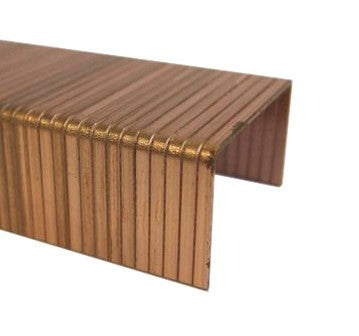
Staples
140/6 Staples are a reliable, everyday fastening staple designed for light-to-medium duty stapling tasks where a neat, secure hold is needed. Commonly referred to as Type 140 staples with a 6 mm leg length, they are widely used in compatible staple guns/tackers for fixing thin materials to timber and similar substrates. Supplied in convenient packs (including high-count packs), they’re ideal for keeping your tool loaded and your workflow moving.
Key Features
Type 140 / 6 mm format: A widely used staple pattern (Type 140) with a 6 mm leg length, chosen for fastening thinner materials where you don’t want excessive penetration.
High-count pack option: Available in large packs (e.g., 5,000 staples) to reduce changeovers and support regular use.
Clean, consistent fastening: Designed to feed smoothly in compatible tackers and deliver a tidy finish when driven correctly.
Versatile for workshop and site: Suitable for a broad range of fixing tasks in packaging, maintenance, fitting-out, and general trade work.
Compatible with Type 140 tackers: Intended for staple guns/tackers that specify Type 140 staples—always confirm your tool’s required staple type before ordering.
- Staple type: 140
- Leg length: 6 mm
- Pack size options: including 5,000 staples (where selected)
Typical Uses
- Fixing light fabrics, membranes, and thin sheet materials to timber
- General workshop fastening and temporary fixing
- Packaging and protective wrap fastening (where appropriate)
- DIY and trade tasks requiring a small, neat staple
140/6 Staples — Full Product Guide
Choosing the right staple is as important as choosing the right tacker. Type 140/6 staples are a popular choice because they balance holding power with a discreet finish. This guide explains what the “140/6” designation means, how to select the right staple for your job, and how to get the best results from your staple gun or tacker.
How It Works
A staple gun/tacker drives a U-shaped fastener into a substrate (commonly timber). The crown (top) of the staple clamps the material down, while the two legs penetrate the surface to hold it in place. With 6 mm legs, 140/6 staples are typically selected for thinner materials and lighter assemblies where you want secure fixing without driving too deep.
For best performance, match the staple type and leg length to:
- the thickness of the material being fixed
- the density/hardness of the substrate
- the required holding strength
- the tool’s specified staple type
Materials and Construction
Type 140 staples are commonly manufactured from steel wire formed into a consistent crown and leg profile for reliable feeding and driving. Depending on the specific variant, staples may be supplied with a protective finish (often described as galvanized on many comparable listings) to help resist surface corrosion in normal indoor conditions. If your application involves moisture, outdoor exposure, or treated timber, confirm the most suitable staple material/finish for that environment.
Tool Compatibility (Type 140)
Type 140 is a staple pattern used by many staple guns and tackers. However, not every tacker accepts every staple type—even if the leg length is similar. Before ordering, check:
- your tool manual or the markings on the tool/magazine
- the required staple type (must state Type 140)
- the supported leg length range (must include 6 mm)
If your tool specifies a different type (for example, Type 13, Type 53, Type 90, etc.), these staples may not fit or feed correctly.
Floor Type Compatibility
These staples are generally used for fastening to timber and timber-based boards rather than flooring substrates. If you are stapling underlays, membranes, or trims as part of a flooring job, ensure the staple length is appropriate for the material thickness and that you are fixing into a suitable timber surface (such as battens or plywood). For direct-to-concrete or masonry applications, a staple gun is typically not the correct fixing method.
Health and Safety
- Eye protection: Wear safety glasses—staples can ricochet from hard knots or dense materials.
- Hand placement: Keep hands clear of the firing line and support the workpiece safely.
- Tool condition: Use the correct staples to reduce jams and misfires.
- Work area: Ensure stable footing and a clear bench/site area before firing.
Ideal Applications and Use Cases
140/6 staples are commonly chosen for:
- Upholstery and fabric fixing: Securing light fabrics, dust covers, and similar materials to timber frames.
- Membranes and films: Fixing thin membranes where a small staple is preferred.
- General repairs: Quick fastening tasks around the workshop, warehouse, or site.
- Light trims and beading support: Temporary holding while adhesives cure (where appropriate).
If you need higher holding power or you’re fixing thicker materials, consider a longer leg length (if your tool supports it) or a different staple type designed for heavier duty work.
Maintenance, Cleaning and Care
Staples themselves require minimal maintenance, but good storage and tool care improve results:
- Store dry: Keep staples in a dry place to reduce the risk of corrosion.
- Keep packs sealed: Close boxes after use to prevent contamination with dust/debris.
- Clear jams safely: Disconnect air supply or remove battery (if applicable) before clearing a jam.
- Use the right staple: Incorrect staple types are a common cause of misfeeds and poor drive depth.
Case Study (Example Workflow)
Task: A maintenance team needs to refit protective fabric and a thin membrane onto timber panels in a storage area.
- They confirm the tacker specifies Type 140 staples and supports 6 mm leg length.
- They select a high-count pack to minimise downtime during repetitive fastening.
- They test-fire into an offcut to confirm drive depth and holding strength.
- They staple along edges at consistent spacing for a neat, secure finish.
Result: Fast, tidy fixing with minimal staple visibility and reliable hold for thin materials.
Who Is It For?
- Trades and fit-out teams needing a dependable staple for routine fastening
- Workshops and warehouses doing regular maintenance and packaging tasks
- DIY users who want a common staple type for a compatible staple gun/tacker
Colours / Features Available
Staples are typically supplied in a metallic finish. Specific coatings/finishes can vary by variant and supplier—select the option that matches your environment and tool requirements.
Sizes Available
This product listing covers Type 140 staples and may include multiple pack sizes and/or related options. Choose the variant that matches your required quantity and confirm your tool supports 6 mm leg length. If you need alternative leg lengths within the Type 140 range, check the available options on the product page.
Reference note: Comparable listings describe these as Type 140 staples with 6 mm leg length and 5,000 pieces per pack.