

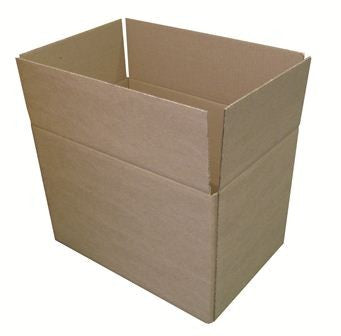
Single Wall Boxes/Cartons
Single Wall Corrugated Carton — Practical Packing Box for Storage, Shipping & Fulfilment
This product is a single wall corrugated cardboard carton designed for everyday packing tasks where you want a dependable, lightweight-to-medium duty box that’s easy to assemble, easy to label, and straightforward to tape shut. Single wall cartons are a popular choice across warehouses, eCommerce operations, offices, and home moves because they balance protection, stackability, and cost efficiency for a wide range of items.
Because this listing may include multiple pack quantities/variants, the guidance below focuses on how single wall cartons typically perform and how to choose the right option for your packing workflow, rather than focusing on one specific pack size.
Key Features
Single wall corrugated construction:
Built from corrugated board with one fluted layer between two liners, giving the carton structure and cushioning while keeping weight and material use efficient.
Fast, familiar assembly:
Standard carton format folds quickly and is compatible with common packing tape and hand-held tape dispensers—ideal for busy packing benches.
Good all-round protection:
Corrugated board helps protect contents from knocks and scuffs during handling, storage, and distribution, especially when items are packed with suitable void fill.
Stackable for storage and transit:
When correctly erected and sealed, cartons can be stacked to make better use of shelf and pallet space. For best results, keep weight evenly distributed and avoid overfilling.
Easy to label and identify:
Cardboard surfaces accept labels and marker pen well, supporting clear identification for picking, dispatch, and returns processing.
Versatile for many industries:
Suitable for general-purpose packing in retail, eCommerce, manufacturing, offices, and removals—where a single wall box is appropriate for the product weight and fragility.
- Single wall corrugated carton for general packing and shipping
- Quick to assemble and seal with standard packing tape
- Helps protect contents from everyday handling impacts
- Stackable when packed and sealed correctly
- Works well with void fill such as paper, bubble wrap, or air pillows
- Ideal for storage, fulfilment, and distribution workflows
Typical Uses
- eCommerce order packing and dispatch
- Warehouse picking, storage, and internal transfers
- Office archiving and document storage (with appropriate packing)
- Retail stock handling and back-of-house organisation
- Home and business moves for non-fragile to moderately fragile items
- Parts, components, and general goods packing (with suitable cushioning)
Single Wall Carton — Full Product Guide
Choosing the right carton is about more than just internal dimensions. The best results come from matching the carton style (single wall vs double wall), the packing method, and the distribution environment to the contents. Use the guide below to get consistent packing quality and reduce damage, returns, and wasted space.
How It Works
A single wall corrugated carton uses a fluted paper layer sandwiched between two flat linerboards. The fluting provides rigidity and a degree of cushioning, while the liners provide a smooth surface for labels and help the carton hold its shape. Once folded and sealed, the carton becomes a protective outer shell that supports stacking and handling through storage and transit.
For best performance, the carton should be erected square, with all flaps properly folded and sealed. A well-sealed base is especially important—most packing failures occur when the base is under-taped or when heavy items shift during handling.
Materials and Construction
Single wall cartons are made from corrugated cardboard (also called corrugated fibreboard). The key elements are:
- Linerboards: the outer and inner flat layers that provide surface strength and help resist punctures and scuffs.
- Fluting: the wavy middle layer that adds stiffness and helps absorb impacts.
Because this is a single wall carton, it is typically best suited to light-to-medium duty packing. If you are shipping very heavy items, high-value goods, or products likely to experience rough handling, consider whether a stronger board grade or a double wall carton is more appropriate for your application.
Floor Type Compatibility
In warehouses and packing areas, cartons are commonly handled across a variety of floor types. Single wall cartons work well in typical environments, but performance improves when you:
- Keep cartons dry and store them off the floor where possible.
- Use pallets, shelving, or racking to prevent moisture uptake and crushing.
- Avoid dragging cartons across rough concrete—lift or use trolleys to reduce abrasion.
If cartons will be staged on pallets, ensure the pallet deck is in good condition and use slip sheets or layer pads if needed to reduce snagging and improve stability.
Health and Safety
Good packing is also safer packing. To reduce strain and handling risks:
- Weight management: keep individual carton weights within safe manual handling limits for your team and process.
- Even loading: distribute weight evenly and avoid point loads that can burst the base or crush corners.
- Secure sealing: apply sufficient tape to prevent flaps lifting and to reduce the chance of contents spilling.
- Use appropriate void fill: prevent movement inside the carton to reduce damage and improve stability when stacked.
If you use knives to open cartons, consider safety cutters and train staff to cut away from the body and contents.
Ideal Applications and Use Cases
Single wall cartons are a strong choice when you need a reliable general-purpose box for:
- Fulfilment packing: packing multiple items together with void fill to prevent movement.
- Storage and archiving: keeping goods organised on shelves or in stock rooms.
- Returns processing: repacking items for resale or consolidation shipments.
- Light industrial parts: components and spares that benefit from a rigid outer carton.
If your items are fragile (glass, ceramics, electronics), the carton should be paired with protective packaging such as bubble wrap, foam, or paper cushioning, and the packed box should pass a simple shake test (no internal movement).
Maintenance, Cleaning and Care
Corrugated cartons are designed for practical use rather than cleaning, but you can extend performance and reduce waste by following a few simple rules:
- Keep cartons dry: moisture reduces strength and can lead to crushing or tearing.
- Store flat until needed: keep bundles of cartons flat to prevent warping.
- Avoid overfilling: bulging sides reduce stacking strength and can cause tape failure.
- Use the right tape: choose a quality packing tape and apply it consistently (e.g., an “H-tape” method for heavier packs).
Where possible, recycle used cartons according to local cardboard recycling guidelines.
Case Study (Example Workflow)
Scenario: A small eCommerce operation dispatches mixed orders daily and needs a carton that assembles quickly and protects items in courier networks.
Approach: The team selects a single wall carton size that allows a small amount of clearance around typical orders. Items are wrapped or bagged, then void fill is added to prevent movement. The base is sealed with a consistent tape pattern, and labels are applied to a clean, flat panel.
Result: Faster packing at the bench, improved presentation on delivery, and fewer damage claims due to reduced internal movement and consistent sealing.
Who is it for?
- Warehouses and distribution centres needing dependable general-purpose cartons
- eCommerce brands and fulfilment teams packing daily orders
- Offices and facilities teams organising storage and archives
- Retailers managing stock transfers and back-of-house storage
- Home movers wanting a practical carton for everyday household items
Colours / Features Available
Cartons in this category are typically supplied in a standard cardboard finish suitable for labels and marker pen. If your workflow requires printed branding, specialist coatings, or enhanced moisture resistance, consider whether a different carton specification is required.
Sizes Available
This product page may represent a configurable carton listing with multiple variants. Select the option that best matches your packing needs and internal clearance requirements. As a general rule:
- Choose a carton that fits your product with enough space for protective packaging.
- Avoid excessive empty space—this increases void fill use and can reduce stacking stability.
- If you regularly ship a range of items, consider standardising on a small set of carton sizes to streamline packing.
If you need help selecting the best carton option for your products, consider the item dimensions, weight, fragility, and the distribution method (courier, pallet, internal transfer) before choosing.