

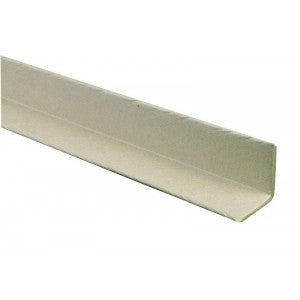
Edge Boards
Edge Boards (Angle Boards) — Protective Edge & Corner Reinforcement for Palletised Loads
Edge boards (also known as angle boards or edge protectors) are rigid, L-shaped protective profiles designed to reinforce the edges and corners of cartons, cases and palletised loads. Placed vertically on the corners of a load (or horizontally along vulnerable edges), they help spread compression and strapping forces over a wider area, reducing the risk of crushed corners, strap marks and transit damage. This listing covers our edge board range in multiple pack quantities and options, making it easy to choose the right protection level for your packaging operation.
Whether you are shipping boxed goods, bundling products together, or stabilising a pallet for storage and distribution, edge boards provide a simple, cost-effective way to improve load integrity. They are commonly used alongside stretch wrap and strapping to keep loads square, protect product surfaces and improve stacking performance.
Key Features
Edge & corner protection:
Helps protect vulnerable corners and edges from knocks, abrasion and compression during handling, storage and transport.
Strapping force distribution:
Designed to work with common strapping methods by spreading strap tension across a wider surface area, helping reduce strap indentation and edge crushing.
Improves load stability:
Supports squarer, tighter pallet loads when used with stretch wrap and/or strapping, helping reduce shifting in transit.
Supports stacking strength:
By reinforcing edges, edge boards can help cartons resist vertical compression and improve overall stack performance (depending on the packaging system and load).
Lightweight and economical:
Adds protective strength without significantly increasing shipping weight, offering a practical balance of performance and cost.
Versatile placement:
Can be applied vertically on pallet corners, along top edges, or between straps and product surfaces where protection is needed.
Range of sizes and pack options:
Available in multiple dimensions and pack quantities to suit different load sizes and protection requirements.
Key Features (Bullet Summary)
- Reinforces pallet corners and carton edges
- Helps reduce crushing, denting and abrasion
- Spreads strapping pressure to minimise strap marks
- Supports squarer, more stable pallet loads
- Useful with stretch wrap, strapping and corner protection systems
- Multiple sizes and pack quantities available
Typical Uses
- Palletised cartons and cases requiring stronger corners for transit
- Loads secured with plastic or steel strapping where strap protection is needed
- Bundled products (e.g., boxed items) where edge reinforcement improves stability
- Warehousing and distribution environments where loads are stacked or handled frequently
- General packaging operations seeking to reduce damage and returns
Edge Boards — Full Product Guide
Edge boards are a straightforward packaging accessory, but selecting the right option and applying it correctly can make a noticeable difference to load protection. This guide explains what edge boards do, how to choose them, and how to use them effectively as part of a complete pallet protection system.
How It Works
Edge boards act as a rigid reinforcement at the most damage-prone points of a load: the edges and corners. When a pallet is strapped, the strap tension concentrates pressure on narrow lines across the carton edges. Without protection, this can lead to crushed corners, strap cutting into packaging, or surface marking. By placing an edge board between the strap and the load, the pressure is distributed across the wider face of the board, reducing localised stress.
During handling and transport, pallets can experience impacts, vibration and compression from stacking. Edge boards help maintain a squarer profile and provide a sacrificial protective layer that absorbs minor knocks and abrasion.
Materials and Construction
Edge boards are typically manufactured from rigid paperboard formed into an L-shaped profile. The construction is designed to provide stiffness and compression resistance while remaining lightweight and easy to handle. Different thicknesses and leg sizes are used to match the level of protection required and the geometry of the load.
Because edge boards are paper-based, they are commonly used in packaging environments where recyclability and ease of disposal are important considerations.
Choosing the Right Edge Board
When selecting an edge board, consider the following factors:
- Leg size (the two sides of the “L”): Larger legs provide more coverage and better distribution of force, especially for heavier loads or wider straps.
- Thickness: Thicker boards generally offer greater rigidity and resistance to crushing under strap tension and stacking loads.
- Length: Choose a length that matches the height of the palletised load for vertical corner protection, or the edge length you want to protect for horizontal use.
- Load weight and handling conditions: Heavier loads, longer transit routes, and more handling steps typically benefit from stronger edge protection.
- Strapping method: Consider strap type and tension. Higher tension systems often require more robust edge protection to prevent indentation.
Compatibility with Strapping and Wrapping
Edge boards are commonly used with:
- Stretch wrap: Helps keep the load tight and stable; edge boards help maintain a square profile and protect corners from wrap abrasion.
- Plastic strapping: Edge boards reduce strap marking and help prevent straps from cutting into cartons or product surfaces.
- Steel strapping: Where used, edge boards can help reduce surface damage by spreading pressure (ensure the edge board specification matches the tension and application).
For best results, position edge boards so straps sit centrally on the board face, and ensure the board is aligned with the load edge to avoid slipping during tensioning.
Floor Type Compatibility
Edge boards are used on palletised loads across a wide range of warehouse and logistics environments. They are compatible with typical pallet handling on concrete warehouse floors, racking systems and standard loading bays. The key consideration is not the floor type itself, but the handling method (forklift, pallet truck, conveyor) and the likelihood of impacts or compression during movement and storage.
Health and Safety
As with all packaging accessories, safe handling practices are recommended:
- Wear appropriate PPE where required (e.g., gloves) to reduce the risk of minor cuts or abrasions when handling rigid board products.
- Store edge boards flat and dry to help maintain shape and performance.
- When used with strapping tools, follow the tool manufacturer’s safety guidance and ensure straps are tensioned and sealed correctly.
Ideal Applications and Use Cases
Edge boards are widely used across manufacturing, warehousing and distribution. Common applications include:
- Cartonised goods: Reinforcing corners to reduce crushing and improve stacking.
- Mixed pallet loads: Helping keep irregular loads square and stable.
- Surface-sensitive products: Reducing strap marks on packaging or product surfaces.
- Export and long-haul distribution: Adding resilience where loads face extended handling and transit.
Maintenance, Cleaning and Care
Edge boards are typically a single-use or limited re-use protective component depending on handling conditions. To get the best performance:
- Keep boards dry and store away from excessive moisture.
- Replace boards that are crushed, delaminated or heavily damaged.
- Use consistent placement and strapping alignment to reduce slipping and improve repeatability.
Case Study (Typical Scenario)
A warehouse shipping palletised cartons experiences corner crushing and strap indentation during transit. By adding edge boards to the pallet corners and aligning straps over the board faces, the load becomes more stable and corners are better protected. The result is fewer damaged cartons on arrival and improved presentation for the end customer. (Performance will vary depending on load type, strap tension and handling conditions.)
Who Is It For?
- Packaging teams looking to reduce transit damage and improve load stability
- Warehouses and distribution centres shipping palletised cartons
- Manufacturers bundling products and securing loads with strapping
- Operations seeking a simple protective add-on to complement stretch wrap and strapping
Colours / Features Available
Edge boards are supplied as rigid paperboard profiles. Appearance and finish may vary by specification and batch. If you require a particular finish or performance characteristic for a specific application, contact us for guidance.
Sizes Available
This product page may represent multiple size and pack options within the same edge board family. Select the variant that matches your required leg size, thickness and length. If you need help choosing the right option for your load, share your pallet dimensions, load height, approximate weight and strapping method and we can advise.