
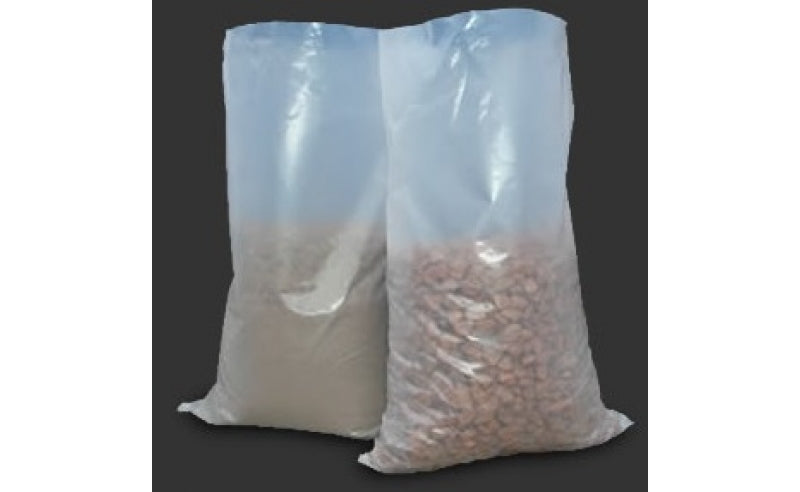
Bags / Sacks / Rubble Sacks
-
20x30 - 500g Black Rubble Sacks 100% RecycledRegular price From £27.51 GBPRegular priceUnit price per
-
20x30 - 500g Aggregate SacksRegular price From £25.12 GBPRegular priceUnit price per
-
22x34 - 520g Grey Rubble Sacks 100% RecycledRegular price From £0.39 GBPRegular priceUnit price per
-
20x30 - 400g Blue Rubble Sacks-on-RollRegular price From £1.37 GBPRegular priceUnit price per
-
20x30 - 480g Blue Rubble Sacks 100% RecycledRegular price From £40.86 GBPRegular priceUnit price per
-
17x29 - 500g Ribbed White Rubble SacksRegular price From £1.99 GBPRegular priceUnit price per


Bags / Sacks / Rubble Sacks
| Product Code | Description |
| 09B20 | 20x30 - 500g Blue Rubble Sacks |
| 09B22 | 22x33 - 550g Blue Rubble Sacks |
| 09B17 | 17x29 - 500g Ribbed White Rubble Sacks |
| 09BK20 | 20x30 - 500g Black Rubble Sacks |
Builders’ rubble sacks (also called aggregate sacks) are heavy-duty polythene bags designed for collecting, containing, and moving dense or sharp site waste such as broken brick, plaster, tiles, concrete fragments, and general construction debris. They’re also widely used for landscaping materials like soil, stones, and hardcore where a tougher bag helps reduce splitting and punctures.
Bags / Sacks / Rubble Sacks — Helpful Guide
This collection focuses on compact, easy-to-handle sacks for building and landscaping waste. The key differences between options are size, thickness (often described by “gauge” or “micron”), colour (useful for sorting), and whether the sacks are supplied loose or on a roll for faster dispensing.
Types of sacks in this category
- Standard rubble sacks (loose) — Individual sacks supplied flat in packs. Ideal when you want quick access to single bags and easy stacking in a van or store.
- Rubble sacks on a roll — Perforated sacks on a roll for controlled dispensing and reduced handling time on busy sites.
- Aggregate sacks — Often used interchangeably with rubble sacks; typically chosen for sand, gravel, and similar materials where a robust bag is needed.
Products available in this collection (with quick use-notes)
Below are the products in this category and the typical jobs they suit. Product names are linked so you can jump straight to the relevant item.
-
20x30 - 500g Black Rubble Sacks 100% Recycled
A compact heavy-duty sack for mixed builders’ waste. Black is commonly used where you want a discreet appearance or to separate waste streams. Made from recycled polythene.
-
20x30 - 500g Aggregate Sacks
Same convenient 20x30 size, typically selected for sand, gravel, and aggregate. A good choice for landscaping and groundwork tasks where dense contents can stress lighter bags.
-
22x34 - 520g Grey Rubble Sacks 100% Recycled
A larger-format rubble sack for bulkier debris or when you want fewer bag changes. Grey is useful for sorting and identifying waste types on site. Made from recycled polythene.
-
20x30 - 400g Blue Rubble Sacks-on-Roll
Perforated sacks on a roll for fast dispensing. The 20x30 footprint keeps loads manageable while the roll format helps reduce clutter and speeds up repetitive bagging tasks.
-
20x30 - 480g Blue Rubble Sacks 100% Recycled
A heavy-duty everyday rubble sack in a popular size. Blue is often used for quick visual identification. Made from recycled polythene and suited to general site clear-up.
-
17x29 - 500g Ribbed White Rubble Sacks
A slightly smaller sack that can be easier to lift when filled with dense rubble. The ribbed finish can help with grip and handling, especially when wearing gloves.
Understanding sizes, thickness, and what “gauge” means
Rubble sacks are commonly described by their dimensions (in inches) and a thickness indicator such as gauge or microns. In many supplier specifications, a “500 gauge” rubble sack is listed at around 125 microns thickness, and a 20x30 inch sack is commonly shown as approximately 500 x 750/760 mm (dimensions can vary slightly by manufacturer). These conventions are useful for comparing products, but real-world performance also depends on the blend of recycled material and how the sack is manufactured.
Why size matters
- 20x30 is a widely used “standard” rubble sack size because it balances capacity with safe handling. It’s often chosen for mixed waste, broken tiles, plaster, and general clear-up.
- 22x34 provides extra volume for bulky debris or when you want fewer bag changes, but it can become heavy quickly when filled with dense materials.
- 17x29 can be a practical option when you want to limit the maximum weight per bag (helpful for manual handling) while still using a tough sack.
Thickness and puncture resistance
Thicker sacks generally resist tearing and punctures better, especially with sharp rubble. However, even heavy-duty sacks can be damaged by protruding rebar, sharp tile edges, or jagged masonry. For best results, avoid overfilling, don’t drag sacks across rough ground, and consider double-bagging for particularly sharp waste.
Case study: speeding up end-of-day site clear-up
A small refurbishment team needed a faster way to clear plasterboard offcuts, broken tiles, and general debris at the end of each day. Previously, loose sacks were stored in the van and pulled out as needed, which led to wasted time and occasional mess when packs were opened on site.
They switched to a mixed approach: sacks-on-roll positioned near the work area for repetitive bagging, and heavier loose sacks kept for sharp rubble and heavier fragments. The roll format reduced time spent finding and opening packs, while the heavier sacks reduced split bags and rework when handling sharp debris. The team also used colour to separate waste streams (e.g., one colour for mixed rubble and another for lighter offcuts), making disposal simpler.
How to choose the correct rubble sack
1) Match the sack to the waste type
- Sharp, jagged rubble (broken tiles, masonry, concrete fragments): choose a heavier-duty option and avoid overfilling.
- Dense but less sharp materials (sand, gravel, aggregate): choose a robust sack and keep fill levels sensible to prevent strain on seams.
- Light, bulky waste (packaging, insulation offcuts): you may prioritise capacity and convenience (for example, a larger size), but still avoid overfilling.
2) Choose a size that supports safe handling
It’s tempting to use the biggest sack available, but dense waste becomes heavy quickly. A slightly smaller sack can reduce the risk of overloading and make lifting safer. If multiple people will handle the sacks, standardising on a size can help keep loads consistent.
3) Decide between loose sacks and sacks-on-roll
- Loose sacks are straightforward for general use and easy to store in packs.
- Sacks-on-roll are ideal when you need frequent bag changes and want controlled dispensing near the work area.
4) Use colour to improve sorting and site organisation
Colour can be a simple operational tool. Using different colours for different waste streams can reduce confusion, help with segregation, and make it easier to identify which sacks contain heavier rubble versus lighter waste.
Best practices for filling, tying, and moving rubble sacks
- Don’t overfill: leave enough headspace to tie or fold the top securely.
- Distribute sharp edges: place flatter pieces against the sides and avoid concentrating sharp points in one area.
- Lift correctly: bend knees, keep the load close, and consider team lifting for heavier sacks.
- Avoid dragging: dragging increases abrasion and can weaken the base; use a barrow or trolley where possible.
- Keep sacks dry where practical: water can add significant weight to rubble and make handling harder.
Common applications
- Bathroom and kitchen strip-outs (tiles, plaster, broken ceramics)
- Brickwork repairs and small demolition tasks
- Garden and landscaping projects (soil, stones, hardcore)
- Workshop and yard clear-ups where tough bags reduce split incidents
Q&A
What does “500g” or “500 gauge” mean on rubble sacks?
Many rubble sacks are described using “gauge,” a thickness convention used for plastic films. In supplier specifications, 500 gauge is commonly listed at around 125 microns. Thickness is a useful comparison point, but durability also depends on material blend and manufacturing quality.
Are 20x30 rubble sacks big enough for most building waste?
20x30 is a popular size because it balances capacity with manageable handling. It suits mixed builders’ waste, broken tiles, plaster, and general clear-up. For bulky debris you may prefer a larger size, but dense rubble can become heavy quickly.
What’s the difference between rubble sacks and aggregate sacks?
The terms are often used interchangeably. “Aggregate sacks” are commonly chosen for sand, gravel, and similar materials, while “rubble sacks” may be used for mixed construction debris. In practice, the key factors are size, thickness, and puncture resistance.
When should I choose sacks-on-roll instead of loose sacks?
Sacks-on-roll are useful when you need frequent bag changes and want controlled dispensing near the work area. They can reduce time spent opening packs and help keep the workspace tidy. Loose sacks are simple for general use and easy to store.
How can I reduce split bags when dealing with sharp rubble?
Avoid overfilling and don’t drag sacks across rough ground. Place sharp fragments carefully so points don’t press into one spot, and consider double-bagging for very jagged waste. Using a trolley or barrow also reduces abrasion and handling stress.