
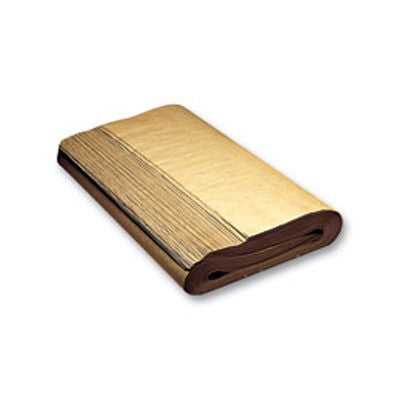
Protective / Paper & Tissue / Kraft Wrap
-
900x1150 - 70gsm Pure Brown Kraft WrapRegular price From £97.52 GBPRegular priceUnit price per
-
700x1150 - 70gsm Pure Brown Kraft WrapRegular price From £71.39 GBPRegular priceUnit price per
-
1150x1500 - 70gsm Pure Brown Kraft WrapRegular price From £127.93 GBPRegular priceUnit price per


Protective / Paper & Tissue / Kraft Wrap
| Order Code | Description | Size (mm) | Pack Quantity |
| 10K90 | Pure ribbed kraft sheet 70gsm | 900 x 1150 | 250 sheets |
| 10K115 | Pure ribbed kraft sheet 70gsm | 1150 x 1500 | 125 sheets |
Kraft wrap is a simple, versatile protective paper used to wrap, separate, and shield products during handling, storage, and shipping. In this collection you’ll find kraft wrap sheets in practical sizes and weights that suit everyday packing tasks—from interleaving flat items to wrapping irregular shapes and lining cartons.
Kraft Wrap — Helpful Guide
Kraft paper is commonly chosen when you need a clean, recyclable protective layer that’s easy to fold, crumple, or cut to size. It’s especially useful for reducing scuffs and abrasion, keeping items separated inside a carton, and adding a light buffer between products. The “gsm” (grams per square meter) indicates paper weight: higher gsm is typically thicker and more resistant to tearing, while lower gsm is easier to wrap tightly around corners and contours.
Types of kraft wrap in this category
-
Brown kraft wrap (general-purpose protective sheets)
A classic choice for day-to-day packing and interleaving. Brown kraft is often used to wrap items, line cartons, and separate products to reduce rubbing during transit.-
18x25 - 70gsm Brown Kraft Wrap
A handy sheet size for wrapping smaller items and adding a protective layer between products in a carton. The 70gsm weight is a practical balance of flexibility and durability for general packing. -
700x1150 - 70gsm Pure Brown Kraft Wrap
A larger-format sheet suited to wrapping medium-to-large items, lining cartons, or creating interleaving layers for stacked goods. The generous dimensions help cover wide surfaces with fewer joins. -
900x1150 - 70gsm Pure Brown Kraft Wrap
A wide sheet size that works well for surface protection, pallet layer separation, and wrapping bulky or flat items. Useful when you want broad coverage and consistent protection across a larger area.
-
-
White kraft wrap (clean presentation and protective wrapping)
White kraft is often selected when presentation matters or when you want a brighter, cleaner-looking wrap while still keeping the practical benefits of kraft paper.-
20x30 - 105gsm White Kraft Wrap
A heavier-weight sheet designed for more robust wrapping and improved tear resistance. The 105gsm weight can be helpful for sharper edges, heavier items, or situations where the wrap needs to hold up to more handling.
-
-
Random kraft wrap (mixed kraft sheets for flexible packing)
Random kraft sheets can be useful when you pack a variety of product sizes and want a flexible option for wrapping and interleaving without committing to a single fixed sheet size for every job.-
20x30 - Random Kraft Wrap
A convenient sheet format for everyday wrapping and carton protection. Ideal for quick packing workflows where you want a ready-to-use sheet for general protective tasks.
-
Where kraft wrap fits in a protective packaging system
Kraft wrap is best thought of as a protective layer rather than a high-cushioning material. It helps prevent surface damage (scuffs, rub marks, light scratches) and keeps items from contacting each other. For fragile products, kraft wrap is commonly combined with other protective materials (for example, cushioning or corner protection) so the paper handles abrasion control while other materials handle impact protection.
Common uses
Wrapping: Fold around products to protect surfaces and keep items clean during handling.
Interleaving: Place sheets between stacked items (metal parts, printed pieces, coated panels, ceramics) to reduce rubbing and scuffing.
Carton lining: Line the base and sides of cartons to reduce abrasion and help keep dust off products.
Light void fill: Crumple sheets to reduce movement in a box (best for light-to-medium items; not a substitute for engineered cushioning for fragile goods).
Pallet layer separation: Use larger sheets as a simple layer between stacked goods to reduce surface-to-surface contact and improve load separation.
Case study: reducing scuffs on stacked products
A distributor shipping coated panels noticed light scuffing where items contacted each other inside cartons. The products weren’t breaking, but cosmetic marks were creating rework and returns. By adding a consistent interleaving step—placing a kraft sheet between each panel—the team reduced surface-to-surface rubbing during vibration in transit. They also standardized sheet size so packers could work quickly and apply the same protection every time.
Key takeaways from this type of improvement:
Consistency matters: Using the same sheet size and placement reduces packing variation.
Match sheet size to product footprint: Wider sheets provide better edge coverage and reduce exposed contact points.
Combine with immobilization: Interleaving works best when the load is also prevented from shifting inside the carton.
How to choose the correct kraft wrap
1) Choose the right paper weight (gsm)
70gsm is a common, flexible choice for general wrapping and interleaving. It folds easily around corners and is efficient for high-volume packing. 105gsm is heavier and can offer improved durability and tear resistance, which may be helpful for sharper edges, heavier items, or more demanding handling conditions.
2) Choose a sheet size that matches your workflow
Smaller sheets can speed up wrapping of compact items and reduce waste when you don’t need large coverage.
Larger sheets are efficient for lining cartons, wrapping bulky items, and interleaving wide products with fewer overlaps.
A practical approach is to select a sheet that covers the product’s largest face with enough extra to fold over edges. If you frequently pack multiple product sizes, keeping two sheet sizes on hand (one smaller, one larger) can reduce cutting and improve packing speed.
3) Consider surface sensitivity
If you’re protecting delicate finishes (high-gloss coatings, printed surfaces, polished metal), test a sheet as an interleaf and check for marking after vibration or compression. Kraft wrap is designed to reduce abrasion, but the best result depends on the product surface, pressure points, and movement during transit.
4) Think about moisture and storage conditions
Paper performance can change with humidity. If your supply chain includes damp environments, cold storage transitions, or outdoor staging, consider how moisture might affect tear resistance and stiffness. Keep kraft wrap stored dry and off the floor, and avoid using paper that has absorbed moisture or become soft.
5) Decide on appearance (brown vs white)
Brown kraft is widely used for protective packing and industrial applications. White kraft can be preferred when presentation is important or when you want a brighter, cleaner-looking wrap. Both can serve protective functions; the best choice depends on your handling needs and the look you want when the package is opened.
Packing tips for better protection
Wrap tight, not strained: A snug wrap reduces shifting, but over-tension can tear paper at corners.
Reinforce corners: For sharp edges, add an extra fold or a second layer at corners where tearing starts.
Use interleaving consistently: If you interleaf stacked items, place a sheet between every item rather than “every few” to avoid contact points.
Combine with immobilization: Use appropriate void fill or fit-to-size cartons so wrapped items don’t slide and rub.
Keep sheets clean: Dust or grit trapped between paper and product can cause abrasion; store paper in clean conditions.
Frequently asked questions
What does “gsm” mean for kraft wrap, and how does it affect protection?
Gsm means grams per square meter and indicates paper weight. Higher gsm is typically thicker and more tear-resistant, which can help with heavier items or sharp edges. Lower gsm is more flexible for wrapping and interleaving but may tear sooner under stress.
Is kraft wrap suitable for cushioning fragile items?
Kraft wrap provides light protection by reducing abrasion and separating items, but it is not engineered cushioning. For fragile products, use kraft as a wrap or interleaf and combine it with cushioning materials and a well-fitted carton to manage impacts and vibration.
How do I choose the right sheet size for my products?
Choose a sheet that covers the largest face of the product with extra material to fold over edges. Smaller sheets reduce waste for compact items, while larger sheets are efficient for lining cartons and wrapping bulky goods. Standardizing sizes can improve packing speed.
Can kraft wrap be used as a pallet layer sheet between stacked goods?
Yes, larger kraft sheets are often used to separate layers on a pallet to reduce surface-to-surface contact and scuffing. Suitability depends on load weight, moisture exposure, and handling conditions. For demanding loads, test performance under compression and movement.
Does kraft wrap help prevent scuffs on coated or printed surfaces?
It can help by creating a barrier that reduces rubbing between items. Results depend on surface finish, pressure points, and movement during transit. For sensitive surfaces, test an interleaving sheet and check for marking after vibration, stacking, and typical handling conditions.