
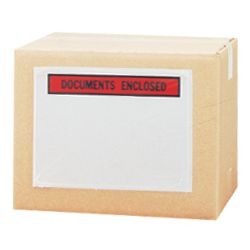
Postal / Document Wallets
-
200x150mmx66m - "Document Enclosed" Pouch TapeRegular price From £17.10 GBPRegular priceUnit price per
-
DL - Plain Document EnvelopesRegular price From £17.47 GBPRegular priceUnit price per
-
DL - "Document Enclosed" EnvelopesRegular price From £18.16 GBPRegular priceUnit price per
-
C7 - Plain Document EnvelopesRegular price From £14.75 GBPRegular priceUnit price per
-
C7 - "Document Enclosed" EnvelopesRegular price From £15.71 GBPRegular priceUnit price per
-
C6 - Plain Document EnvelopesRegular price From £23.32 GBPRegular priceUnit price per
-
C6 - "Document Enclosed" EnvelopesRegular price From £24.21 GBPRegular priceUnit price per
-
C5 - Plain Document EnvelopesRegular price From £43.80 GBPRegular priceUnit price per
-
C5 - "Document Enclosed" EnvelopesRegular price From £0.05 GBPRegular priceUnit price per
-
C4 - Plain Document EnvelopesRegular price From £45.74 GBPRegular priceUnit price per
-
C4 - "Document Enclosed" EnvelopesRegular price From £59.73 GBPRegular priceUnit price per


Postal / Document Wallets
Postal / document wallets (often called packing list envelopes or “documents enclosed” wallets) are self-adhesive pouches designed to hold paperwork on the outside of parcels. They keep invoices, delivery notes, customs forms, and return paperwork visible and protected during handling, storage, and transit.
Postal / Document Wallets — Helpful Guide
This category includes two main formats: self-adhesive document envelopes (in common paper sizes such as DL, C7, C6, C5 and C4) and document pouch tape for creating custom-length pouches. Choosing the right option depends on your document size, how you want the paperwork to be accessed (top/side loading), and the surface you’re applying to (cartons, mailers, stretch wrap, etc.).
Types of postal / document wallets in this collection
-
Printed “Document Enclosed” document envelopes
These are clear self-adhesive wallets with a printed message to help carriers and receivers quickly identify that paperwork is inside. They’re commonly used for invoices, packing slips, delivery notes, and export paperwork that must travel with the shipment.- DL - "Document Enclosed" Envelopes — A compact format suited to folded A4 paperwork (e.g., invoices or dispatch notes) where you want a clear “documents enclosed” identifier.
- C7 - "Document Enclosed" Envelopes — A small wallet for compact paperwork, labels, or folded notes where space on the parcel is limited.
- C6 - "Document Enclosed" Envelopes — A popular size for folded A4 documents (often folded into quarters) and small multi-page paperwork packs.
- C5 - "Document Enclosed" Envelopes — A larger wallet for folded A4 (half-fold) or thicker document sets that need more room.
- C4 - "Document Enclosed" Envelopes — Designed for A4 sheets without folding, ideal when documents must remain flat (e.g., certificates, detailed packing lists, or multi-page customs paperwork).
-
Plain (unprinted) document envelopes
Plain wallets provide the same protective, visible pouch function without printed messaging. They’re useful when you prefer a clean look, when the paperwork itself is clearly titled, or when you’re using the pouch for internal routing documents.- DL - Plain Document Envelopes — A neat option for folded paperwork where you don’t need printed “document enclosed” text.
- C7 - Plain Document Envelopes — Compact plain wallet for small documents, labels, or folded notes.
- C6 - Plain Document Envelopes — Versatile plain wallet for folded A4 paperwork and small document packs.
- C5 - Plain Document Envelopes — Larger plain wallet for thicker paperwork sets or half-folded A4.
- C4 - Plain Document Envelopes — Full A4-friendly plain wallet for flat documents and multi-page packs.
-
Document pouch tape (make-your-own pouches)
Pouch tape is used to create custom-length document pouches on demand. It’s especially helpful when your paperwork varies in length, when you want to standardize on one roll format, or when you need a continuous run for high-throughput packing benches.- 200x150mmx66m - "Document Enclosed" Pouch Tape — Roll format for creating “document enclosed” pouches; useful for variable paperwork lengths and repeat packing workflows.
Case study: reducing missing paperwork in dispatch
A typical dispatch workflow includes picking, packing, labeling, and staging. Paperwork often gets separated from the parcel at the busiest point: the handoff between packing and carrier collection. By placing the paperwork in a self-adhesive document wallet on the outside of the carton, teams can reduce “where is the invoice?” interruptions and avoid reprinting documents after the parcel has already been sealed.
In practice, many operations standardize by shipment type:
- Domestic parcels: a DL or C6 wallet for a folded invoice/dispatch note.
- Multi-item orders: a C5 wallet to accommodate thicker paperwork packs.
- Export shipments: a C4 wallet to keep customs paperwork flat and easy to inspect.
When the paperwork is consistently placed in the same location (for example, top-right of the longest face of the carton), warehouse staff and carriers can find it quickly, which helps reduce handling time and misroutes.
How to choose the correct postal / document wallet
1) Match the wallet size to your document size (and folding preference)
Start with the document you need to include: invoice, packing list, delivery note, return form, or customs paperwork. If you can fold the document, you can often use a smaller wallet (such as DL or C6). If the document must remain flat (common for A4 customs forms or certificates), choose a larger format such as C4.
- DL: best for folded paperwork where you want a compact pouch footprint.
- C7 / C6: good for small documents, labels, or folded notes.
- C5: useful for thicker packs or half-folded A4.
- C4: ideal for A4 sheets without folding.
2) Decide whether you need printed identification
Printed “Document Enclosed” wallets help signal to carriers and receiving teams that paperwork is present. Plain wallets are often preferred when the paperwork is self-explanatory, when you want a neutral appearance, or when the pouch is used for internal routing documents.
3) Consider access and handling: top-loading vs side-loading
Different workflows benefit from different loading orientations. Top-loading styles can be convenient at a packing bench because paperwork drops in quickly. Side-loading styles can help reduce the chance of papers sliding out if a parcel is handled on its side. If your parcels are frequently rotated or stacked, think about how gravity and friction will affect the contents.
4) Check the surface you’re applying to
Self-adhesive document wallets are commonly applied to corrugated cartons, paper mailers, and some plastic mailers. For best results, apply to a clean, dry surface and press firmly across the full adhesive area. If you apply to dusty cartons, textured surfaces, or stretch wrap, adhesion can be reduced—test a sample in your real packing environment.
5) Think about protection requirements
Document wallets are typically made from durable plastic film designed to protect paperwork from moisture, dirt, and scuffing. If your parcels may be exposed to rain during loading/unloading, a well-sealed pouch helps keep documents readable and intact. For high-friction handling environments, tear resistance is also important.
Best practices for using document wallets
- Place consistently: choose a standard location on the parcel so carriers and receivers know where to look.
- Avoid seams and edges: apply on a flat panel rather than across carton joins to reduce lifting.
- Keep barcodes visible: don’t cover shipping labels or tracking barcodes with the wallet.
- Remove air pockets: smooth the pouch after inserting documents to improve readability and scanning.
- Use the right thickness: if you routinely include multi-page packs, size up to avoid overstuffing and edge lift.
Common use cases
Postal / document wallets are used across ecommerce, manufacturing, wholesale distribution, and office dispatch. Typical applications include:
- Packing lists and invoices attached to cartons
- Delivery notes for palletized shipments
- Returns paperwork included on outbound parcels
- Customs documentation for export shipments
- Internal routing slips for warehouse transfers
Questions & Answers
What is the difference between a plain document wallet and a “Document Enclosed” wallet?
Both are self-adhesive pouches that hold paperwork on the outside of a parcel. A “Document Enclosed” wallet includes printed text to highlight the contents for carriers and receivers. Plain wallets are unprinted and are often used when the paperwork is already clearly labeled.
Which size should I choose for A4 paperwork?
If the A4 sheet must stay flat, choose a larger format such as C4. If folding is acceptable, smaller sizes like C5, C6, or DL can work depending on how many pages you include. Always allow extra room for multi-page packs.
Will document wallets stick to plastic mailers or stretch wrap?
They typically adhere best to clean, dry cardboard and smooth packaging films. Adhesion can vary on textured plastics, dusty cartons, or stretch wrap. For reliable results, test on your actual packaging materials and apply firm pressure across the full adhesive area.
How do I prevent paperwork from slipping out during transit?
Choose a wallet size that isn’t overfilled, insert documents fully so edges don’t catch, and smooth the pouch to remove air pockets. If parcels are frequently rotated, consider how the opening orientation affects retention and place the wallet on a flatter panel.
When should I use document pouch tape instead of pre-made wallets?
Pouch tape is useful when document lengths vary, when you want to create custom-length pouches on demand, or when you’re setting up a repeatable packing bench workflow. It can reduce the need to stock multiple pouch sizes for different paperwork packs.