
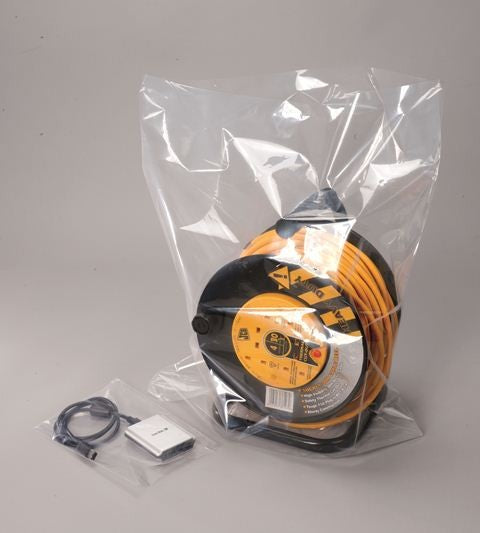
Bags / Polythene (Popular) / 250G (63mu)
-
18x24 - 250g Clear Poly Bags (457x610mm - 64mu)Regular price From £44.41 GBPRegular priceUnit price per
-
10x12 - 250g Clear Poly Bags (254x305mm - 64mu)Regular price From £26.14 GBPRegular priceUnit price per
-
24x36 - 250g Clear Poly Bags (610x914mm - 64mu)Regular price From £35.97 GBPRegular priceUnit price per
-
36x48 - 250g Clear Poly Bags (914x1219mm - 64mu)Regular price From £68.56 GBPRegular priceUnit price per
-
20x30 - 250g Clear Poly Bags (508x762mm - 64mu)Regular price From £60.26 GBPRegular priceUnit price per
-
15x20 - 250g Clear Poly Bags (381x508mm - 64mu)Regular price From £60.26 GBPRegular priceUnit price per
-
10x12 - 250g Poly Bags - Blue TintRegular price From £35.70 GBPRegular priceUnit price per
-
48x60 - 250g Clear Poly Bags (1219x1524mm - 64mu)Regular price From £80.96 GBPRegular priceUnit price per
-
48x36 - 250g (Opening on long side) Clear Poly Bags (1219x914mm - 64mu) - Paper WrappedRegular price From £69.29 GBPRegular priceUnit price per
-
30x48 - 250g Clear Poly Bags (762x1219mm - 64mu)Regular price From £58.04 GBPRegular priceUnit price per
-
30x42 - 250g Clear Poly Bags (762x1067mm - 64mu)Regular price From £51.30 GBPRegular priceUnit price per
-
12x18 - 250g Clear Poly Bags (305x457mm - 64mu)Regular price From £45.03 GBPRegular priceUnit price per
-
12x15 - 250g Clear Poly Bags (305x381mm - 64mu)Regular price From £37.39 GBPRegular priceUnit price per
-
10x20 - 250g Clear Poly Bags (254x508mm - 64mu) - Paper WrappedRegular price From £30.86 GBPRegular priceUnit price per
-
8x10 - 250g Clear Poly Bags (203x254mm - 64mu)Regular price From £33.79 GBPRegular priceUnit price per
-
14x18 - 64g Food Grade Blue Tint Poly Bags (350x450mm - 16mu)Regular price From £63.92 GBPRegular priceUnit price per
-
16x20 - 250g Clear Poly Bags (400x508mm - 64mu) - Paper WrappedRegular price From £33.42 GBPRegular priceUnit price per
-
30x30 - 250g Clear Poly Bags 30% Recycled (762x762mm - 64mu) - Paper WrappedRegular price From £37.39 GBPRegular priceUnit price per
-
10x23 - 250g Clear Poly Bags (254x584mm - 64mu)Regular price From £9.93 GBPRegular priceUnit price per
-
8.5x10 - 250g Clear Poly Bags (216x254mm - 64mu)Regular price From £21.84 GBPRegular priceUnit price per
-
40x58x83 - 1000x1471x2080 - 250g Clear Poly BagsRegular price From £24.25 GBPRegular priceUnit price per
-
40x64x48 - 250g (1000X1600X1200) Clear Poly BagsRegular price From £113.55 GBPRegular priceUnit price per
-
40x58x65 - 1000x1471x1653 - 250g Clear Poly BagsRegular price From £103.10 GBPRegular priceUnit price per
-
14x18x30 - 250g Clear Poly Bags - Paper WrappedRegular price From £41.31 GBPRegular priceUnit price per
-
50x75 - 250g Clear Poly Bags (1270x1905mm - 64mu)Regular price From £73.80 GBPRegular priceUnit price per
-
50x36 - 250g Clear Poly Bags (1270x914mm - 64mu)Regular price From £71.13 GBPRegular priceUnit price per
-
36x24 - 250g Clear Poly Bags (914x610mm - 64mu) - Paper WrappedRegular price From £17.93 GBPRegular priceUnit price per
-
30x60 - 250g Clear Poly Bags (762x1524mm - 64mu) - Paper WrappedRegular price From £52.91 GBPRegular priceUnit price per
-
12x24 - 250g Clear Poly Bags (305x610mm - 64mu)Regular price From £58.04 GBPRegular priceUnit price per
-
24x36 - 250g Blue Opaque Poly Bags (610x914mm - 64mu)Regular price From £44.63 GBPRegular priceUnit price per
-
20x30 - 250g Blue Tint Poly Bags (508x762mm - 64mu)Regular price From £44.63 GBPRegular priceUnit price per
-
18x36 - 250g Clear Poly Bags (457x914mm - 64mu) - Paper WrappedRegular price From £64.65 GBPRegular priceUnit price per
-
18x20 - 250g Clear Poly Bags (457x508mm - 64mu) - Paper WrappedRegular price From £19.60 GBPRegular priceUnit price per
-
14x26 - 250g Clear Poly Bags (356x660mm - 64mu) - Paper WrappedRegular price From £37.78 GBPRegular priceUnit price per
-
12x20 - 250g Clear Poly Bags (305x508mm - 64mu)Regular price From £35.70 GBPRegular priceUnit price per
-
10x18 - 250g Clear Poly Bags (254x457mm - 64mu) - Paper WrappedRegular price From £40.19 GBPRegular priceUnit price per


Bags / Polythene (Popular) / 250G (63mu)
* Many of our poly bags are suitable for food use, however there may be exceptions and if you specifically require this then it is best to get specific confirmation of this.
Clear Polythene Bags (Popular) — 250G (63–64 micron) Overview
This collection groups popular, everyday clear polythene bags made from LDPE-style film at approximately 250 gauge (often referenced as about 63–64 micron). This thickness is commonly chosen when you need a bag that feels noticeably stronger than lightweight garment or sandwich-style bags, while still remaining flexible, easy to open, and clear for quick identification of contents.
These bags are widely used for packing, protecting, and organising items in retail, warehousing, workshops, e-commerce fulfilment, and general storage. The clear film helps with stock control and picking accuracy, and the 250G thickness helps reduce tearing when handling sharper edges or heavier products.
Important note on food use: many polythene bags are suitable for food use, but there can be exceptions. If you specifically require food suitability for your application, obtain confirmation for the exact product you intend to use.
Clear Polythene Bags — Helpful Guide
Within this category you’ll find clear flat poly bags in multiple sizes, plus a small number of variants (such as blue tint or paper-wrapped presentation). Use the guide below to match bag type and size to your packing task.
1) Standard clear flat poly bags (250G / ~64mu)
These are the core products in this collection: clear, flat bags designed for general protection and packing. They are commonly used to keep items clean, reduce scuffing, and group components together. Choose a size that allows the product to slide in without forcing, and leave enough extra length for folding or sealing if required.
- 10x12 - 250g Clear Poly Bags (254x305mm - 64mu) — a versatile small-to-medium bag size for parts, boxed items, folded garments, and general stock protection.
- 15x20 - 250g Clear Poly Bags (381x508mm - 64mu) — a popular mid-size option for larger components, folded textiles, and grouped items where extra width and length reduce snagging.
- 18x24 - 250g Clear Poly Bags (457x610mm - 64mu) — suited to bulkier products, larger folded items, and protective over-bagging where a stronger film helps during handling.
- 20x30 - 250g Clear Poly Bags (508x762mm - 64mu) — useful for larger packs, kits, and items that need more length for folding over or sealing.
- 24x36 - 250g Clear Poly Bags (610x914mm - 64mu) — a large-format bag for oversized components, larger textile bundles, and protective storage.
- 30x48 - 250g Clear Poly Bags (762x1219mm - 64mu) — extra-large coverage for bulky items, long products, or grouping multiple items together.
- 36x48 - 250g Clear Poly Bags (914x1219mm - 64mu) — large bag size for substantial items where tear resistance and clarity are both important.
- 48x60 - 250g Clear Poly Bags (1219x1524mm - 64mu) — one of the largest sizes in the range, typically used for very bulky items, protective covering, or large grouped loads.
2) Blue tint poly bag variant
Some operations prefer a tinted film for quick visual differentiation (for example, separating product lines, identifying internal-use packaging, or distinguishing packed vs. unpacked stock). The tint does not change the fundamental use case, but it can help with workflow and sorting.
- 10x12 - 250g Poly Bags - Blue Tint — a tinted alternative to the standard clear 10x12 size for easy identification in storage or production areas.
3) Long-side opening (presentation / handling format)
Most flat bags open on the short side. A long-side opening can be helpful when inserting wide, flat items or when you want a different loading orientation on a bench. This format can reduce catching and speed up packing for certain shapes.
- 48x36 - 250g (Opening on long side) Clear Poly Bags (1219x914mm - 64mu) - Paper Wrapped — large-format bag with a long-side opening; paper-wrapped presentation can help keep packs tidy and easier to store.
Understanding 250 Gauge (63–64 micron) Film
Film thickness is often described in either gauge or micron. In this collection, 250G corresponds to roughly 63–64 micron. In practical terms, this thickness is commonly selected when:
- you need improved puncture and tear resistance compared with lighter bags,
- the contents have corners, edges, or weight that can stress thinner film,
- bags are handled repeatedly during picking, packing, or internal transfers,
- clarity is important for identification, scanning, or quality checks.
Even at the same nominal thickness, performance can vary with material formulation and manufacturing tolerances. If your application is sensitive (sharp edges, heavy loads, or critical presentation), it’s good practice to trial a small quantity first.
Typical Uses for Clear 250G Poly Bags
- Parts and components: keep assemblies together, reduce dust ingress, and prevent small items being lost in transit or storage.
- Textiles and soft goods: protect folded garments, linens, or fabric pieces from moisture and handling marks while keeping contents visible.
- Retail and e-commerce fulfilment: over-bagging to protect product packaging, reduce scuffs, and keep multi-item orders grouped.
- Workshops and maintenance: organise consumables, fasteners, and spares; clear film makes it easier to identify stock at a glance.
- Storage and archiving: short-to-medium term protection from dust and light splashes (note: not a substitute for barrier packaging where moisture control is critical).
Case Study: Reducing Picking Errors in a Busy Stockroom
A small distribution team was experiencing frequent picking delays because similar-looking components were stored in open trays. Items were clean but often mixed, and staff had to double-check labels repeatedly. The team introduced clear 250G poly bags to group each SKU into consistent pack sizes, keeping labels visible through the film.
By switching to a stronger, clearer bag thickness, the packs held up better during repeated handling and internal transfers. Staff could visually confirm contents quickly, and the stockroom became easier to audit because each tray contained uniform, bagged units rather than loose parts.
How to Choose the Correct Bag Size and Format
Step 1: Measure your product correctly
Measure the maximum width and length of the item as it will be inserted into the bag. For soft items (like textiles), measure the folded bundle. For rigid items, include protrusions, corners, and any packaging already on the product.
Step 2: Add clearance for easy loading
Allow extra width so the item slides in without forcing. If you plan to fold the open end over, apply a label, or heat seal, add extra length to accommodate the closure method. Tight-fitting bags can slow packing and increase the chance of tearing at the opening.
Step 3: Consider the opening orientation
If you regularly insert wide, flat items, a long-side opening can speed up loading and reduce snagging. For very large bags, think about how the bag will be held open on the bench and whether two-person handling is needed.
Step 4: Match thickness to handling stress
250G (~63–64 micron) is often chosen for general-purpose protection where bags are handled repeatedly or where contents have edges. If your items are extremely sharp or heavy, you may need to consider alternative packaging formats or additional protective layers.
Step 5: Confirm suitability for your environment
Consider temperature, storage duration, and exposure to oils or chemicals. Standard polythene bags are widely used, but specific environments may require specialist materials. If food contact is required, obtain confirmation for the exact product.
Handling, Storage, and Best Practice Tips
- Keep packs clean: store bags in their outer packaging until use to reduce dust and contamination.
- Avoid overfilling: leaving a little headspace reduces stress on seams and helps prevent splits during handling.
- Label consistently: clear film supports visible labels; place labels in a consistent position to speed up scanning and checks.
- Protect against sharp edges: if contents have corners, consider adding an inner wrap or corner protectors to reduce punctures.
- Choose closure method: depending on your process, bags may be folded, taped, tied, or sealed. Ensure you select a size that supports your chosen closure.
Frequently Asked Questions (Q&A)
What does 250 gauge (63–64 micron) mean for a polythene bag?
Gauge and micron are two ways to describe film thickness. In this range, 250 gauge is commonly referenced as about 63–64 micron. Thicker film generally improves tear and puncture resistance, especially when bags are handled repeatedly or used with heavier items.
How do I choose the right bag size for my product?
Measure the maximum width and length of the item as it will be inserted, then add clearance so it slides in easily. If you need to fold over, tape, or seal the opening, add extra length. Tight fits can slow packing and increase tearing risk.
Are clear polythene bags suitable for food contact?
Many polythene bags are suitable for food use, but there can be exceptions depending on material specification and intended use. If food contact is required for your process, you should obtain confirmation for the exact bag you plan to use before packing food items.
What is the benefit of a long-side opening bag?
A long-side opening changes the loading orientation, which can make it easier to insert wide, flat items and reduce snagging on corners. It can also speed up packing on a bench when the product is awkward to feed through a short-side opening.
Why would I choose a blue tint poly bag instead of clear?
A tinted bag can help with quick visual identification in busy environments, such as separating product lines, distinguishing internal-use packaging, or marking items at a particular process stage. The tint is mainly a workflow aid; size and thickness remain key performance factors.