

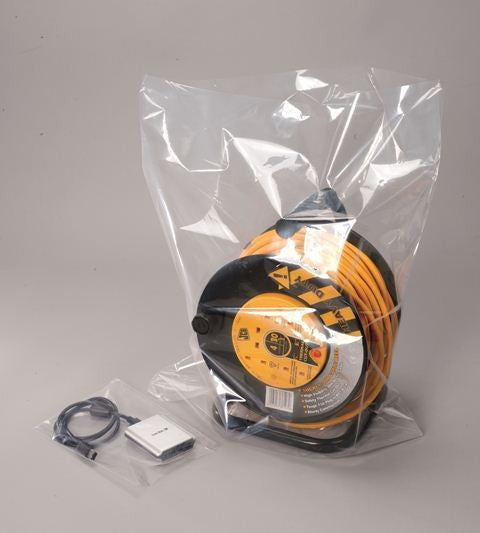
250G Polythene Bags
Clear Poly Bags (Paper Wrapped) — Product Overview
These clear poly bags are a practical, everyday packaging choice for protecting and presenting items in storage, fulfilment, retail, and general workplace use. Made in a clear film for easy identification of contents, they help keep products clean, reduce handling damage, and support tidy organisation across shelves, bins, and packing benches.
This listing covers a clear polythene bag option supplied paper wrapped, which helps keep packs neat and easier to handle in busy environments. The bags are commonly used wherever you need a simple, lightweight protective sleeve that is quick to open, quick to fill, and easy to stack.
Note: This product page may represent multiple pack quantities and/or closely related options. Please refer to the selectable options on the page for the exact pack size and pricing.
Key Features
Clear film for fast identification
The transparent material makes it easy to see what’s inside without opening the bag—ideal for picking, packing, stock control, and returns processing.
Everyday protective packaging
A simple way to protect items from dust, light scuffs, and handling marks during storage, internal movement, or dispatch preparation.
Paper wrapped packs
Supplied paper wrapped to keep packs tidy and easier to store, count, and issue on a packing bench or in a stockroom.
Consistent thickness option
This listing is for a specified film thickness option (shown in the product title/selection). Choosing the right thickness helps balance protection, flexibility, and cost for your application.
Versatile for many item types
Suitable for a wide range of light-to-medium duty packaging tasks, from small components and accessories to printed materials and general goods.
Key Features (Bullet Summary)
- Clear poly bags for quick content visibility
- Supplied paper wrapped for tidy storage and handling
- Useful for storage, organisation, packing, and protection
- Thickness option stated in the product title/selection
- Suitable for many everyday packaging tasks
Typical Uses
- Picking and packing: keeping items grouped per order line
- Retail back-of-house: organising small stock and accessories
- Workshops and maintenance: storing parts, fixings, and consumables
- Print and mailroom: protecting leaflets, inserts, and documents
- Returns processing: separating and identifying returned items
- General storage: keeping items clean and easy to locate
Clear Poly Bags — Full Product Guide Introduction
Clear polythene bags are one of the most widely used packaging formats because they are simple, economical, and adaptable. Whether you’re running a small packing operation or managing a larger warehouse, a reliable clear bag helps you standardise how items are protected and presented.
This guide explains how clear poly bags are typically used, what to consider when selecting a thickness, and how to get the best performance in day-to-day handling—without overcomplicating the decision.
How It Works
The bag acts as a lightweight protective sleeve around your product. Items are placed inside, then the bag can be left open for quick access or closed using your preferred method (for example, folding, taping, or heat sealing—depending on your process and the bag style you select).
Because the film is clear, teams can identify contents at a glance. This reduces time spent opening packaging during picking, quality checks, and stock counts, and it can help reduce errors when multiple similar items are handled together.
Materials and Construction
This product is described as a polythene/poly bag. Poly bags are valued for their combination of flexibility and toughness, and for being lightweight compared with rigid packaging. The film is designed to be easy to handle and quick to load, while still providing a barrier against dust and everyday handling.
The listing also specifies a film thickness option (shown in the title/selection). Thickness is commonly used as a practical indicator of how robust the bag will feel in use. A thicker film generally offers increased resistance to tearing and punctures, while a thinner film may be more economical and easier to conform around irregular shapes.
Paper wrapped supply format helps keep packs neat and can make it easier to store and issue bags in controlled quantities.
Choosing the Right Thickness (Practical Guidance)
When selecting a poly bag thickness, consider:
- Product edges and corners: sharper items typically benefit from a more robust film.
- Handling intensity: frequent opening/closing, high pick rates, or conveyor handling can increase wear.
- Presentation needs: clearer, smoother film can improve product appearance for retail or customer-facing packing.
- Cost vs protection: choose the lightest option that still protects your product reliably.
If you’re unsure, it can be helpful to trial a small quantity across your most common items and observe how the bags perform during a normal working day.
Compatibility With Packing Processes
Clear poly bags are commonly integrated into many workflows:
- Manual packing benches: quick to open and fill, easy to stack in dispensers or bins.
- Batch kitting: keeps multi-part kits together and reduces missing components.
- Labelling: labels can be applied to the outside of the bag for identification, barcoding, or routing.
- Secondary packaging: can be used inside cartons, mailing bags, or boxes as an inner protective layer.
Health and Safety
As with all plastic bags, keep away from babies and small children due to suffocation risk. In workplace settings, store bags in a controlled area and avoid leaving loose bags where they could create slip or trip hazards. If you use heat sealing equipment, follow the equipment manufacturer’s safety guidance and ensure operators are trained.
Ideal Applications and Use Cases
These clear poly bags are a strong fit for:
- Warehousing and distribution: separating SKUs, protecting items in totes, and simplifying stock checks.
- E-commerce fulfilment: keeping items clean and presentable before they go into an outer mailer or carton.
- Retail operations: organising accessories, spare parts, and small items in back-of-house storage.
- Manufacturing and assembly: kitting components and protecting finished parts between process steps.
- Offices and print rooms: protecting documents, inserts, and printed materials from dust and handling.
Maintenance, Cleaning and Care
Poly bags are typically intended for single-use packaging, but in some internal applications they may be reused if they remain clean and undamaged. For best results:
- Store packs in a clean, dry area away from direct heat sources.
- Avoid overfilling—leave enough room to prevent stress on seams and edges.
- Keep sharp items from contacting the film directly where possible (for example, by adding a small protective wrap around corners).
- Dispose of used bags responsibly in line with your local waste and recycling guidance.
Case Study (Example Workflow)
Scenario: A small parts distributor ships mixed orders containing multiple small items per customer.
Challenge: Items can be easily mixed up during picking, and small components can be lost inside cartons.
Approach: Each order line is placed into a clear poly bag and labelled. The bagged lines are then packed into the outer carton.
Result: Faster picking checks (contents visible), fewer packing errors, and improved customer experience because items arrive clean and organised.
Who Is It For?
- Warehouse and fulfilment teams needing quick, visible item protection
- Retail stockrooms organising small goods and accessories
- Workshops and maintenance departments storing parts and consumables
- Manufacturers and assemblers kitting components
- Offices and print rooms protecting documents and inserts
Colours / Features Available
This option is supplied in clear film for visibility. The supply format is paper wrapped as stated in the product title/selection.
Sizes Available
This product page may include multiple size and pack options within the same family. Please use the on-page selections to confirm the exact size, thickness, and pack quantity you require.
If you need help choosing the best option for your product (for example, selecting a thickness for sharper items or higher handling rates), share what you’re packing and how it’s shipped/stored, and we can recommend a suitable choice.