

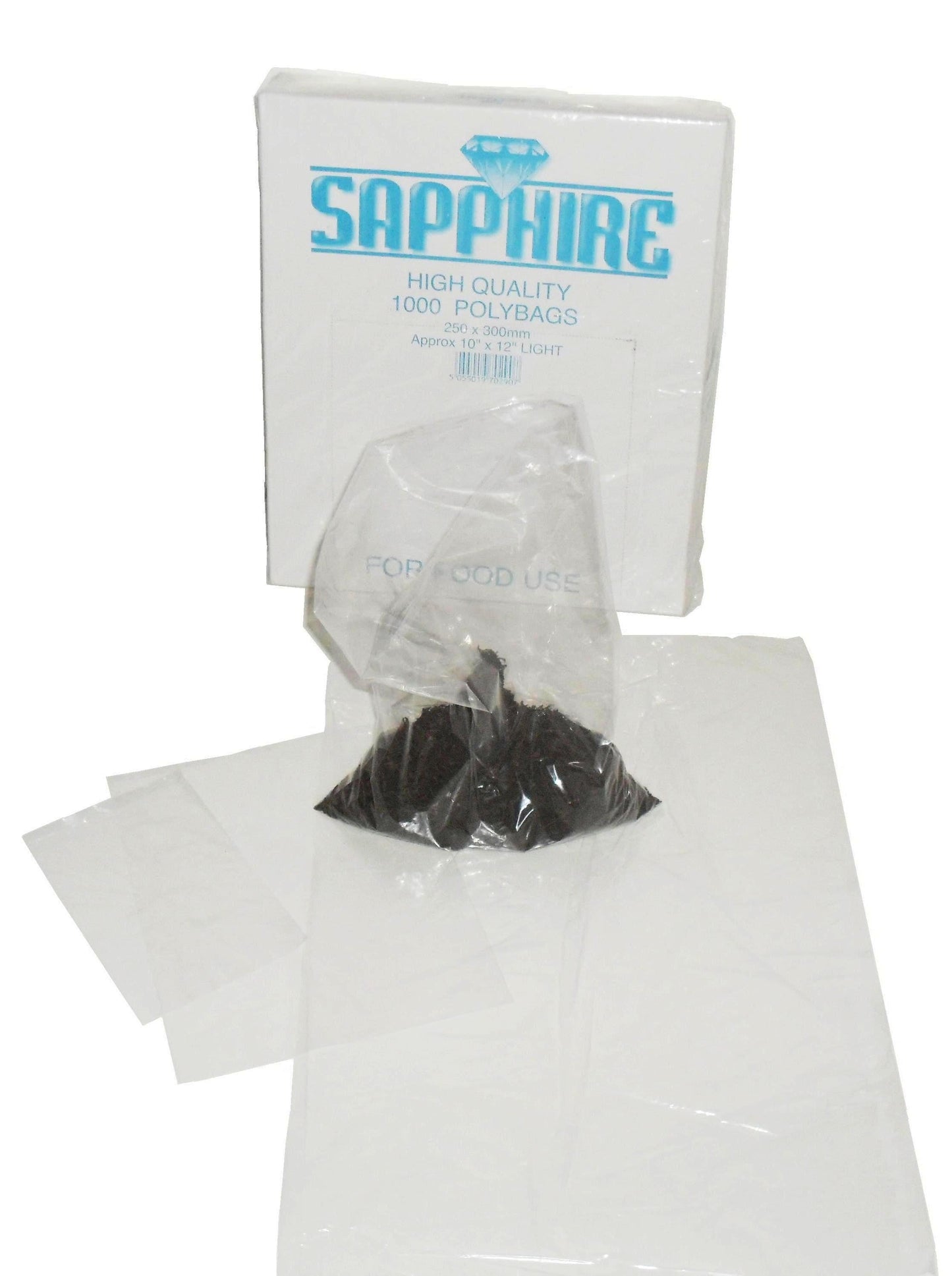
Perforated Polythene Bags
Clear Perforated Poly Bags — Product Overview
These clear perforated poly bags are designed for fast, tidy packing where airflow, easy separation, and product visibility matter. The perforation feature helps reduce trapped air and allows contents to breathe, making them a practical choice for packaging items that may hold moisture or need ventilation during storage and transit. The clear film keeps the contents visible for quick identification, stock control, and presentation.
Perforated polythene bags are commonly used across warehousing, fulfilment, retail back-of-house, manufacturing, and food-adjacent handling (where appropriate for the application). They’re especially useful when you want the convenience of a lightweight protective bag but don’t want condensation build-up or ballooning during packing.
Key Features
Perforated for airflow: The perforations allow air to pass through the bag, helping to reduce condensation and preventing the bag from inflating during packing, stacking, or transport.
Clear film for visibility: Transparent material makes it easy to identify contents without opening the bag—ideal for picking, packing, and inventory checks.
Lightweight protection: Helps protect items from dust, light scuffs, and handling marks while keeping packaging weight low.
Consistent thickness specification: Supplied to a defined micron thickness, supporting repeatable performance for everyday packing tasks.
Efficient for high-volume packing: A simple, familiar format that works well in busy packing environments and can be paired with common sealing methods (where applicable).
Key Features (Bullet Summary)
- Perforated design to allow airflow and reduce trapped air
- Clear polythene for quick content identification
- Helps reduce condensation build-up compared with non-perforated bags
- Lightweight protective packaging for storage and transit
- Suitable for a wide range of packing and fulfilment workflows
Typical Uses
- Packaging items that benefit from ventilation (e.g., products that may retain moisture)
- Warehousing and fulfilment: pick/pack protection and organisation
- Retail stock handling and back-of-house storage
- Manufacturing and assembly: keeping components grouped and protected
- General-purpose protective bagging where breathability is preferred
Clear Perforated Poly Bags — Full Product Guide
Perforated poly bags are a straightforward packaging solution with one important enhancement: controlled airflow. That small difference can improve packing speed, reduce issues caused by trapped air, and help manage moisture in certain applications. This guide explains what perforated bags are, how they’re typically used, and how to choose the right option for your workflow.
How It Works
A perforated poly bag includes small holes (perforations) distributed across the film. These perforations allow air to move in and out of the bag. In practice, this can:
- Reduce “ballooning” when inserting products quickly
- Help bags stack more neatly by allowing trapped air to escape
- Support ventilation to reduce condensation risk in moisture-prone scenarios
Perforations are not intended to make the bag watertight or airtight—rather, they intentionally allow airflow. If you need a sealed barrier against air or moisture, a non-perforated bag may be more appropriate.
Materials and Construction
These bags are made from clear polythene (polyethylene) film. Polythene is widely used in packaging because it is lightweight, flexible, and offers good everyday durability for handling and storage. The film is supplied to a specified thickness (micron), which is a common way to describe polythene strength and feel.
Thickness (micron): Micron (µ) is a measurement of film thickness. A higher micron generally indicates a thicker, more robust film. This product is specified at 30µ, which is commonly referenced in packaging as approximately 120 gauge.
Product Visibility and Presentation
Clear film supports quick identification of contents, which can reduce handling time and errors in busy environments. It also helps with:
- Barcode scanning and label verification (when labels are applied to the outside)
- Quality checks without opening the packaging
- Neat presentation for storage, internal distribution, or customer-facing packing
Workflow Benefits in Packing and Fulfilment
In many packing operations, trapped air is a small but persistent inefficiency. Perforated bags can help streamline the process by letting air escape naturally as items are inserted. This can make it easier to:
- Insert products quickly without the bag puffing up
- Stack or carton-pack bagged items more compactly
- Reduce the need to manually squeeze air out before sealing or closing
For teams working at speed, these small improvements can add up across a shift.
Floor Type Compatibility
As a packaging consumable, these bags are compatible with typical warehouse and packing environments. They can be used at:
- Packing benches and dispatch stations
- Warehouse pick faces and tote systems
- Retail stockrooms and replenishment areas
If you use automated bagging or specific dispensing equipment, confirm the bag format and thickness suits your machinery and process.
Health and Safety
As with all plastic bags, safe handling and storage are important:
- Keep plastic bags away from babies and young children due to suffocation risk.
- Store packaging materials in a clean, dry area away from heat sources.
- Use appropriate manual handling practices when moving bulk packs.
If you are using bags for food contact or regulated applications, ensure the specific product specification and compliance requirements are met for your use case.
Ideal Applications and Use Cases
Perforated poly bags are chosen when breathability is beneficial. Common examples include:
- Moisture-prone items: Products that may carry residual moisture after processing or cleaning, where ventilation helps reduce condensation.
- Freshness-sensitive packing workflows: Situations where airflow is preferred over a sealed environment (application-dependent).
- High-volume fulfilment: Faster packing and easier stacking due to reduced trapped air.
- Parts and components: Keeping items grouped while allowing airflow and reducing static “cling” issues associated with trapped air.
- Textiles and soft goods: Protecting from dust while avoiding the “puffed” look of air-filled bags.
Maintenance, Cleaning and Care
These bags are intended as a consumable packaging item. To maintain performance and presentation:
- Store flat in the original packaging to reduce creasing and contamination.
- Keep away from direct sunlight and excessive heat to help preserve film quality.
- Use clean hands or gloves in environments where product cleanliness is important.
Dispose of used packaging responsibly in line with local waste and recycling guidance for polythene film.
Case Study (Typical Scenario)
Scenario: A fulfilment team packs mixed items into cartons for dispatch. With non-perforated bags, trapped air makes bags bulky, slows packing, and reduces carton efficiency.
Approach: Switching to perforated poly bags allows air to escape as items are inserted. Bags sit flatter, packers spend less time squeezing air out, and cartons close more easily.
Result: Faster packing flow, neater presentation, and improved carton utilisation—without changing the overall bagging method.
Who Is It For?
- Warehouses and fulfilment centres seeking faster, more compact packing
- Retail operations needing clear, breathable storage bags
- Manufacturers and assemblers organising parts and components
- Any operation that prefers ventilation over an airtight seal
Colours / Features Available
- Colour: Clear (transparent) film for visibility
- Feature: Perforated to allow airflow
Sizes Available
This product page may represent a specific size option and/or a range of related variants. Select the required size and pack quantity from the options available on this listing.
If you need guidance choosing the best size for your product, consider:
- Internal dimensions required for the item (including any inserts or labels)
- Whether you need extra room for easy loading
- How tightly you want the bag to fit for presentation and carton efficiency
Reference notes: This listing specifies a 30µ film thickness (commonly referenced as approximately 120 gauge) and a clear perforated polythene construction.