

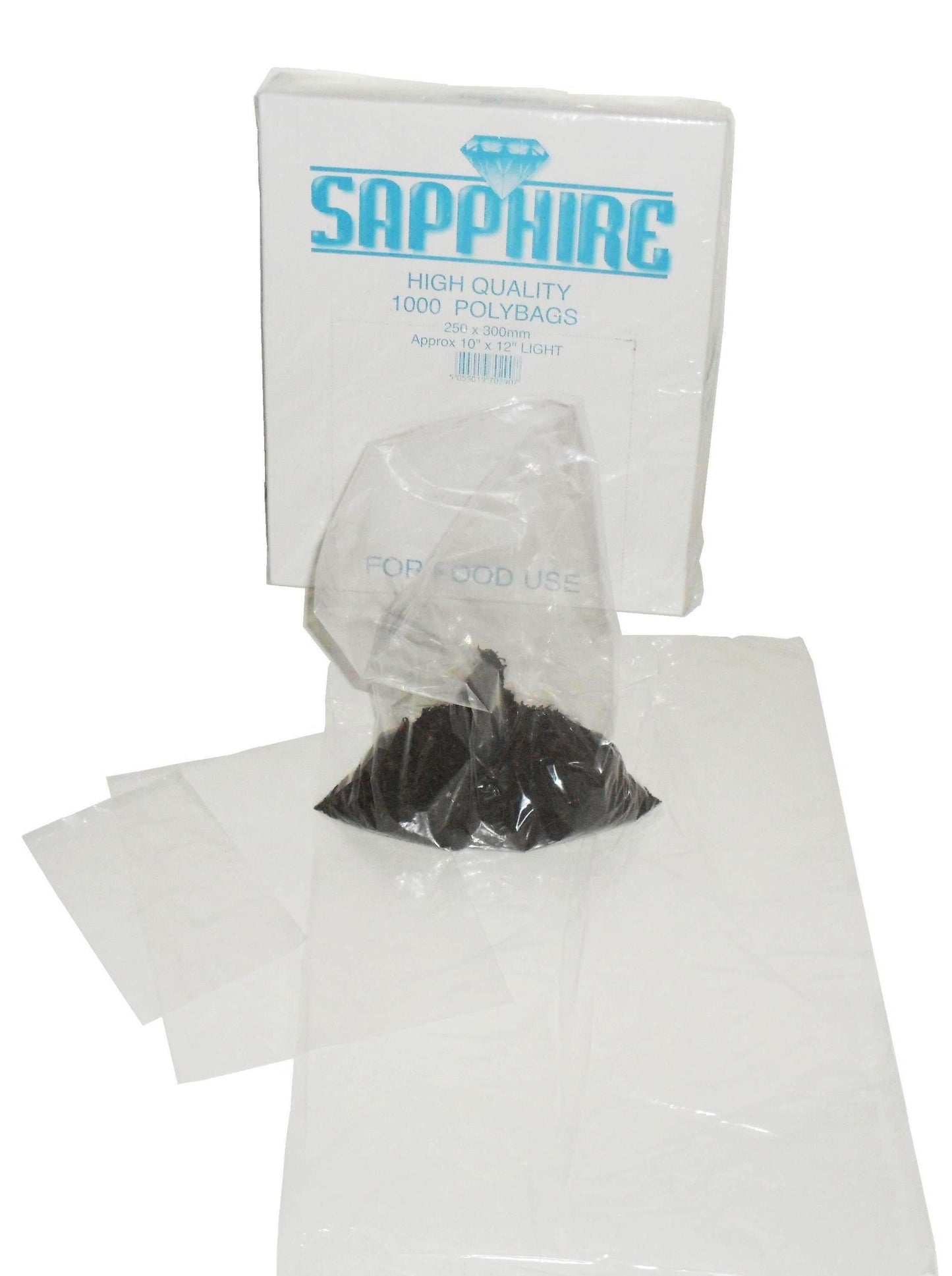
Perforated Polythene Bags
Clear Perforated Polythene Bags — Product Overview
These clear perforated polythene bags are designed for packaging applications where you want the visibility and protection of a sealed bag, but also need controlled airflow. The perforations allow trapped air and moisture vapour to escape more easily than a fully sealed bag, helping reduce condensation build-up around the packed item. This makes perforated poly bags a practical choice for a wide range of packing and storage tasks across warehousing, fulfilment, retail, and light industrial environments.
Because this is a configurable product listing, the exact dimensions, pack quantities and pricing may vary by option. Please select the variant that matches your required bag size and pack quantity.
Key Features
Perforated for ventilation: Perforations help promote airflow and allow moisture vapour to escape, which can reduce condensation compared with non-perforated bags.
Clear film for easy identification: Transparent material helps you quickly identify contents without opening the bag—useful for picking, packing, and stock control.
Polythene protection: Provides a barrier against dust and light handling contamination while keeping items grouped and protected during storage and transit.
Flexible packaging format: Suitable for many product shapes and can be used as an inner liner, over-bag, or standalone protective bag depending on your process.
Multiple options available: This page may include multiple sizes and pack configurations—choose the option that best fits your application.
- Ventilated packaging for items that benefit from airflow
- Clear visibility for faster identification and fewer handling errors
- Everyday protection against dust and scuffs during storage
- Convenient packing for fulfilment, retail prep, and general warehouse use
Typical Uses
- Warehousing and fulfilment: keeping items grouped while allowing air to escape
- Retail and e-commerce packing: clear presentation and quick content checks
- General storage: protecting products from dust while avoiding a fully sealed environment
- Work-in-progress handling: temporary protection between process steps
Clear Perforated Polythene Bags — Full Product Guide Introduction
Perforated polythene bags are a simple but highly effective packaging choice when a fully sealed bag is not ideal. In many packing environments, trapped air can make bags bulky, slow down packing, or create an untidy presentation. In other cases, moisture can accumulate inside a sealed bag, especially when items are packed warm, moved between temperature zones, or stored for extended periods. Perforations address these issues by allowing air exchange while still providing the practical benefits of a polythene bag.
This guide explains how perforated poly bags work, what to consider when choosing an option, and how to use them effectively in day-to-day packing operations.
How It Works
Perforations are small holes distributed across the film. Their purpose is to allow air to pass through the bag more readily than through an unperforated film. In practical terms, this can help in three common ways:
- Air release during packing: When you insert an item, displaced air can escape through the perforations, helping the bag sit flatter and look neater.
- Reduced condensation risk: Moisture vapour can vent more easily, which may reduce the chance of condensation forming inside the bag in certain storage conditions.
- Breathability for suitable products: Some items benefit from not being fully sealed, particularly where airflow is preferred over a moisture-tight barrier.
Perforated bags are not intended to be airtight or watertight. If you need a moisture barrier or leak resistance, a non-perforated bag (or a different packaging format) may be more appropriate.
Materials and Construction
These bags are made from clear polythene film. Polythene is widely used in packaging because it is lightweight, flexible, and provides a practical protective layer against dust and handling marks. Clear film also supports efficient operations by allowing quick visual checks of contents, labels, and barcodes.
Thickness is typically specified in microns (µ). A higher micron value generally indicates a thicker, more robust film. When selecting a thickness, consider the weight of the contents, the likelihood of sharp edges, and how the bag will be handled (manual packing vs. automated processes, single handling vs. multiple touchpoints).
Floor Type Compatibility
While bags themselves are not floor-dependent, the way they are used in a packing area can be. In busy fulfilment environments, perforated bags are often used at packing benches, on racking, or in pick/pack stations. For best results:
- Store cartons or packs in a clean, dry area to keep film free from dust.
- Use dispensers or dedicated shelf locations to reduce snagging and improve packing speed.
- Keep cutting tools and sharp edges away from open packs to avoid accidental tearing.
Health and Safety
- Packaging safety: Keep plastic bags away from babies and children due to suffocation risk.
- Workplace handling: Use appropriate cutting tools and safe practices when opening cartons or separating bags.
- Slip hazards: Loose film can be slippery—dispose of offcuts promptly and keep walkways clear.
Ideal Applications and Use Cases
Perforated polythene bags are commonly chosen when you want a balance of protection and ventilation. They can be a good fit for:
- Items prone to condensation when sealed (depending on storage conditions)
- Products that may be packed warm and then cooled in storage
- General warehouse items where dust protection is needed but airtight sealing is not
- Retail preparation where clear presentation and quick identification matter
If your application requires tamper evidence, liquid containment, or a strong moisture barrier, consider alternative packaging formats or non-perforated bags.
Maintenance, Cleaning and Care
Polythene bags are typically single-use packaging items, but good storage and handling will help maintain performance:
- Store in original cartons until needed to keep bags clean.
- Avoid prolonged exposure to direct sunlight or high heat, which can affect packaging materials over time.
- Handle with clean hands or gloves if packing items where presentation is important.
- Rotate stock (first-in, first-out) to keep packaging in best condition.
Case Study (Example Workflow)
Scenario: A small fulfilment team packs mixed items for dispatch and wants a tidy presentation without “ballooning” bags caused by trapped air.
- Challenge: Standard sealed bags trap air, making parcels bulky and slowing down packing.
- Approach: Switch to perforated clear poly bags for suitable product lines.
- Result: Air escapes during packing, bags sit flatter, and packers spend less time pressing air out before sealing outer cartons.
This is a typical example of where perforations can improve packing efficiency and presentation, depending on the product being packed.
Who is it for?
- Warehouses and fulfilment centres looking for faster, neater bagging
- Retail back-of-house teams preparing stock for shelves
- Workshops and light industrial sites needing simple protective packaging
- Businesses that want clear visibility of contents for stock control
Colours / Features Available
- Colour: Clear (transparent) film for easy identification
- Feature: Perforated film to allow ventilation and air release
Sizes Available
This product page may include multiple size options and pack configurations. Select the variant that matches your required dimensions and quantity. If you need help choosing the most suitable option for your packing process, contact us with details of your product type, approximate weight, and how the bag will be handled in transit and storage.
Note: Perforated bags are designed to vent air and moisture vapour; they are not intended to provide an airtight or watertight seal.