

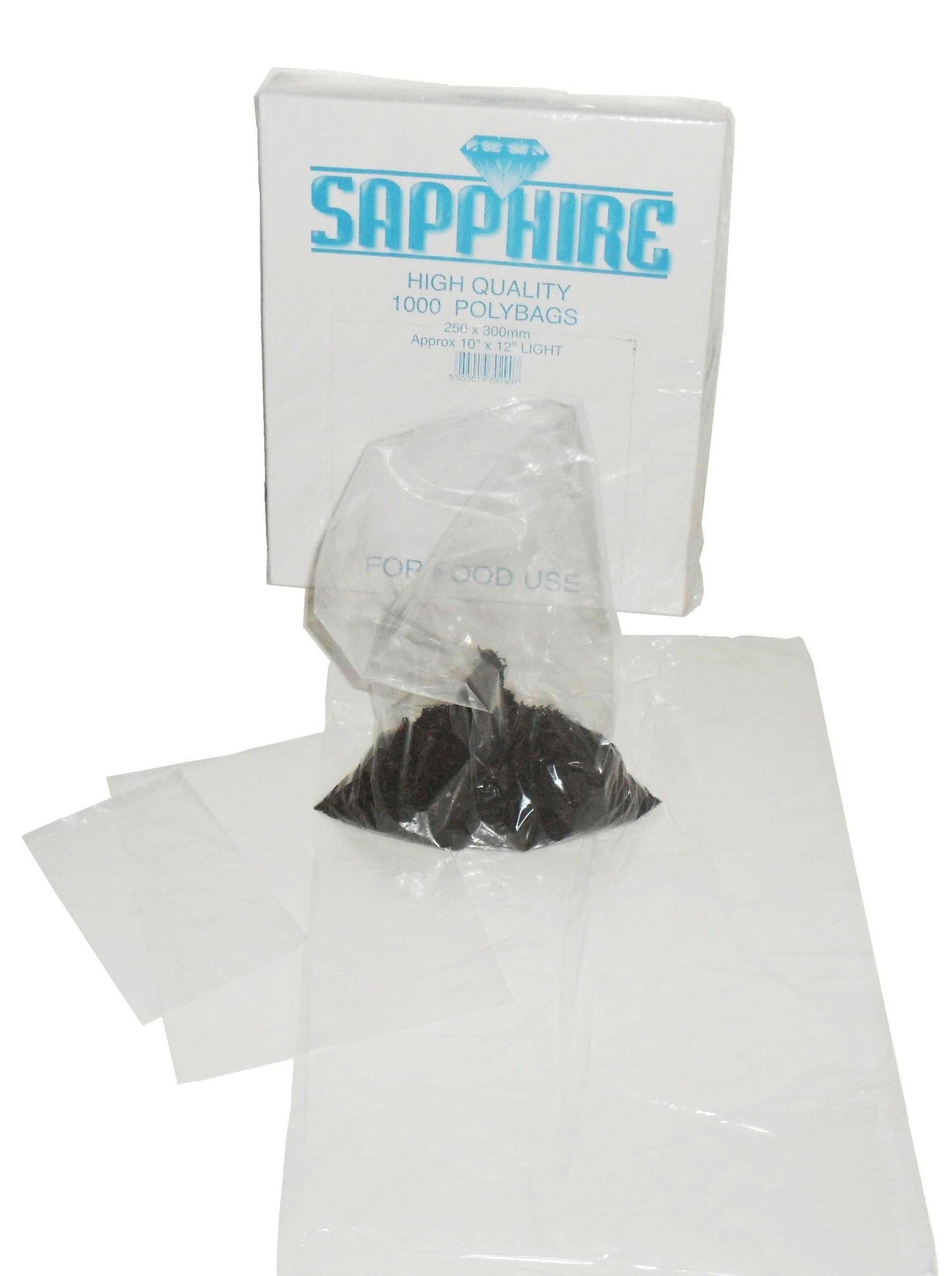
Perforated Polythene Bags
Clear Perforated Poly Bags — Product Overview
These clear perforated polythene bags are designed for packing, protecting and presenting products where airflow is beneficial. The perforations allow trapped air to escape more easily than with standard sealed poly bags, helping reduce “ballooning” during packing and improving stackability in cartons, cages and on pallets. The clear film supports quick visual identification of contents, making these bags a practical choice for busy packing benches, goods-in/goods-out areas and retail back-of-house operations.
This listing covers a perforated clear poly bag option supplied in trade packs. As this is a configurable product page, specifications such as pack quantity and exact dimensions may vary by variant—please select the required option from the dropdowns on the page for the precise size and pack format you need.
Key Features
Perforated for controlled ventilation
Perforations help equalise air pressure and allow air to escape during packing. This can make filling faster and can help reduce the volume of packed items when you need to carton or palletise efficiently.
Clear film for easy identification
The transparent material makes it simple to check contents at a glance, supporting faster picking, packing and stock checks without repeatedly opening bags.
Helps reduce “ballooning” in transit
Where products naturally trap air (for example, soft goods or irregular shapes), perforations can help prevent bags from puffing up, improving stability when stacked.
Lightweight protection from dust and handling
Poly bags provide a clean barrier against dust, light scuffs and general handling marks—useful for keeping items presentable from packing bench to end user.
Trade-friendly pack formats
Supplied in practical pack quantities suited to regular dispatch operations, workshops and production environments.
Versatile packaging solution
Suitable for a wide range of non-food items where ventilation is preferred over an airtight seal.
Key Features (Bullet Summary)
- Perforated to allow airflow and release trapped air
- Clear film for quick content visibility
- Supports faster packing and improved stackability
- Helps keep products clean and presentable
- Available in multiple variants on this configurable page
Typical Uses
- Packaging garments, textiles and soft goods where airflow is helpful
- Protecting items from dust during storage, picking and dispatch
- Organising parts, components and assemblies in workshops
- Retail back-of-house bagging for stock handling and transfers
- General warehouse packing where reduced trapped air improves carton fill
Clear Perforated Poly Bags — Full Product Guide
Perforated polythene bags are a simple upgrade from standard poly bags when you need the convenience of a clear protective cover but don’t want an airtight package. Below is a practical guide to help you choose the right variant and get the best performance in day-to-day packing.
How It Works
A standard poly bag can trap air as you insert products, especially bulky or compressible items. With perforated bags, small holes in the film allow air to escape. In practice, this can:
- Make it easier to slide products into the bag without fighting trapped air
- Reduce the finished pack volume for more efficient carton packing
- Improve stability when stacking multiple packed items together
Perforations are intended for ventilation rather than liquid containment. If you require a fully sealed, moisture-resistant pack, a non-perforated bag or a heat-sealable option may be more appropriate.
Materials and Construction
These bags are made from clear polythene film. Polythene is widely used in packaging because it is lightweight, flexible and provides a clean barrier against dust and handling. Film thickness is typically specified in microns (µm); thicker films generally offer increased puncture resistance and durability, while thinner films can be more economical for lighter-duty applications.
Because this is a configurable listing, the exact thickness and dimensions depend on the variant selected. Always confirm the specification shown next to your chosen option before ordering.
Choosing the Right Size (Practical Guidance)
When selecting a bag size, consider:
- Product width and depth: allow enough room for the item to slide in comfortably without stressing seams.
- Product height/length: include extra allowance if you need to fold over the top or apply a closure.
- How you pack: if you pack quickly at a bench, a slightly larger bag can speed up insertion and reduce snagging.
- Carton efficiency: if you are trying to maximise carton fill, choose a size that minimises excess film and trapped air.
If you are unsure, it can be helpful to trial a small quantity across a couple of sizes to find the best balance between speed of packing and neat presentation.
Compatibility With Closures and Packing Methods
Perforated poly bags are commonly used with simple closure methods depending on your workflow:
- Fold-over closure: quick and tidy for internal transfers or short journeys.
- Labels: apply product labels or barcodes to the outside for identification.
- Tape: for a more secure closure where needed (note: perforations mean the pack is not airtight).
If you require tamper evidence or a fully sealed pack, consider alternative bag types designed for sealing.
Health and Safety
As with all plastic bags, keep away from babies and children due to suffocation risk. In warehouse and production settings, ensure bags are stored neatly to prevent slip/trip hazards and avoid placing loose film near heat sources or open flames. If you are packing items with sharp edges, consider additional protection (such as wrapping the item first) to reduce puncture risk.
Ideal Applications and Use Cases
Perforated clear poly bags are particularly useful when you want visibility and protection but also want the pack to “breathe”. Common scenarios include:
- Textiles and garments: helps reduce trapped air and keeps items clean.
- Printed materials: protects from dust and handling while allowing air release.
- Parts and components: keeps sets together and supports easy identification.
- Warehouse picking: speeds up packing and reduces carton void caused by inflated bags.
Maintenance, Cleaning and Care
These bags are intended as packaging consumables and do not require maintenance. For best results:
- Store in a clean, dry area away from direct sunlight and excessive heat.
- Keep packs closed until use to minimise dust contamination.
- Use a consistent packing method to reduce waste and improve presentation.
Case Study (Typical Workflow Example)
Scenario: A dispatch team packs soft goods for shipment. Using non-perforated bags, items trap air and the finished packs take up more space, making cartons harder to close neatly.
Change: Switching to perforated clear poly bags allows air to escape during insertion. Packs sit flatter, cartons close more easily, and pallet stacks become more stable.
Result: Faster packing, improved carton utilisation, and a cleaner presentation on arrival—without changing the rest of the packing process.
Who Is It For?
- Warehouses and fulfilment operations aiming to improve packing efficiency
- Manufacturers and workshops organising parts and assemblies
- Retail stockrooms needing quick, visible protection for goods
- Any operation that benefits from ventilated protective bagging
Colours / Features Available
This product is supplied in clear film for visibility. The defining feature is the perforation, which supports airflow and reduces trapped air during packing.
Sizes Available
This is a configurable product page with multiple variants. Please refer to the options shown on the page for the available sizes and pack quantities. If you require a specific size for a repeat packing process, select the closest matching variant and consider trialling before committing to larger volumes.
Note: Perforated bags are designed for ventilation and are not intended to be airtight or leakproof.