

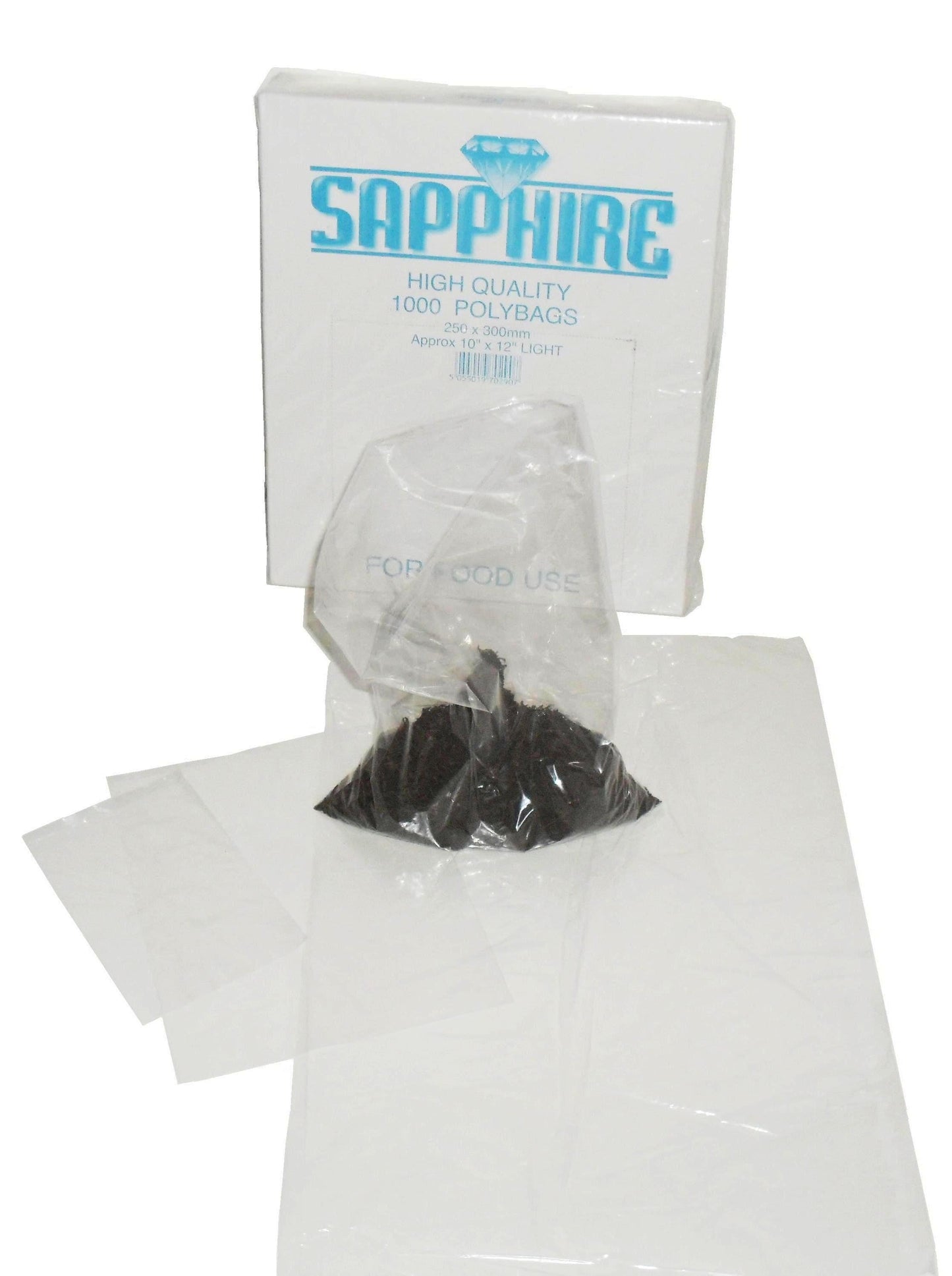
Perforated Polythene Bags
White Perforated Polythene Bags — Product Overview
These white perforated polythene bags are designed for fast, tidy packing where airflow, easy separation, and consistent presentation matter. Made from polythene film and supplied in a clean white finish, they’re a practical choice for protecting products from dust and handling marks while still allowing ventilation through perforations. This makes them especially useful for packaging items that benefit from breathing (for example, fresh produce, bakery items, or goods that may retain moisture) and for applications where condensation needs to be reduced.
Because this is a configurable product listing, the exact dimensions and pack options can vary by selection. The core benefit remains the same across the range: a dependable, easy-to-use perforated bag that supports efficient packing lines and a professional look at point of sale or during distribution.
Key Features
Perforated for ventilation
Perforations allow air exchange, helping reduce moisture build-up and supporting product freshness where airflow is beneficial.
Clean white appearance
The white film provides a neat, consistent presentation that suits retail, food service, and general packing environments.
Polythene film protection
Polythene helps protect contents from dust, light splashes, and handling during storage and transit.
Efficient packing workflow
Perforated bags are commonly chosen for quick bagging tasks where speed and consistency are important.
Multiple options under one listing
This page may represent multiple variants (such as different pack quantities), making it easier to standardise purchasing while selecting the option that fits your operation.
- Ventilated design to support airflow around packed items
- White polythene film for a clean, professional look
- Practical everyday protection against dust and handling
- Suitable for fast packing in retail and back-of-house settings
- Variant-based ordering (choose the option that matches your needs)
Typical Uses
- Fresh produce and food items where ventilation is helpful
- Bakery and takeaway counter packing (where permitted and appropriate)
- General retail bagging for small goods and components
- Stockroom organisation and light-duty protection during storage
- Distribution and fulfilment where a simple protective bag is required
White Perforated Polythene Bags — Full Product Guide
Perforated polythene bags are a straightforward packaging staple: they combine the convenience and protection of polythene film with the added advantage of ventilation. If you’ve ever had products fog up inside a sealed bag, or you’ve needed a bag that allows items to “breathe,” perforations are often the simplest solution. This guide explains what perforated bags are, how they’re typically used, and how to choose the right option for your packing process.
How It Works
Standard polythene bags create a barrier between the product and the outside environment. That barrier is useful for keeping out dust and reducing handling marks, but it can also trap moisture and warm air. Perforations introduce controlled openings in the film so air can circulate. In many everyday packing scenarios, this helps reduce condensation and supports freshness for items that benefit from airflow.
Perforations can also make bags easier to open and handle quickly, depending on the packing method used. In busy environments—such as retail counters, food prep areas, or packing benches—small improvements in handling speed can make a noticeable difference over a full shift.
Materials and Construction
These bags are made from polythene film (polyethylene). Polythene is widely used in packaging because it is lightweight, flexible, and cost-effective. It also offers a good balance of clarity/appearance (in this case, a white finish), toughness for everyday handling, and compatibility with common packing workflows.
Film thickness is often specified by gauge or micron depending on the supplier and market. The thickness you choose should reflect the weight and shape of the items you’re packing, as well as how the bags will be handled (hand-packed, packed on a bench, moved in crates, etc.). If you’re unsure, it’s usually best to match the thickness you currently use successfully, then adjust based on performance feedback.
Ventilation and Product Freshness
The main reason to choose a perforated bag is airflow. Ventilation can be beneficial for products that release moisture or that should not be sealed airtight. For example, certain fresh foods can sweat inside a sealed bag, leading to condensation and a less appealing presentation. Perforations help moisture escape and allow air exchange, which can improve the look and condition of the packed item over time.
That said, perforations also mean the bag is not intended to be liquid-tight or airtight. If your application requires a sealed barrier (for example, to prevent leaks or to isolate odours), a non-perforated bag or a different packaging format may be more suitable.
Floor Type Compatibility (Where They Fit in Your Operation)
Perforated polythene bags are commonly used across a wide range of environments:
- Retail and front-of-house: quick bagging with a consistent, tidy appearance.
- Food prep and back-of-house: ventilated packing for items that benefit from airflow.
- Warehousing and stockrooms: light protection and organisation for parts and products.
- Fulfilment and distribution: simple protective bagging inside cartons or crates.
If you’re standardising packaging across multiple sites, choosing a consistent bag type (like a white perforated polythene bag) can help keep packing processes uniform and reduce ordering complexity.
Health and Safety
As with all plastic bags, safe handling and storage are important. Keep packaging materials away from heat sources and store them in a clean, dry area to maintain quality. If used for food-related applications, ensure your overall packaging process meets your local hygiene requirements and that the chosen packaging format is appropriate for the product being packed.
For workplaces, it’s also good practice to keep bag stacks or cartons organised to reduce trip hazards and to ensure packers can access bags without overreaching or awkward lifting.
Ideal Applications and Use Cases
These bags are often selected when you need a balance of protection and breathability. Common use cases include:
- Fresh produce where airflow helps maintain appearance.
- Bakery items where reducing condensation can help preserve texture and presentation.
- General retail goods where a clean white bag supports a consistent brand-neutral look.
- Parts and components where light protection and easy handling are the priority.
If your products are sensitive to dust but also prone to moisture build-up, perforated bags are often a practical compromise.
Maintenance, Cleaning and Care
Polythene bags are typically supplied ready to use and do not require cleaning. To keep them in best condition:
- Store in original packaging until needed to reduce dust contamination.
- Keep cartons off the floor where possible and away from damp areas.
- Avoid compressing cartons excessively, which can crease or deform bags.
- Rotate stock (first in, first out) to keep packaging fresh and consistent.
If bags are used in food environments, follow your site’s hygiene procedures for handling and dispensing packaging materials.
Case Study (Typical Workflow Example)
Scenario: A busy produce counter needs a bag that keeps items presentable during the day while allowing airflow to reduce condensation.
Approach: Staff use perforated polythene bags for quick packing at the counter. The perforations help reduce moisture build-up compared with fully sealed bags, while the polythene film still provides a clean barrier against dust and handling.
Result: Faster packing, consistent presentation, and fewer issues with fogging or dampness inside the bag during display and short-term storage.
This is a general example of how perforated bags are commonly used; the best choice will depend on your specific product and handling conditions.
Who Is It For?
- Retailers who need quick, consistent bagging at point of sale
- Food service teams packing items where ventilation is beneficial
- Warehouses and stockrooms organising goods and components
- Fulfilment operations needing a simple protective inner bag
Colours / Features Available
This listing is for a white perforated polythene bag format. Depending on the variant options available on this page, you may be able to select different pack quantities. The defining feature across the range is the perforated design for ventilation.
Sizes Available
This product page may include multiple size or pack variants. Select the option that matches your required bag dimensions and ordering quantity. If you need help choosing the right option for your product, consider:
- the approximate dimensions of the item being packed
- whether you need extra room for easy loading
- how the packed items will be stored or transported (crates, cartons, display)
If you regularly pack items with varying shapes, it can be useful to keep two nearby sizes on hand—one for snug packing and one for bulkier items—while keeping the same bag type for consistency.
Need help selecting the right perforated bag?
If you tell us what you’re packing, how it’s stored (ambient/chilled), and your typical quantities, we can help you choose the most suitable option from the variants available on this page.