

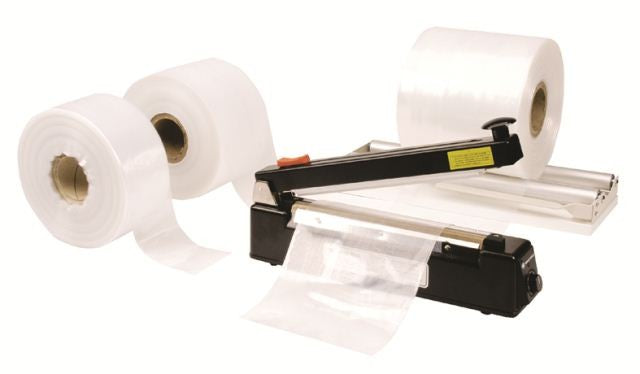
500G Lay Flat Tubing (LFT)
Black Lay Flat Tubing (Layflat Polythene) — Overview
Lay flat tubing is a versatile polythene packaging format supplied as a continuous tube wound on a roll. Because it is a tube (rather than a pre-made bag), you can create packs to the length you need: cut the tubing, seal one end, insert the product, then seal the other end. This makes layflat tubing a practical choice when you need flexible pack lengths, want to reduce the number of different bag sizes you hold in stock, or need to protect long or awkward items.
This product is black lay flat tubing supplied on a heavy roll. The specification shown on this listing includes a 305mm (12") layflat width, a 178 micron (178µ) thickness, and a 22kg roll weight. The listing title also references 700 gauge (often used as an alternative way to express film thickness). Please select the variant that matches your required width/thickness/roll weight where applicable.
Key Features
Made as a continuous tube
Create custom-length packs on demand by cutting and sealing to suit your product length. Ideal when product lengths vary or when you want to minimise the number of different bag sizes you purchase.
Black film for concealment and presentation
Black polythene helps obscure the contents and can provide a clean, uniform appearance for storage, handling, and distribution.
Heavy-duty thickness
The specification on this page includes 178µ film thickness, designed for robust protection in handling and transit where a stronger film is preferred.
Compatible with heat sealing equipment
Layflat tubing is commonly used with heat sealers to create sealed packs. It can also be used with appropriate bag sealing methods depending on your process and equipment.
Efficient stockholding
One roll can replace multiple pre-made bag sizes, helping streamline purchasing and reduce storage space for packaging materials.
Key Features (Bullet Summary)
- Layflat tube format for made-to-length packaging
- Black polythene for concealment and consistent presentation
- 305mm (12") layflat width (as shown in this listing)
- 178 micron thickness (as shown in this listing)
- 22kg roll (as shown in this listing)
- Suitable for heat sealing to create sealed packs
Typical Uses
- Packaging long or variable-length items where pre-made bags are inconvenient
- Protective wrapping for components, parts, and products during storage or distribution
- Creating custom sleeves or protective covers
- General industrial and warehouse packaging where a strong polythene film is required
Black Lay Flat Tubing — Full Product Guide
Choosing the right layflat tubing is mainly about matching the layflat width (so your product fits comfortably), the film thickness (so it withstands handling), and the roll format (so it works with your packing process). The sections below explain how layflat tubing is typically used and what to consider when selecting a variant.
How It Works
Layflat tubing is supplied as a flattened tube on a roll. In use, you typically:
- Cut the tubing to the required length
- Seal one end (commonly with a heat sealer)
- Insert the product
- Seal the open end to complete the pack
This workflow is especially useful when you pack items of different lengths, because you can standardise on a smaller number of tubing widths and create the length you need at the point of packing.
Materials and Construction
This listing is for polythene layflat tubing in black. Polythene film is widely used for packaging because it is lightweight, flexible, and provides a protective barrier against dust and general handling marks. The tubing format means there are no side seams like you would find on some bag styles; instead, you create end seals as part of your packing process.
Thickness is a key performance factor. The specification shown here includes 178µ thickness, which is typically chosen when a more robust film is required. If you are comparing options, always check the micron value (or the gauge value where provided) to ensure you are selecting the correct strength for your application.
Understanding Layflat Width (Fit Guidance)
Layflat width is the width of the tubing when it is laid flat. When opened into a tube, the circumference is approximately double the layflat width. To ensure a good fit:
- Allow clearance for the product’s width/thickness and any sharp corners
- Consider whether the product needs to slide in easily (extra clearance helps)
- If packing bulky items, you may need a wider layflat width than the product’s nominal width
This product page shows a 305mm (12") layflat width in the title. If you are selecting between variants, choose the layflat width that provides comfortable clearance for your product.
Film Thickness, Microns, and Gauge
Film thickness may be shown in microns (µ) and sometimes also in gauge. This listing includes 178µ and references 700 gauge in the title. When comparing products, use the thickness value shown on the listing/variant to ensure you are ordering the correct film strength for your packing environment.
Floor Type Compatibility
Layflat tubing is typically used at packing benches, on packing lines, or in warehouse environments. For best results:
- Use a stable work surface for cutting and sealing
- Keep the roll supported to prevent telescoping or uneven unwind
- Maintain a clean area around the sealing zone to help achieve consistent seals
Health and Safety
- Heat sealing: If using a heat sealer, follow the equipment manufacturer’s guidance and allow sealing bars to cool before handling.
- Cutting: Use appropriate cutting tools and safe cutting practices.
- Plastic film handling: Keep packaging film away from children and avoid covering the face to reduce suffocation risk.
Ideal Applications and Use Cases
Black layflat tubing is commonly chosen where you want the flexibility of made-to-length packaging combined with a darker film that helps conceal contents. Typical use cases include:
- Variable-length products: pack different lengths without changing bag sizes
- Long items: create sleeves for items that are difficult to bag
- Warehouse protection: protect goods from dust and scuffs during storage
- Distribution: create sealed packs for handling and transit
Maintenance, Cleaning and Care
- Storage: Keep rolls in a clean, dry area away from direct heat sources.
- Handling: Avoid crushing the roll edges to help maintain smooth unwind.
- Sealing quality: If seals are inconsistent, check sealer temperature/time settings and ensure the film is clean and flat in the sealing area.
Case Study (Example Workflow)
Scenario: A warehouse packs mixed-length components for internal transfer and outbound shipments. Pre-made bags require multiple sizes and frequent changeovers.
Approach: The team switches to layflat tubing in a suitable width and thickness. Operators cut to length, seal one end, insert the component, and seal the other end.
Outcome: Fewer packaging SKUs are needed, packing remains consistent across different product lengths, and the black film provides a uniform appearance while helping conceal contents.
Who Is It For?
- Warehouses and distribution centres packing variable-length items
- Manufacturing and engineering environments needing protective polythene packaging
- Operations looking to reduce the number of bag sizes held in stock
- Packers who want a robust film option for tougher handling conditions
Colours / Features Available
This listing is for black layflat tubing. If your process requires different colours, transparency, or alternative film specifications, check the available variants or related layflat tubing ranges.
Sizes Available
Sapphire product pages may represent multiple variants. Please refer to the variant selector on this page for the available layflat widths, thicknesses, and roll formats. This specific listing title references 305mm (12") layflat width, 178µ thickness, and a 22kg roll.
Need help choosing?
If you share your product dimensions (width, thickness/diameter, and typical lengths) and how you plan to seal the tubing, we can help you select the most suitable layflat width and film thickness.